
World
U-2 Spy Plane Legacy: 70 Years of Service and Future Uncertain

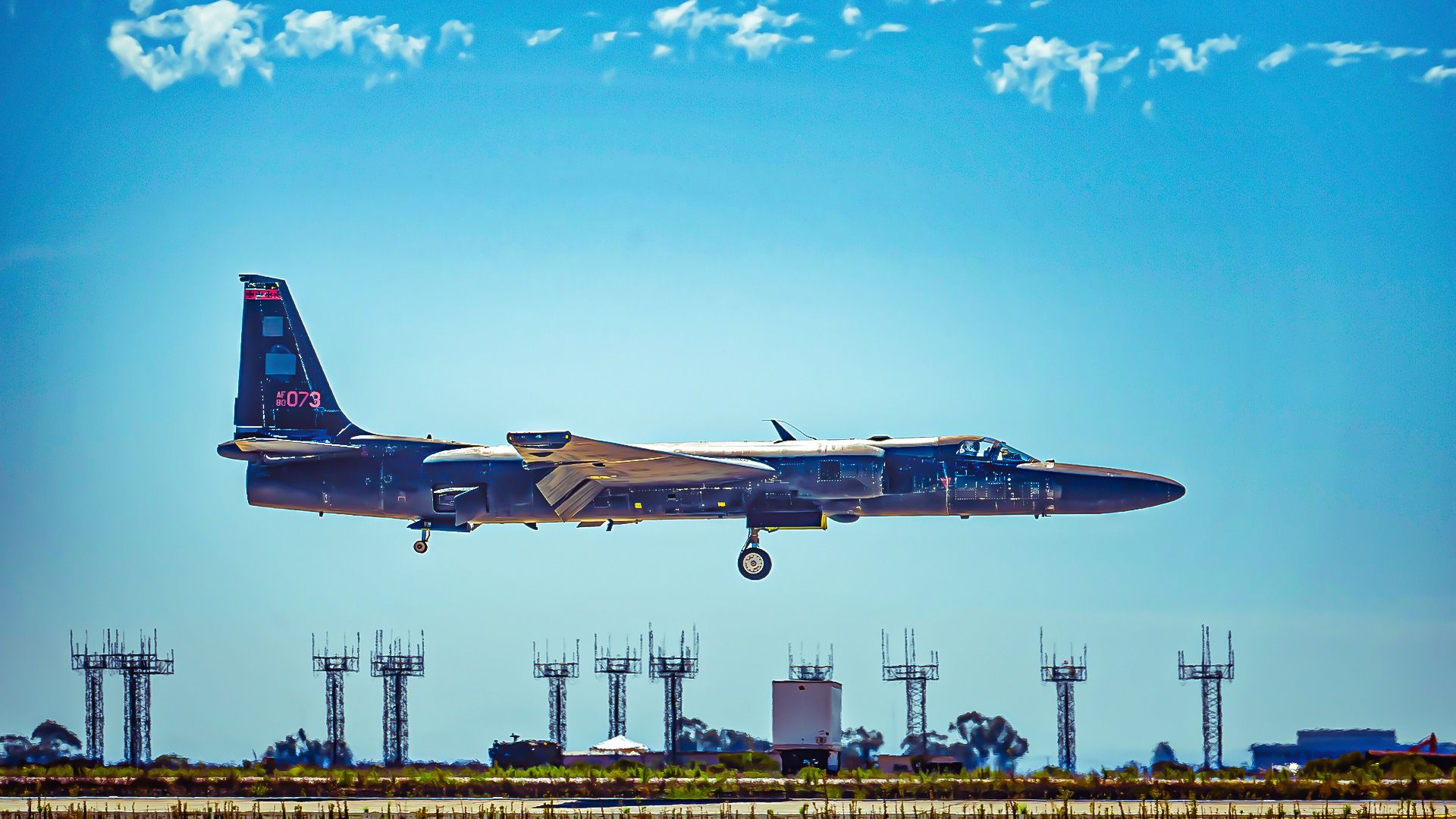
The Lockheed U-2, known as the “Dragon Lady,” has marked over 70 years of service with the United States Air Force (USAF). First entering service in 1956, this iconic spy plane has played a pivotal role in intelligence-gathering, including its significant involvement during the 1962 Cuban Missile Crisis. Despite ongoing discussions about its retirement, the U-2 continues to be operational, with expectations for phased retirement starting in October 2026.
Over the decades, a total of 104 U-2s were built, with the majority of those serving in various capacities since the aircraft’s inception. The current fleet comprises models produced during the 1980s, indicating that while the airframes are indeed aging, they are not yet among the oldest in military service. Approximately one-third of the total U-2s built remain active today, with reports indicating that around seven have been lost to enemy action and about 36%, or at least 37 aircraft, have been involved in crashes due to various mishaps.
Historical Significance and Development
The U-2 was developed as a secretive program by Lockheed’s Skunk Works division under the leadership of Clarence L. Johnson. It was designed to operate at high altitudes and conduct reconnaissance missions, a necessity during the Cold War. The aircraft has been regarded as one of the most successful intelligence-gathering platforms in history. Unlike the faster, supersonic SR-71 Blackbird, which was operational for a shorter period from 1966 until 1998, the U-2 has proven its longevity and reliability in various mission environments.
The U-2’s operational history is marked by its ability to adapt and overcome the challenges of evolving aerial threats. Initially authorized by the CIA, the U-2 was flown by both American and Taiwanese pilots for intelligence missions over hostile territories. The aircraft’s design has undergone multiple iterations, resulting in several sub-types, including the U-2A, U-2D, U-2R, and TR-1A, each enhancing capabilities for surveillance and reconnaissance.
Current Status and Future Prospects
As of the start of Fiscal Year 2024, the USAF lists 31 U-2s in its inventory, comprising 27 single-seat variants and four two-seat trainers. The aircraft’s future remains uncertain, with Congress actively involved in discussions regarding its retirement. A draft bill from mid-2025 suggested that no more than eight U-2 aircraft would be retired in any given year, potentially extending its service life until Fiscal Year 2030.
Despite advancements in drone technology and the introduction of newer surveillance platforms, the U-2 continues to fulfill a vital role in low-threat environments. Lockheed Martin emphasizes that the U-2 “operates in and around contested areas” and provides crucial data that enhances situational awareness for modern military operations.
The U-2’s legacy is preserved not only in its active service but also through various displays in museums across the globe. Significant collections can be found in the United States at the National Air and Space Museum in Washington, D.C., and the National Museum of the US Air Force in Dayton, Ohio. Some retired airframes have also been exhibited in European countries, including the UK and Norway.
As the U-2 approaches its 70th anniversary, it recently set an endurance record for its category, with a flight spanning over 6,000 miles and lasting 14 hours. This achievement underscores the aircraft’s remarkable capabilities and its continued relevance in today’s military landscape. While the future of the U-2 may involve transition into less active roles, its contributions to intelligence and reconnaissance will undoubtedly be remembered for decades to come.

Bedrock Restaurant Group to Launch New Dining Concept in San Jose

Amer Sports Faces Price Target Changes Following Analysts’ Updates

Private Donors Commit $1 Billion for World’s Largest Particle Accelerator

Golfers Brave Cold to Raise Over $2,100 for Christmas Fund

Senate Nears Urgent ‘Mini-Bus’ Deal to Prevent Shutdown Threat

Coldplay ‘Kiss Cam’ Incident Sparks Outrage and Harassment

Floyd County Sheriff Rolls Out New Body Cameras After $22.9K Grant

Australian Police Arrest Seven in Anti-Terror Operation Following Shooting

Morgan Stanley Raises Micron Price Target to $350 Following Strong Earnings

Inventor Achieves Breakthrough with 2 Billion FPS Laser Video

Community Unites for 7th Annual Into the Light Walk for Mental Health

Charlie Sheen’s New Romance: ‘Glowing’ with Younger Partner

Dua Lipa Aces GCSE Spanish, Sparks Super Bowl Buzz with Fans

Curium Group, PeptiDream, and PDRadiopharma Launch Key Cancer Trial

Former Mozilla CMO Launches AI-Driven Cannabis Cocktail Brand Fast

Mother Fights to Reunite with Children After Kidnapping in New Drama

R&B Icon D’Angelo Dies at 51, Leaving Lasting Legacy

Israel Reopens Rafah Crossing After Hostage Remains Returned
-
 Science2 months ago
Inventor Achieves Breakthrough with 2 Billion FPS Laser Video
-
 Health2 months ago
Community Unites for 7th Annual Into the Light Walk for Mental Health
-
 Top Stories2 months ago
Charlie Sheen’s New Romance: ‘Glowing’ with Younger Partner
-
 Entertainment2 months ago
Dua Lipa Aces GCSE Spanish, Sparks Super Bowl Buzz with Fans
-
 Health2 months ago
Curium Group, PeptiDream, and PDRadiopharma Launch Key Cancer Trial
-
 Top Stories2 months ago
Former Mozilla CMO Launches AI-Driven Cannabis Cocktail Brand Fast
-
 Entertainment2 months ago
Mother Fights to Reunite with Children After Kidnapping in New Drama
-
 World2 months ago
R&B Icon D’Angelo Dies at 51, Leaving Lasting Legacy
-
 World2 months ago
Israel Reopens Rafah Crossing After Hostage Remains Returned
-

 Health2 months ago
YouTube Launches New Mental Health Tools for Teen Users
-

 Business2 months ago
Tyler Technologies Set to Reveal Q3 Earnings on October 22
-

 Entertainment2 months ago
Red Sox’s Bregman to Become Free Agent; Tigers Commit to Skubal