
Science
Blue Origin Halts Space Tourism Flights to Focus on Lunar Mission

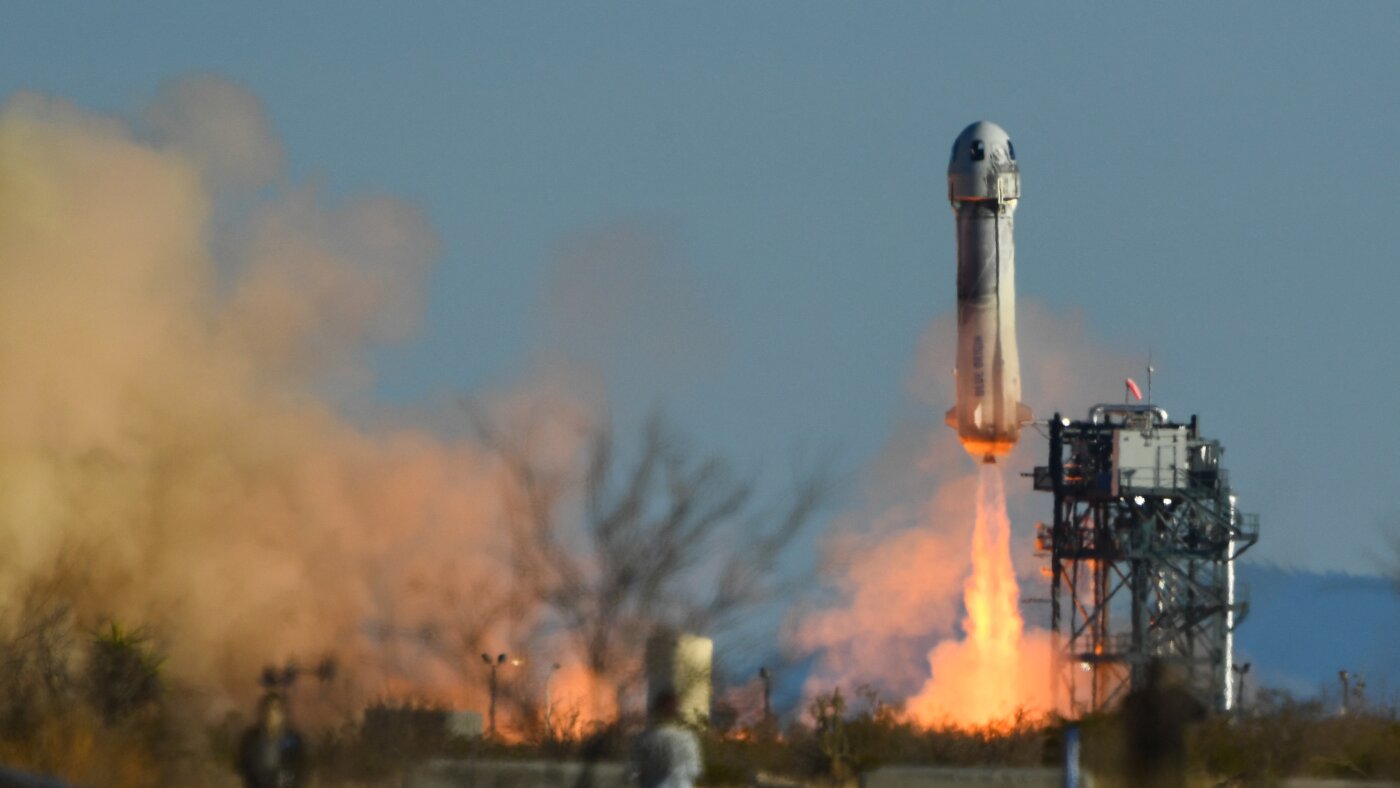
Blue Origin, the private aerospace company founded by Jeff Bezos, has announced a suspension of its suborbital space tourism flights using the New Shepard spacecraft. This decision comes as the company shifts its focus toward developing lunar landing capabilities. Since the inaugural human flight in July 2021, New Shepard has successfully transported 98 passengers beyond the Kármán line, which is recognized as the threshold of space at an altitude of approximately 62 miles (100 kilometers) above Earth.
The suborbital missions, which typically last about ten minutes from launch to landing in west Texas, have included a mix of paying customers and notable personalities. The first flight featured Bezos, his brother Mark Bezos, aviator Wally Funk, and Oliver Daemen, an 18-year-old who became the youngest person to fly to space. Subsequent flights saw famous passengers such as William Shatner, Katy Perry, Gayle King, and Michael Strahan join the experience.
The pause in operations will last for a minimum of two years, during which Blue Origin aims to allocate more resources toward its commitment to NASA’s lunar programs. The company was awarded a substantial contract worth $3.4 billion to develop a spacecraft capable of carrying humans to the lunar surface. This initiative is part of NASA’s ambitious Artemis program, which seeks to return humans to the moon for the first time in over five decades, collaborating with commercial space enterprises to create the necessary technology.
As Blue Origin pivots to lunar exploration, competition in the space industry remains fierce. Elon Musk’s SpaceX is currently advancing its Starship rocket, which is designated to facilitate the first two human landing missions. Blue Origin’s vehicle is slated to support the third landing. Yet, before any spacecraft can transport astronauts to the moon, NASA must first conduct the Artemis II mission. This mission aims to take astronauts on a journey around the moon and back, with a potential launch date of Sunday, February 8, 2024. However, unusually cold temperatures at the Florida launch site are currently causing delays in critical testing ahead of the launch attempt.
As Blue Origin refines its focus on lunar capabilities, the future of space tourism remains uncertain. The company’s decision reflects a strategic shift that could redefine its role in the evolving landscape of space exploration.

Tensions Explode as Candiace Banned from ‘The Traitors’ Castle

Urgent: Manchester High School Student Arrested with Gun, Drugs

American Airlines Expands Philadelphia Hub with New European Routes

Cisco Systems Shares Rise 1.5% as Analysts Update Price Targets

Teddi Mellencamp Opens Up About ‘The Masked Singer’ and Health Journey

New Sci-Fi Short Explores Humanity’s Final Moments Amid Doom

Arthur Brooks Discusses Therapy’s Limits on Happiness in New Book

Longmont’s Rare Whiskey Auction to Fund Local Charities on Saturday

Santa Clara Establishes Free Speech Zones for Super Bowl LX

Researchers Launch $1.25M Project for Real-Time Hazard Monitoring in Hawaiʻi

Inventor Achieves Breakthrough with 2 Billion FPS Laser Video

Charlie Sheen’s New Romance: ‘Glowing’ with Younger Partner

Dua Lipa Aces GCSE Spanish, Sparks Super Bowl Buzz with Fans

UK Government Borrowing Hits £20.2 Billion in September Surge

Community Unites for 7th Annual Into the Light Walk for Mental Health

Mother Fights to Reunite with Children After Kidnapping in New Drama

Olivia Plath Opens Up About Her Marriage Struggles and Divorce

AI Gun Detection System Mistakes Doritos for Weapon, Sparks Outrage
-
 Science2 months ago
Researchers Launch $1.25M Project for Real-Time Hazard Monitoring in Hawaiʻi
-
 Science4 months ago
Inventor Achieves Breakthrough with 2 Billion FPS Laser Video
-
 Top Stories4 months ago
Charlie Sheen’s New Romance: ‘Glowing’ with Younger Partner
-
 Entertainment4 months ago
Dua Lipa Aces GCSE Spanish, Sparks Super Bowl Buzz with Fans
-
 World4 months ago
UK Government Borrowing Hits £20.2 Billion in September Surge
-
 Health4 months ago
Community Unites for 7th Annual Into the Light Walk for Mental Health
-
 Entertainment4 months ago
Mother Fights to Reunite with Children After Kidnapping in New Drama
-
 Entertainment4 months ago
Olivia Plath Opens Up About Her Marriage Struggles and Divorce
-
 Science3 months ago
AI Gun Detection System Mistakes Doritos for Weapon, Sparks Outrage
-

 Top Stories4 months ago
Former Mozilla CMO Launches AI-Driven Cannabis Cocktail Brand Fast
-

 World4 months ago
R&B Icon D’Angelo Dies at 51, Leaving Lasting Legacy
-

 Health4 months ago
YouTube Launches New Mental Health Tools for Teen Users