
Science
Study Reveals How Play Enhances Word Learning in Dogs

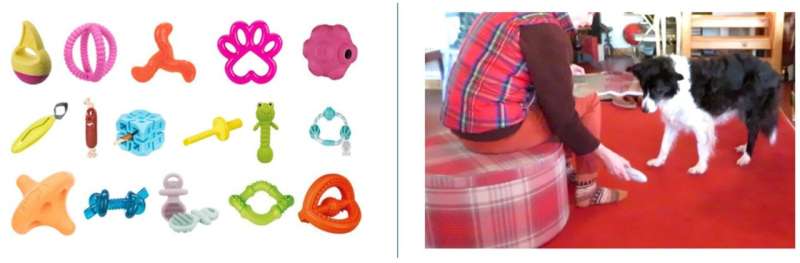
A recent study from researchers at Eötvös Loránd University in Budapest, Hungary, has uncovered intriguing insights into how some dogs learn words more effectively than others. These so-called gifted word learners (GWL) have a remarkable ability to quickly grasp the names of toys—an ability that many dogs do not possess. The findings, published in the journal Animal Cognition, suggest that social interaction during play is a key factor in this unique talent.
The study involved 31 Border Collies, divided into two groups: ten gifted dogs and 21 typical dogs. Over a two-week period, the dogs interacted with four toys provided by the researchers. Half of the toys were labeled, and their names were repeatedly called by the owners during play. The other two toys remained unlabeled, with no names mentioned. After the play period, the dogs underwent a series of tests to evaluate their responses to the toys.
During the first part of the assessment, the dogs were placed in a room with the familiar toys and two new ones. Owners were instructed to remain passive while researchers observed which toys the dogs selected and how often they sought their owner’s attention. In the subsequent test, owners asked the dogs to fetch the toys by name. The results indicated that only the GWLs had successfully learned the names of the new toys during the two-week play period.
Research revealed that both groups of dogs showed similar preferences for exploration, favoring the new toys. However, the GWL dogs distinguished themselves through their eagerness to offer toys to their owners, indicating a strong desire to initiate social engagement. The research team posits that the ability to learn words extends beyond cognitive capacity, suggesting a social dimension that resembles how young children learn through shared experiences.
“The results showing a higher tendency of GWL dogs, compared to typical dogs, to initiate social interactions with the caregivers lay the foundation for future studies to explore the relationship between social motivation, communicative intent, and vocabulary learning in non-human and non-linguistic species,” the researchers stated in their paper.
While the study does not fully elucidate the complexities of word learning in dogs, it offers a fresh perspective on the factors that contribute to this ability. By emphasizing the significance of social interaction, the findings could also pave the way for a deeper understanding of language evolution in other species.
This research was conducted meticulously, with contributions from Paul Arnold, edited by Gaby Clark, and reviewed by Robert Egan, reinforcing the credibility of the findings. The study is an important step forward in understanding canine communication and learning processes, highlighting the vital role of play and social connections in the development of word comprehension among dogs.

Tensions Explode as Candiace Banned from ‘The Traitors’ Castle

Urgent: Manchester High School Student Arrested with Gun, Drugs

American Airlines Expands Philadelphia Hub with New European Routes

Cisco Systems Shares Rise 1.5% as Analysts Update Price Targets

Teddi Mellencamp Opens Up About ‘The Masked Singer’ and Health Journey

New Sci-Fi Short Explores Humanity’s Final Moments Amid Doom

Arthur Brooks Discusses Therapy’s Limits on Happiness in New Book

Longmont’s Rare Whiskey Auction to Fund Local Charities on Saturday

Santa Clara Establishes Free Speech Zones for Super Bowl LX

Researchers Launch $1.25M Project for Real-Time Hazard Monitoring in Hawaiʻi

Inventor Achieves Breakthrough with 2 Billion FPS Laser Video

Charlie Sheen’s New Romance: ‘Glowing’ with Younger Partner

Dua Lipa Aces GCSE Spanish, Sparks Super Bowl Buzz with Fans

UK Government Borrowing Hits £20.2 Billion in September Surge

Community Unites for 7th Annual Into the Light Walk for Mental Health

Mother Fights to Reunite with Children After Kidnapping in New Drama

Olivia Plath Opens Up About Her Marriage Struggles and Divorce

AI Gun Detection System Mistakes Doritos for Weapon, Sparks Outrage
-
 Science2 months ago
Researchers Launch $1.25M Project for Real-Time Hazard Monitoring in Hawaiʻi
-
 Science4 months ago
Inventor Achieves Breakthrough with 2 Billion FPS Laser Video
-
 Top Stories4 months ago
Charlie Sheen’s New Romance: ‘Glowing’ with Younger Partner
-
 Entertainment4 months ago
Dua Lipa Aces GCSE Spanish, Sparks Super Bowl Buzz with Fans
-
 World4 months ago
UK Government Borrowing Hits £20.2 Billion in September Surge
-
 Health4 months ago
Community Unites for 7th Annual Into the Light Walk for Mental Health
-
 Entertainment4 months ago
Mother Fights to Reunite with Children After Kidnapping in New Drama
-
 Entertainment4 months ago
Olivia Plath Opens Up About Her Marriage Struggles and Divorce
-
 Science3 months ago
AI Gun Detection System Mistakes Doritos for Weapon, Sparks Outrage
-

 Top Stories4 months ago
Former Mozilla CMO Launches AI-Driven Cannabis Cocktail Brand Fast
-

 World4 months ago
R&B Icon D’Angelo Dies at 51, Leaving Lasting Legacy
-

 Health4 months ago
YouTube Launches New Mental Health Tools for Teen Users