
Politics
US Seizes Venezuelan Oil Tanker Amid Rising Tensions

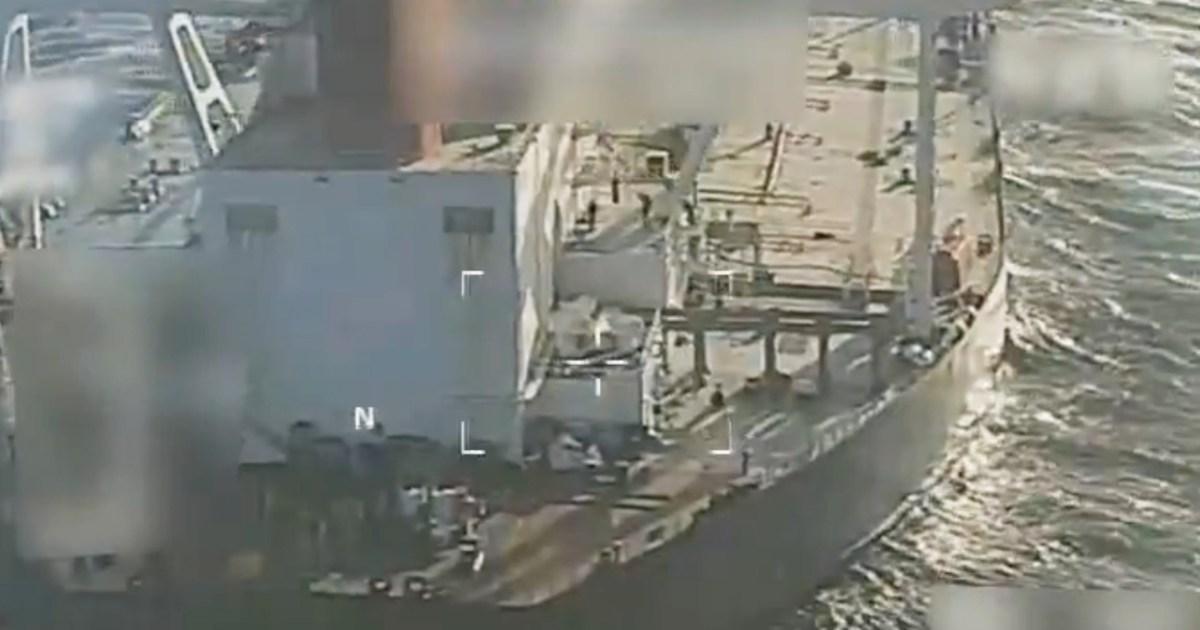
The United States has seized an oil tanker off the coast of Venezuela, escalating tensions between Caracas and Washington. Venezuelan officials have denounced the action as “international piracy,” with President Nicolás Maduro‘s government claiming that the seizure is motivated by a desire for control over the country’s natural resources.
The tanker was reportedly transporting sanctioned oil from Venezuela and Iran. Attorney General Pam Bondi released footage of the seizure, which President Donald Trump characterized as a significant accomplishment, stating, “We’ve just seized a tanker on the coast of Venezuela. Largest one ever seized, actually.” This operation is part of a broader initiative known as Operation Southern Spear, aimed at curbing drug trafficking linked to Venezuelan gangs.
Tensions have been mounting since the beginning of November, when the USS Gerald R. Ford, the largest aircraft carrier in the world, joined US naval forces in the Caribbean. Reports indicate that the US has been conducting air and naval operations in the region, which could lead to airstrikes against targets in Venezuela if the situation deteriorates. An official stated, “President Trump is prepared to use every element of American power to stop drugs from flooding into our country and to bring those responsible to justice.”
In recent months, US forces have engaged in several strikes against boats in Venezuelan waters, alleging connections to drug trafficking. In September, a strike against a gang resulted in multiple casualties, raising concerns about the legality of such actions.
UN Human Rights Chief Volker Türk described these operations as “extrajudicial killings,” intensifying the debate over the US’s military tactics in the region.
Critics of the US approach point out that a 2020 report from the US Drug Enforcement Administration indicated that only 8% of the cocaine entering the United States was transported via Caribbean routes, with most coming through Mexican cartels. This suggests that the focus on Venezuela may not accurately reflect the primary sources of drug trafficking into the US.
The situation has prompted speculation about the potential for a military conflict. While a full-scale invasion appears unlikely at this time, the concentration of US forces suggests that airstrikes could occur if tensions escalate further. The Venezuelan military, which includes around 109,000 active personnel, faces significant challenges due to outdated equipment and a lack of modern air defenses.
The US government’s stance on Venezuela stems from its refusal to recognize Maduro as a legitimate leader. Secretary of State Marco Rubio has labeled the Venezuelan government as linked to terrorist activities in the region. Maduro, in turn, accuses the US of fabricating a narrative to justify intervention, claiming that the true motive behind US aggression is the desire to control Venezuela’s oil resources.
In light of these developments, flights into Venezuelan airspace have decreased, with airlines cancelling routes following warnings from the Federal Aviation Administration. While Trump’s order to block airspace is not legally enforceable, it reflects the heightened military activity in the region and raises concerns about the potential for conflict.
The crisis in Venezuela has persisted for over a decade, marked by economic instability and political turmoil. Maduro has maintained power through contested elections and has faced accusations of widespread human rights abuses. As the situation continues to unfold, the international community watches closely, aware that the stakes are high for both the US and Venezuela.

Berkeley Hat Company to Close After 50 Years on Telegraph Ave

Urgent Recall: Nasal Spray Contaminated, Nationwide Distribution Affected

Iconic ‘Star Wars’ Painting Sells for $3.9 Million at Auction

Federal Judge Orders Immediate Release of Kilmar Abrego Garcia

Woman Reunites Lost Family Photos with TV Host Ricki Lake

Senate to Vote on Health Bills Impacting Millions of Americans

Hillcrest Offers Essential Tips for Seniors to Combat Holiday Loneliness

Federal Judge Orders Immediate Release of Kilmar Abrego Garcia

Lawrence Kasdan’s Archive at University of Michigan Opens to Researchers

Inventor Achieves Breakthrough with 2 Billion FPS Laser Video

Community Unites for 7th Annual Into the Light Walk for Mental Health

Charlie Sheen’s New Romance: ‘Glowing’ with Younger Partner

Dua Lipa Aces GCSE Spanish, Sparks Super Bowl Buzz with Fans

Curium Group, PeptiDream, and PDRadiopharma Launch Key Cancer Trial

Former Mozilla CMO Launches AI-Driven Cannabis Cocktail Brand Fast

Israel Reopens Rafah Crossing After Hostage Remains Returned

Mother Fights to Reunite with Children After Kidnapping in New Drama

R&B Icon D’Angelo Dies at 51, Leaving Lasting Legacy
-
 Science2 months ago
Inventor Achieves Breakthrough with 2 Billion FPS Laser Video
-
 Health2 months ago
Community Unites for 7th Annual Into the Light Walk for Mental Health
-
 Top Stories2 months ago
Charlie Sheen’s New Romance: ‘Glowing’ with Younger Partner
-
 Entertainment2 months ago
Dua Lipa Aces GCSE Spanish, Sparks Super Bowl Buzz with Fans
-
 Health2 months ago
Curium Group, PeptiDream, and PDRadiopharma Launch Key Cancer Trial
-
 Top Stories2 months ago
Former Mozilla CMO Launches AI-Driven Cannabis Cocktail Brand Fast
-
 World2 months ago
Israel Reopens Rafah Crossing After Hostage Remains Returned
-
 Entertainment2 months ago
Mother Fights to Reunite with Children After Kidnapping in New Drama
-
 World2 months ago
R&B Icon D’Angelo Dies at 51, Leaving Lasting Legacy
-

 Business2 months ago
Tyler Technologies Set to Reveal Q3 Earnings on October 22
-

 Health2 months ago
YouTube Launches New Mental Health Tools for Teen Users
-

 Health2 months ago
North Carolina’s Biotech Boom: Billions in New Investments