
Science
Study Reveals Impact of Lighting on Music Listening Experience

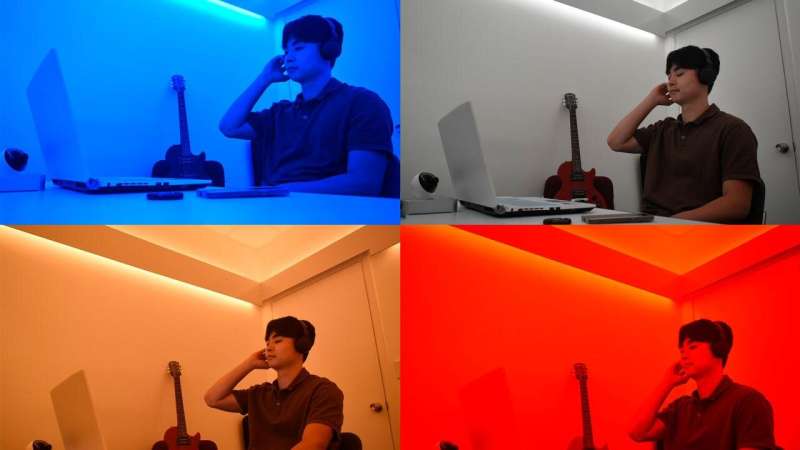
Research conducted by a multidisciplinary team from three universities highlights the significant role that indoor lighting plays in enhancing the experience of listening to music. Published on December 9, 2025, in the journal Lighting Design + Application, the study suggests that venues and even individual listeners should pay closer attention to their lighting choices to optimize emotional responses to music.
Jae Yong Suk, an associate professor at the University of California, Davis, and director of the California Lighting Technology Center, emphasized that while some performance venues have started using color-changing LED systems, many lack knowledge about which colors effectively shape emotional responses. “Our study provides a clearer direction, allowing lighting choices to be intentional and emotionally supportive rather than just aesthetic,” he stated.
The study’s lead author, Dongwoo (Jason) Yeom, currently a distinguished associate professor at Clemson University, noted that the findings could also enhance well-being in healthcare settings. The research found that lighting conditions significantly influence music perception, which could have implications for mood regulation and recovery for patients in long-term care.
This investigation is particularly notable as few studies have explored the relationship between indoor environments and perceived emotions in music. The researchers focused on how various lighting conditions affected listeners’ emotional experiences while they listened to music categorized as either happy or sad.
Experimental Setup and Findings
Participants in the study were exposed to different lighting conditions while listening to musical excerpts known for eliciting specific emotional responses. The study took place at an Arizona State University facility equipped with 12 LED smart lights. A total of 22 participants were randomly assigned to different lighting settings, which included blue, cool white, red, and warm white lights.
The results were revealing. Happy music garnered the most positive responses under warm white lighting, while blue lighting received the least favorable ratings. Conversely, during the sad music segments, participants rated blue lighting the highest and red lighting the lowest, contrary to expectations based on previous research that suggested blue wavelengths tend to energize listeners.
Interestingly, while cool-white lighting is generally visually acceptable, it was perceived as the least fitting for happy music. This indicates that designers and venue operators should not only prioritize visual comfort but also consider the emotional compatibility of lighting with the music being played.
Implications for Music Venues and Beyond
These findings suggest a potential shift in how music venues, healthcare settings, and even homeowners approach lighting. By aligning lighting with the emotional tone of the music, it may be possible to create more calming, energizing, or emotionally supportive atmospheres. The authors advocate for intentional lighting design that enhances the overall experience of music listening, highlighting its potential to influence mood and emotional well-being.
The implications extend beyond entertainment; they resonate in spaces where emotional health is a priority, such as hospitals or therapy centers. As the study illustrates, the interplay between light and sound can profoundly shape human experience, inviting a reevaluation of how environments are designed to support emotional engagement.
More information on this research can be found in the published study, “How Can Lighting Enhance Your Perceptual Music Listening Experience?” in Lighting Design + Application.

OpenAI, Microsoft Hit with Urgent Lawsuit Tied to Deaths

Urgent Update: 19-Year-Old Shot Dead in Anaheim Police Incident

Homeland Security Secretary Noem Faces Intense Scrutiny Today

Joker Claims Bruce Wayne’s Life in Shocking New Comic Twist

Transform Your Look: Physician-Developed Eyelash Serum Gains Popularity

Architects of AI Named Time’s 2025 Person of the Year

Secretary Noem Faces Tough Questions Over Immigration Policies

Greensboro Science Center Unveils New Features for Winter Wonderlights

Giants Seek Momentum After Quiet Winter Meetings in Florida

Inventor Achieves Breakthrough with 2 Billion FPS Laser Video

Community Unites for 7th Annual Into the Light Walk for Mental Health

Charlie Sheen’s New Romance: ‘Glowing’ with Younger Partner

Dua Lipa Aces GCSE Spanish, Sparks Super Bowl Buzz with Fans

Curium Group, PeptiDream, and PDRadiopharma Launch Key Cancer Trial

Former Mozilla CMO Launches AI-Driven Cannabis Cocktail Brand Fast

Mother Fights to Reunite with Children After Kidnapping in New Drama

Israel Reopens Rafah Crossing After Hostage Remains Returned

R&B Icon D’Angelo Dies at 51, Leaving Lasting Legacy
-
 Science2 months ago
Inventor Achieves Breakthrough with 2 Billion FPS Laser Video
-
 Health2 months ago
Community Unites for 7th Annual Into the Light Walk for Mental Health
-
 Top Stories2 months ago
Charlie Sheen’s New Romance: ‘Glowing’ with Younger Partner
-
 Entertainment2 months ago
Dua Lipa Aces GCSE Spanish, Sparks Super Bowl Buzz with Fans
-
 Health2 months ago
Curium Group, PeptiDream, and PDRadiopharma Launch Key Cancer Trial
-
 Top Stories2 months ago
Former Mozilla CMO Launches AI-Driven Cannabis Cocktail Brand Fast
-
 Entertainment2 months ago
Mother Fights to Reunite with Children After Kidnapping in New Drama
-
 World2 months ago
Israel Reopens Rafah Crossing After Hostage Remains Returned
-
 World2 months ago
R&B Icon D’Angelo Dies at 51, Leaving Lasting Legacy
-

 Business2 months ago
Tyler Technologies Set to Reveal Q3 Earnings on October 22
-

 Health2 months ago
North Carolina’s Biotech Boom: Billions in New Investments
-

 Health2 months ago
YouTube Launches New Mental Health Tools for Teen Users