
Science
University of Chicago Astronomer Donald York Passes Away at 81

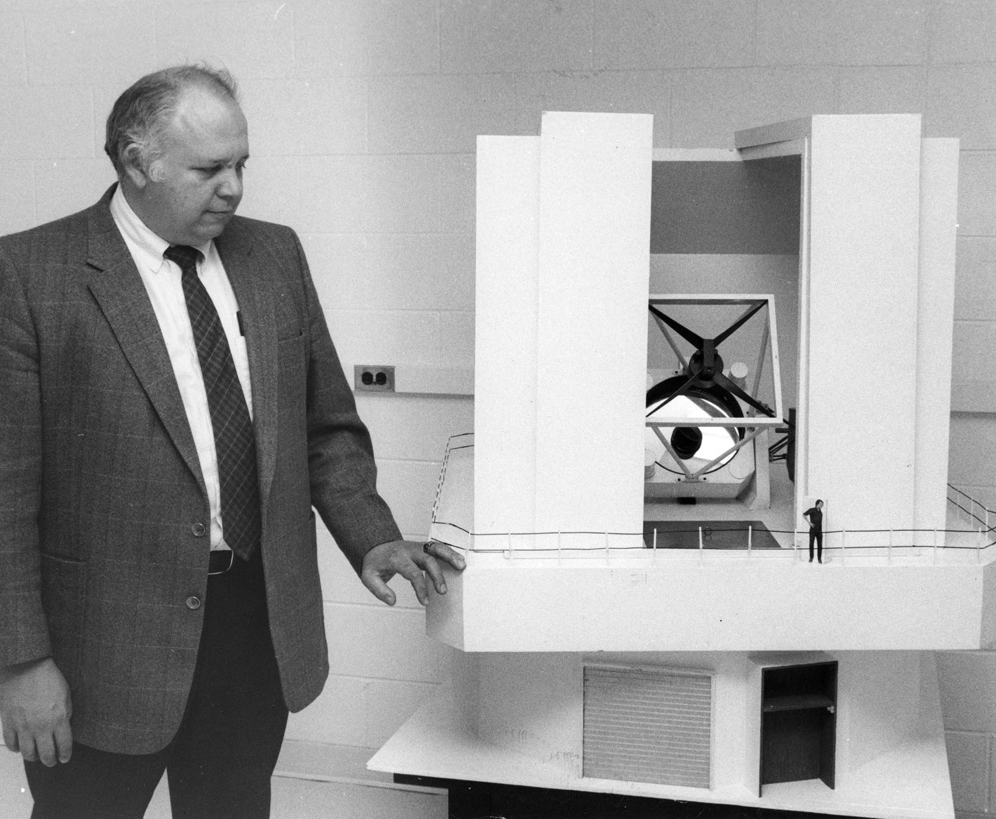
Donald G. York, a prominent astronomer at the University of Chicago and a co-founder of the Sloan Digital Sky Survey, passed away on December 26, 2023, at his home in Ann Arbor, Michigan. He was 81 years old and succumbed to complications from chronic illnesses, as reported by his wife, Anna, with whom he shared nearly six decades of marriage. York’s contributions to astronomy and education have left an indelible mark on both fields.
York played a pivotal role in the creation of the Sloan Digital Sky Survey, which fundamentally changed astronomical research by producing a comprehensive three-dimensional map of the night sky. His vision and leadership were instrumental in developing innovative technologies that allowed astronomers to gather data systematically. He was particularly known for his work at the Apache Point Observatory in New Mexico, where he directed the construction of a modular telescope that could accommodate different instruments and be operated remotely.
The Sloan Digital Sky Survey began its data collection in 1998 and has since generated data that has been cited in over 12,000 scientific papers. This project, named for the Alfred P. Sloan Foundation, has provided insights into various astronomical phenomena, including the existence of black holes at the centers of massive galaxies and the properties of dark matter.
York’s approach to large-scale astronomy collaborations was described by his colleague, Professor Edward “Rocky” Kolb, as adept at “herding the cats” and ensuring that diverse opinions and ideas were harmonized in pursuit of common goals. Kolb highlighted the challenges associated with leading such expansive projects, emphasizing York’s unique ability to maintain focus and cohesion among researchers.
Born in 1944 in Shelbyville, Illinois, York’s journey into astronomy began after he moved to Terre Haute, Indiana, at the age of eight. He graduated from Wiley High School, where he played football, before earning a bachelor’s degree in physics from the Massachusetts Institute of Technology (MIT) in 1966. At MIT, he also played rugby, demonstrating an early inclination towards teamwork and collaboration.
After completing a Ph.D. in astronomy at the University of Chicago in 1971, York began his professional career at Princeton University, where he worked alongside the esteemed astronomer Lyman Spitzer. During this time, he contributed to the NASA satellite known as Copernicus, which was launched in 1972. Significantly, York became the first researcher to detect deuterium in interstellar clouds, a finding that advanced the understanding of dark matter and dark energy.
In 1982, York accepted a tenured position at the University of Chicago, continuing to expand his influence within the field. He was a founding director of the Apache Point Observatory and played a key role in developing the Sloan Digital Sky Survey concept. The project not only transformed data collection in astronomy but also fostered a culture of collaboration that has influenced subsequent research methodologies.
York’s impact extended beyond the realm of astronomy. He co-founded the Chicago Public Schools/University of Chicago Internet Project in 1996, aimed at connecting local public schools to the internet to ensure equitable access to technology. His commitment to public education was evident, as he believed that schools were essential for promoting fairness and opportunity. Colleagues praised him for his dedication to bridging the digital divide.
Throughout his career, York published approximately 600 peer-reviewed papers, amassing more than 100,000 citations. He co-edited the book “The Astronomy Revolution: 400 Years of Exploring the Cosmos” in 2012, further solidifying his legacy in the academic community.
York retired from the University of Chicago around a decade ago, but he remained actively engaged in his interests outside of academia, including camping, hiking, and participating in local church activities. He is survived by his wife, Anna, four children, six grandchildren, and a sister. A memorial service is scheduled for June 13 at the Hyde Park Union Church in Chicago.
In reflecting on his legacy, Anna York remarked on her husband’s vision for astronomy and education, noting how his initiatives have had a lasting impact on both fields. As the scientific community mourns the loss of Donald G. York, his contributions will continue to inspire future generations of astronomers and educators.

Funko’s Price Target Increased to $4.00 as Analysts React

Humboldt Celebrates as ‘One Battle After Another’ Claims Best Picture

GSK Faces Backlash Over Asthma Inhaler Scrapping, Children Suffer

Adorable Sandhill Crane Colt Hugs Mom in The Villages

USA Unveils Star-Spangled Jerseys Ahead of March Friendlies

Newport Plans Colorful Lighting for Fourth Street Bridge

Sandia Scientists Honored for Innovative Career Journeys

Urgent: Charles M. Payment Passes Away at 78, Memorial Details Inside

NFL Free Agency: Key Moves and Player Signings in Week One

Researchers Launch $1.25M Project for Real-Time Hazard Monitoring in Hawaiʻi

Send It South Revives Culture and Community at The Momentary

UK Government Borrowing Hits £20.2 Billion in September Surge

Flipkart Republic Day Sale: iPhone 16 Plus Price Slashed by ₹23,900

Adecco SA Secures Mixed Ratings from Analysts Amid Earnings Update

Researchers Achieve Record 15.1 mA/cm² Hydrogen Production Efficiency

Globant Reveals Key Tech Forces Shaping Business in 2026

Inventor Achieves Breakthrough with 2 Billion FPS Laser Video

Dua Lipa Aces GCSE Spanish, Sparks Super Bowl Buzz with Fans
-
 Science8 months ago
Researchers Launch $1.25M Project for Real-Time Hazard Monitoring in Hawaiʻi
-
 Entertainment7 months ago
Send It South Revives Culture and Community at The Momentary
-
 World9 months ago
UK Government Borrowing Hits £20.2 Billion in September Surge
-
 Business6 months ago
Flipkart Republic Day Sale: iPhone 16 Plus Price Slashed by ₹23,900
-
 Sports8 months ago
Adecco SA Secures Mixed Ratings from Analysts Amid Earnings Update
-
 Top Stories5 months ago
Researchers Achieve Record 15.1 mA/cm² Hydrogen Production Efficiency
-
 Business8 months ago
Globant Reveals Key Tech Forces Shaping Business in 2026
-
 Science10 months ago
Inventor Achieves Breakthrough with 2 Billion FPS Laser Video
-
 Entertainment10 months ago
Dua Lipa Aces GCSE Spanish, Sparks Super Bowl Buzz with Fans
-

 Top Stories10 months ago
Charlie Sheen’s New Romance: ‘Glowing’ with Younger Partner
-

 Top Stories8 months ago
JSerra Names Hardy Nickerson as First Black Football Coach
-

 Health10 months ago
Community Unites for 7th Annual Into the Light Walk for Mental Health