
Science
NASA’s Artemis II Mission Returns Humans to the Moon

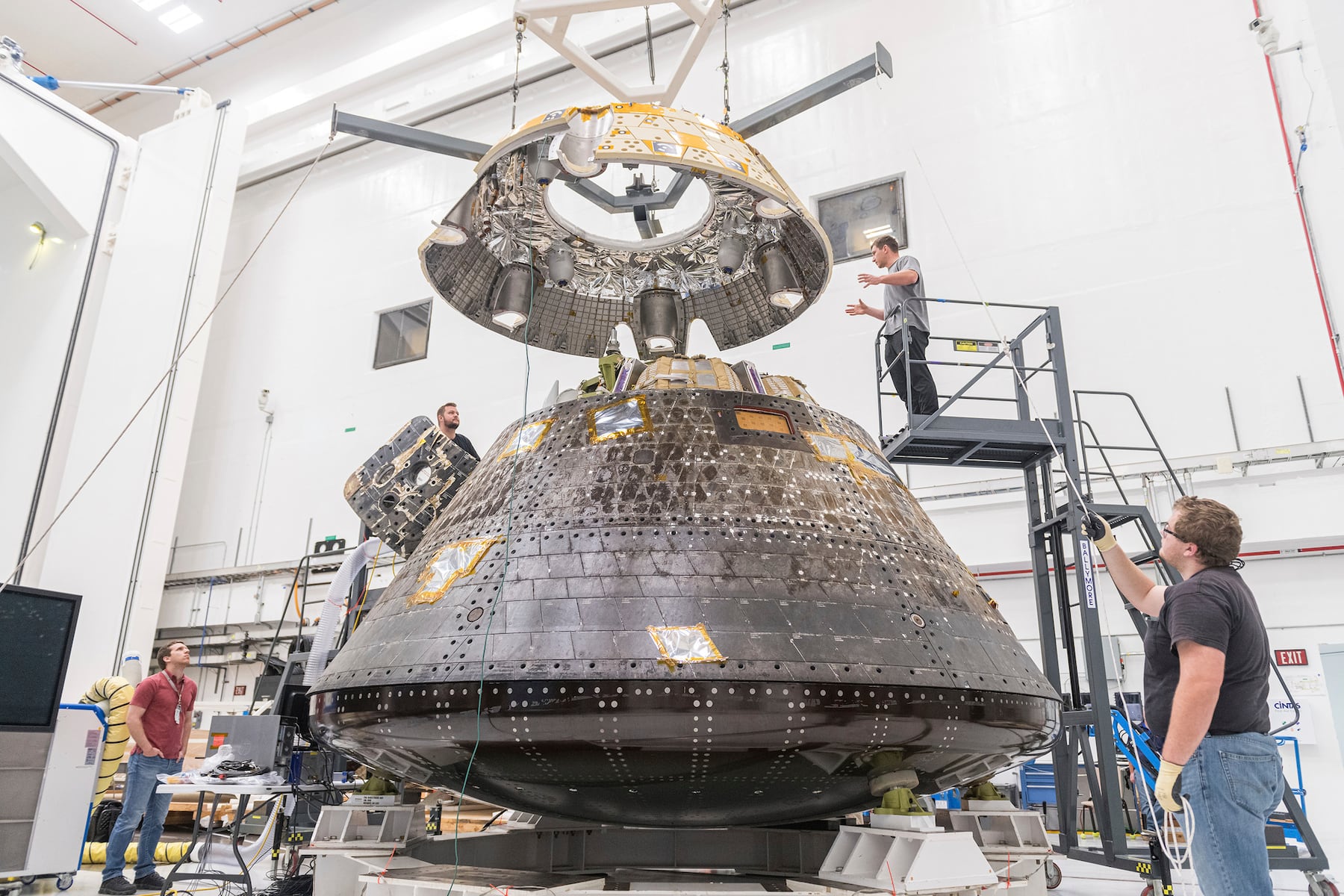
NASA is preparing to send humans back around the moon for the first time in over 50 years. The upcoming Artemis II mission, set to launch from Cape Canaveral, Florida, on April 1, 2024, will carry four astronauts, including three Americans and one Canadian, on a ten-day journey. This mission marks a significant step in NASA’s long-term plans to establish a permanent presence on the moon and further explore the solar system.
The Artemis II mission will build on the success of its predecessor, Artemis I, which was an unmanned mission that successfully circumnavigated the moon in 2022. According to NASA, the crewed mission’s primary objective is to test critical life-support systems that were not part of the earlier flight. Steve Barsi, deputy manager of the European Service Module Integration Office at NASA Glenn Research Center, emphasizes that ensuring the service module’s integration with the crew module is crucial for mission success.
Cleveland’s contribution to the mission is significant, with more than 80 experts from NASA Glenn involved in various aspects. Their responsibilities include overseeing the service module, constructed by the European Space Agency and Airbus, which will support the crew by providing power, propulsion, air, and water during the journey. A critical focus for these engineers has been ensuring that all components are flight-ready, particularly the tanks that supply oxygen, nitrogen, and water for the astronauts’ needs.
The crew module itself is larger than the Apollo living quarters but remains a tight space for the astronauts. Rob Ahlman, a systems engineer at NASA Glenn, has been involved in testing the module to withstand the intense forces experienced during launch and reentry. This includes subjecting it to extreme conditions, such as simulated lightning strikes and rigorous shaking tests at the Neil Armstrong Test Facility in Sandusky, Ohio.
In recent months, the Artemis II launch schedule has faced setbacks. Originally slated for 2024, the mission was postponed to allow for further evaluations of critical systems, including the heat shield that protects the crew during reentry. Issues with fuel lines have also contributed to delays, moving the launch window from February 6 to March 6, then again to April 1. The vehicle was recently rolled back to the Vehicle Assembly Building to address these concerns.
Once launched, the Orion spacecraft will be propelled into space atop the Space Launch System, which includes a powerful main rocket and two boosters. Mission Control at the Johnson Space Center in Houston will monitor the mission closely, with Barsi and other managers overseeing the data received from the spacecraft.
Following Artemis II, NASA plans to advance its lunar exploration with Artemis III, a crewed mission to low-Earth orbit scheduled for 2027, followed by a lunar landing mission, Artemis IV, in 2028. One of the key tasks for the Artemis II astronauts will be to assess potential landing sites on the moon, analyzing geological features such as impact craters and ancient lava flows.
As preparations continue, excitement is building within the NASA community and beyond. Ahlman, who plans to attend the launch with his family, reflects on the significance of the mission. He notes, “This is a really exciting time… it’s not just for Glenn, it’s for NASA, it’s for the U.S., it’s for humanity.” With the Artemis program, NASA aims not only to return to the moon but also to pave the way for future missions to Mars, exploring advanced technologies that could make interplanetary travel feasible.
The Artemis II mission is set to reignite public interest in space exploration and demonstrate the potential for human life beyond Earth, highlighting the collaborative efforts of engineers and scientists working toward a shared goal.

Funko’s Price Target Increased to $4.00 as Analysts React

Humboldt Celebrates as ‘One Battle After Another’ Claims Best Picture

GSK Faces Backlash Over Asthma Inhaler Scrapping, Children Suffer

Adorable Sandhill Crane Colt Hugs Mom in The Villages

USA Unveils Star-Spangled Jerseys Ahead of March Friendlies

Newport Plans Colorful Lighting for Fourth Street Bridge

Sandia Scientists Honored for Innovative Career Journeys

Urgent: Charles M. Payment Passes Away at 78, Memorial Details Inside

NFL Free Agency: Key Moves and Player Signings in Week One

Researchers Launch $1.25M Project for Real-Time Hazard Monitoring in Hawaiʻi

Send It South Revives Culture and Community at The Momentary

UK Government Borrowing Hits £20.2 Billion in September Surge

Flipkart Republic Day Sale: iPhone 16 Plus Price Slashed by ₹23,900

Adecco SA Secures Mixed Ratings from Analysts Amid Earnings Update

Researchers Achieve Record 15.1 mA/cm² Hydrogen Production Efficiency

Globant Reveals Key Tech Forces Shaping Business in 2026

Inventor Achieves Breakthrough with 2 Billion FPS Laser Video

Dua Lipa Aces GCSE Spanish, Sparks Super Bowl Buzz with Fans
-
 Science8 months ago
Researchers Launch $1.25M Project for Real-Time Hazard Monitoring in Hawaiʻi
-
 Entertainment7 months ago
Send It South Revives Culture and Community at The Momentary
-
 World9 months ago
UK Government Borrowing Hits £20.2 Billion in September Surge
-
 Business6 months ago
Flipkart Republic Day Sale: iPhone 16 Plus Price Slashed by ₹23,900
-
 Sports8 months ago
Adecco SA Secures Mixed Ratings from Analysts Amid Earnings Update
-
 Top Stories5 months ago
Researchers Achieve Record 15.1 mA/cm² Hydrogen Production Efficiency
-
 Business8 months ago
Globant Reveals Key Tech Forces Shaping Business in 2026
-
 Science9 months ago
Inventor Achieves Breakthrough with 2 Billion FPS Laser Video
-
 Entertainment10 months ago
Dua Lipa Aces GCSE Spanish, Sparks Super Bowl Buzz with Fans
-

 Top Stories10 months ago
Charlie Sheen’s New Romance: ‘Glowing’ with Younger Partner
-

 Top Stories7 months ago
JSerra Names Hardy Nickerson as First Black Football Coach
-

 Entertainment10 months ago
Olivia Plath Opens Up About Her Marriage Struggles and Divorce