
Health
Groundbreaking CAR-T Therapy Trials Offer Hope for Multiple Sclerosis Patients

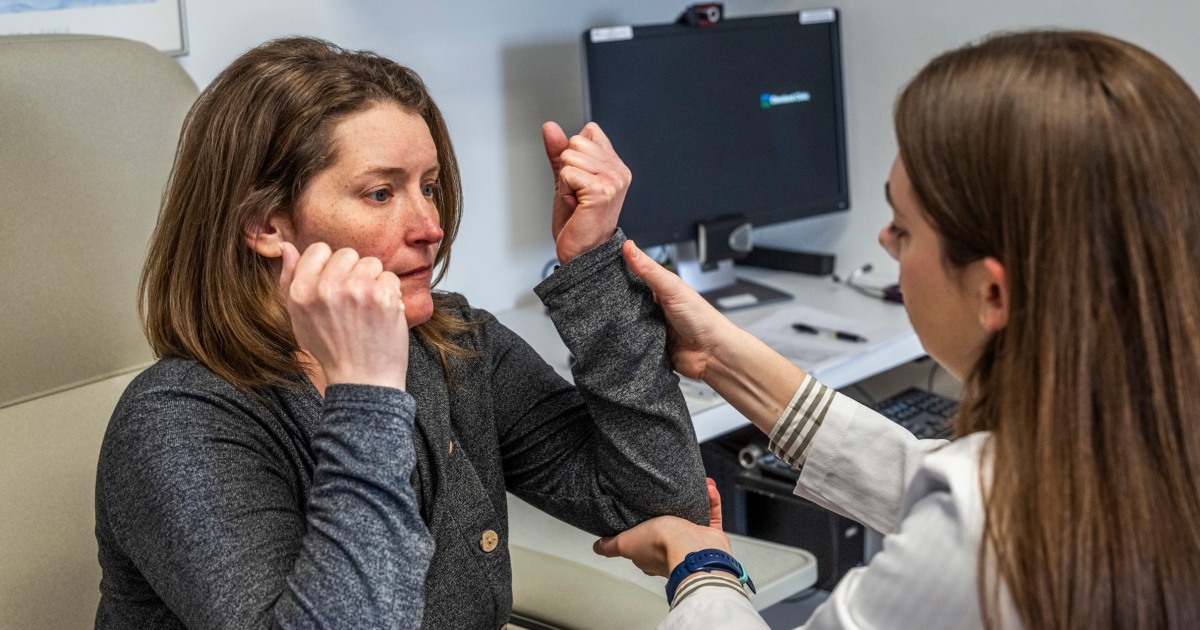
A new clinical trial at the Cleveland Clinic is investigating whether a groundbreaking cancer therapy, known as CAR-T therapy, can provide hope to individuals suffering from multiple sclerosis (MS). Patients like Grace Miller, a 46-year-old from Fishers, Indiana, are participating in early-stage trials, marking a potential shift in treatment options for a condition that currently has no cure.
Miller’s journey with MS began at age 24, when she experienced severe fatigue that was initially misdiagnosed. After years of battling symptoms including vertigo and vision loss, she found herself reliant on a cane by 2021. After enduring 15 years on medications that left her feeling ill, Miller enrolled in the CAR-T therapy trial at the Cleveland Clinic in hopes of a breakthrough.
CAR-T therapy represents a significant advancement in cancer treatment. The process involves extracting a patient’s own T cells, which are then reprogrammed to recognize and attack specific proteins on tumor cells. While the therapy has shown considerable success in treating cancers such as leukemia and lymphoma, researchers are now investigating its potential to target the overactive B cells responsible for MS.
Dr. Jeffrey Cohen, the director of the experimental therapeutics program at the Cleveland Clinic’s Mellen Center for Multiple Sclerosis, expressed optimism about CAR-T’s ability to tackle the B cells that contribute to MS progression. Standard treatments often fail to reach these cells in the brain and central nervous system, but CAR-T cells may have the capability to do so.
“There is already considerable experience with CAR-T in cancer therapy, which gives us a significant advantage,” Cohen stated. Despite the promise, he cautioned that the trials are still in the exploratory phase, and the effectiveness of CAR-T for MS remains uncertain.
The trial, sponsored by Bristol Myers Squibb, has enrolled seven participants, including four with MS and three with myasthenia gravis, another autoimmune disease. Among those with MS, two have progressive forms of the disease, characterized by a gradual decline in neurological function, while the others have the relapsing form, marked by unpredictable symptoms.
Each participant received one infusion of reprogrammed T cells, which required prior chemotherapy to create space for the modified cells. Ten months after her infusion in May 2022, Miller still relies on a cane, but she reports encouraging progress. “I picked up my friend’s 18-month-old for the first time while standing, something I’ve never been able to do before,” she said.
Despite the optimism surrounding CAR-T therapy, experts remain cautious. Dr. Rhonda Voskuhl, director of the UCLA Multiple Sclerosis Program, highlighted her skepticism regarding the therapy’s efficacy, particularly for those with progressive MS. “Current antibody treatments do well, even if they don’t penetrate the blood-brain barrier,” she noted.
Concerns also exist regarding the potential risks associated with CAR-T therapy. One serious side effect is cytokine release syndrome, which can lead to severe inflammatory responses. Additionally, immune effector cell-associated neurotoxicity syndrome (ICANS) poses risks for MS patients, raising questions about the safety of applying cancer treatments to autoimmune disorders.
Dr. Enrique Alvarez, medical director of the Rocky Mountain MS Center in Colorado, emphasized the need for therapies that not only target inflammation but also repair neurological damage. “We need solutions that can grow new neural pathways and reverse cell damage,” he said, pointing out that stem cell therapies could hold promise in this area.
Cohen acknowledged the limitations of CAR-T therapy in repairing existing damage caused by MS, emphasizing that while it may not directly heal, it could inhibit further deterioration. “If we can slow the damage caused by MS, the body may have a chance to catch up on its own repair processes,” he explained.
Ongoing trials across various institutions, including Stanford University and Mass General, will contribute to a broader understanding of CAR-T therapy’s efficacy and safety for MS patients. Even if the therapy does not yield the expected results, the knowledge gained from these trials could significantly advance the understanding of the immune system’s role in MS.
As the research unfolds, the hope remains that innovative treatments like CAR-T therapy could provide new avenues for managing multiple sclerosis, a condition that continues to challenge patients and medical professionals alike.

Funko’s Price Target Increased to $4.00 as Analysts React

Humboldt Celebrates as ‘One Battle After Another’ Claims Best Picture

GSK Faces Backlash Over Asthma Inhaler Scrapping, Children Suffer

Adorable Sandhill Crane Colt Hugs Mom in The Villages

USA Unveils Star-Spangled Jerseys Ahead of March Friendlies

Newport Plans Colorful Lighting for Fourth Street Bridge

Sandia Scientists Honored for Innovative Career Journeys

Urgent: Charles M. Payment Passes Away at 78, Memorial Details Inside

NFL Free Agency: Key Moves and Player Signings in Week One

Researchers Launch $1.25M Project for Real-Time Hazard Monitoring in Hawaiʻi

Send It South Revives Culture and Community at The Momentary

UK Government Borrowing Hits £20.2 Billion in September Surge

Flipkart Republic Day Sale: iPhone 16 Plus Price Slashed by ₹23,900

Adecco SA Secures Mixed Ratings from Analysts Amid Earnings Update

Researchers Achieve Record 15.1 mA/cm² Hydrogen Production Efficiency

Globant Reveals Key Tech Forces Shaping Business in 2026

Inventor Achieves Breakthrough with 2 Billion FPS Laser Video

Dua Lipa Aces GCSE Spanish, Sparks Super Bowl Buzz with Fans
-
 Science8 months ago
Researchers Launch $1.25M Project for Real-Time Hazard Monitoring in Hawaiʻi
-
 Entertainment7 months ago
Send It South Revives Culture and Community at The Momentary
-
 World9 months ago
UK Government Borrowing Hits £20.2 Billion in September Surge
-
 Business6 months ago
Flipkart Republic Day Sale: iPhone 16 Plus Price Slashed by ₹23,900
-
 Sports8 months ago
Adecco SA Secures Mixed Ratings from Analysts Amid Earnings Update
-
 Top Stories5 months ago
Researchers Achieve Record 15.1 mA/cm² Hydrogen Production Efficiency
-
 Business8 months ago
Globant Reveals Key Tech Forces Shaping Business in 2026
-
 Science10 months ago
Inventor Achieves Breakthrough with 2 Billion FPS Laser Video
-
 Entertainment10 months ago
Dua Lipa Aces GCSE Spanish, Sparks Super Bowl Buzz with Fans
-

 Top Stories10 months ago
Charlie Sheen’s New Romance: ‘Glowing’ with Younger Partner
-

 Top Stories8 months ago
JSerra Names Hardy Nickerson as First Black Football Coach
-

 Health10 months ago
Community Unites for 7th Annual Into the Light Walk for Mental Health