
Science
States Push New Science Initiatives Amid Federal Funding Uncertainty

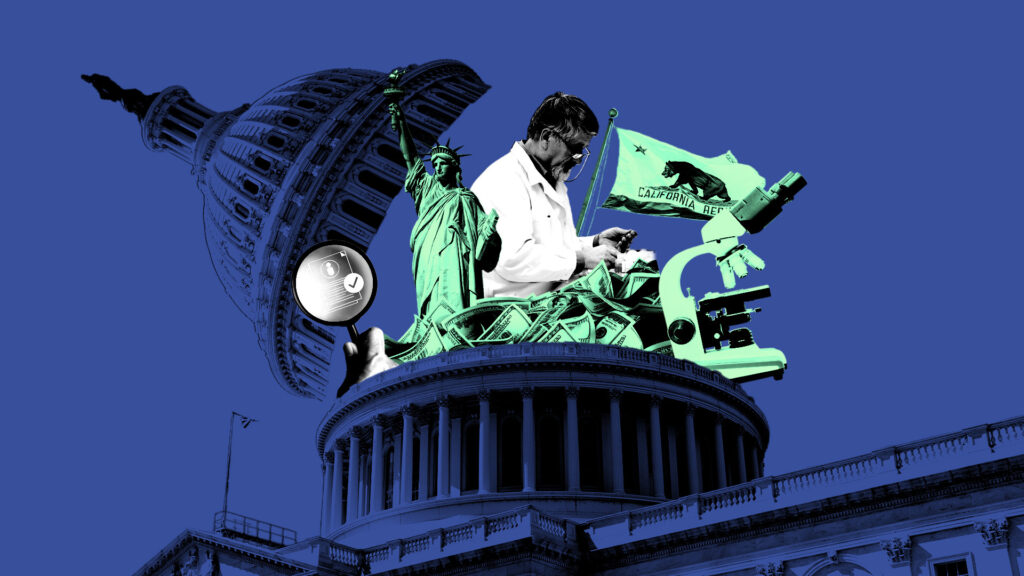
As uncertainty surrounding federal research funding increases, states like Massachusetts are exploring new initiatives to bolster scientific research. The ongoing debate emphasizes the need for alternative funding sources for institutions such as UMass Chan Medical School, which is grappling with the effects of halted and terminated grants following shifts in federal policy.
Despite a nominal 1.6% decrease in National Institutes of Health (NIH) RO1 awards for the 2025 fiscal year compared to 2024, the reality is more complex. The reported funding is buoyed by the NIH’s transition to multiyear funding, where budgets for awards are allocated in their entirety during the first year. Consequently, UMass Chan has access to only $75.4 million of the $88.6 million available this year. Michael Collins, the chancellor of UMass Chan, expressed concern over the unpredictable nature of federal funding, stating, “One of the issues with federal funding is the uncertainty of when institutions, such as UMass Chan, will receive award money.”
The uncertainty of federal grants has prompted UMass and other universities to seek support elsewhere. Although private philanthropy and corporate funding have been considered, these avenues have not yet made a substantial impact. Collins and Nobel laureate Victor Ambros are advocating for state governments to play a more significant role in stabilizing the funding ecosystem. In response to these challenges, Massachusetts is contemplating the Discovery, Research, and Innovation for a Vibrant Economy (DRIVE) initiative, which aims to allocate $400 million for state universities.
Ambros highlighted the urgency of the DRIVE initiative, emphasizing that institutions like UMass Chan have faced significant challenges due to budget constraints. Last year, the school was forced to furlough or lay off 200 employees and reduced its Ph.D. class size from 73 to 13 students this academic year. Collins hopes state funding will provide critical support, allowing faculty to bridge gaps while awaiting NIH approval for grants.
Currently, UMass Chan has 40 grant proposals pending with the NIH, collectively valued at $152 million—but the timeline for funding remains unclear. Historically, state and local governments have had a minimal role in research funding, contributing just 0.7% of spending on research and development in 2023. Ambros believes that state funding could significantly improve morale and transform the narrative surrounding research funding.
Similar proposals are emerging in other states, including New York, Texas, Pennsylvania, and California. Advocates argue that diversifying funding sources can enhance universities’ resilience against federal funding fluctuations. Rory Cooper, assistant vice chancellor for research at the University of Pittsburgh, noted that a balanced funding mix involving state and federal governments, foundations, and industry is essential for future stability.
Efforts to build support for state funding of scientific research may also help raise public awareness of the value of such spending. While advocates for federal funding often emphasize potential medical breakthroughs, state governments may focus more pragmatically on job creation and local economic benefits. Ivy Estabrooke, a policy expert at RTI International, pointed out that localized funding allows states to address issues specific to their communities, such as air and water quality.
Nevertheless, some experts caution that increased reliance on state funding could undermine federal priorities. Kenneth Evans, a scholar at Rice University, noted that there is a growing narrative suggesting that philanthropy can fill the gaps left by federal funding, which he believes is dangerous. He referenced statements from Michael Kratsios, head of the White House Office of Science and Technology Policy, that advocate for a more decentralized approach to science funding.
Proposals to shift funding away from federal agencies are reflected in Project 2025, a policy framework for a potential second Trump administration that advocates for allocating NIH resources as block grants to states. Shruti Naik, an immunologist and founder of New York Cures, strongly opposes such a shift, asserting that federal funding is irreplaceable for setting national priorities and maintaining the United States’ competitive edge in biomedicine.
Concerns have also been voiced by states historically reliant on federal research funding. States like New York, which received $2.8 billion in NIH funding, worry that changes could jeopardize their status as top recipients. Jonathan Teyan, CEO of the Associated Medical Schools of New York, described shifts in funding strategies as concerning, particularly if they are influenced by political considerations rather than merit.
In Texas, a history of successful state-funded research initiatives continues to grow. In November, Texas approved $3 billion over ten years to support dementia research, building on the success of the Cancer Prevention Research Institute of Texas (CPRIT), which has attracted significant talent and funding since its inception in 2009. Experts believe that state funding can enhance recruitment efforts for top researchers, as demonstrated by John Quackenbush, a computational biologist currently facing funding challenges at Harvard University.
Quackenbush has decided to relocate to Texas, drawn by the stability of the funding offered by CPRIT, which will provide $8 million over five years. He expressed frustration over the precarious nature of funding at his current institution and emphasized the importance of reliable financial support for research innovation.
California also serves as a model for state-funded research initiatives, particularly through the California Institute for Regenerative Medicine (CIRM), which emerged in response to federal restrictions on stem cell research during the George W. Bush administration. John Thomas, president and CEO of CIRM, believes that California’s willingness to fund basic research, despite uncertain returns, showcases the state’s commitment to advancing science.
As states navigate the complexities of research funding, the potential for innovative initiatives like DRIVE may offer a pathway to support scientific advancement and foster resilience in the face of federal uncertainty.

Funko’s Price Target Increased to $4.00 as Analysts React

Humboldt Celebrates as ‘One Battle After Another’ Claims Best Picture

GSK Faces Backlash Over Asthma Inhaler Scrapping, Children Suffer

Adorable Sandhill Crane Colt Hugs Mom in The Villages

USA Unveils Star-Spangled Jerseys Ahead of March Friendlies

Newport Plans Colorful Lighting for Fourth Street Bridge

Sandia Scientists Honored for Innovative Career Journeys

Urgent: Charles M. Payment Passes Away at 78, Memorial Details Inside

NFL Free Agency: Key Moves and Player Signings in Week One

Researchers Launch $1.25M Project for Real-Time Hazard Monitoring in Hawaiʻi

Send It South Revives Culture and Community at The Momentary

UK Government Borrowing Hits £20.2 Billion in September Surge

Flipkart Republic Day Sale: iPhone 16 Plus Price Slashed by ₹23,900

Adecco SA Secures Mixed Ratings from Analysts Amid Earnings Update

Researchers Achieve Record 15.1 mA/cm² Hydrogen Production Efficiency

Globant Reveals Key Tech Forces Shaping Business in 2026

Inventor Achieves Breakthrough with 2 Billion FPS Laser Video

Dua Lipa Aces GCSE Spanish, Sparks Super Bowl Buzz with Fans
-
 Science8 months ago
Researchers Launch $1.25M Project for Real-Time Hazard Monitoring in Hawaiʻi
-
 Entertainment7 months ago
Send It South Revives Culture and Community at The Momentary
-
 World9 months ago
UK Government Borrowing Hits £20.2 Billion in September Surge
-
 Business6 months ago
Flipkart Republic Day Sale: iPhone 16 Plus Price Slashed by ₹23,900
-
 Sports7 months ago
Adecco SA Secures Mixed Ratings from Analysts Amid Earnings Update
-
 Top Stories5 months ago
Researchers Achieve Record 15.1 mA/cm² Hydrogen Production Efficiency
-
 Business8 months ago
Globant Reveals Key Tech Forces Shaping Business in 2026
-
 Science9 months ago
Inventor Achieves Breakthrough with 2 Billion FPS Laser Video
-
 Entertainment10 months ago
Dua Lipa Aces GCSE Spanish, Sparks Super Bowl Buzz with Fans
-

 Top Stories10 months ago
Charlie Sheen’s New Romance: ‘Glowing’ with Younger Partner
-
 Top Stories7 months ago
JSerra Names Hardy Nickerson as First Black Football Coach
-

 Health10 months ago
Community Unites for 7th Annual Into the Light Walk for Mental Health