
Politics
Chicago Immigrant Protesters Face Legal Battles After Arrests

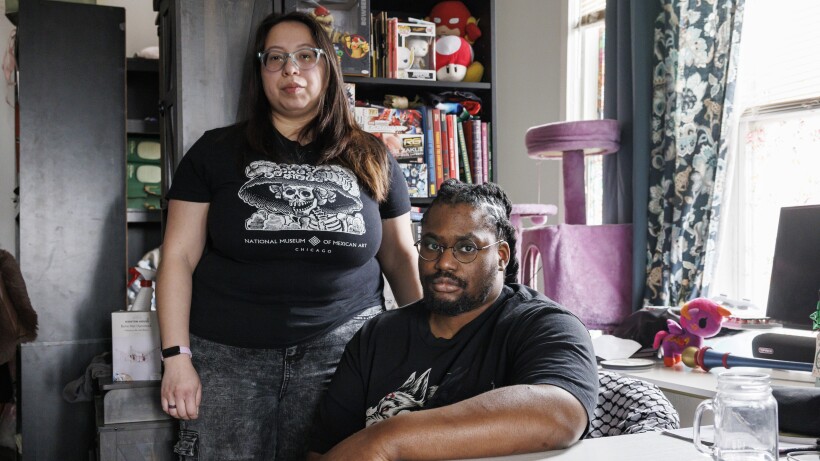
Protests against U.S. immigration enforcement have taken a toll on activists in Chicago, with many facing legal challenges after their arrests. Ray Collins and Jocelyne Robledo were arrested on September 27, 2025, outside an immigration processing center in Broadview amidst a crackdown on undocumented immigrants initiated by former President Donald Trump. Although the couple’s charges were ultimately dropped, the fallout from their arrests has left lasting implications on their lives and reputations.
Collins and Robledo’s arrest occurred shortly after Trump intensified deportation efforts in the Chicago area. They were initially labeled by authorities as “armed rioters.” However, a grand jury later refused to indict them, leading to the collapse of the prosecution against them and several others involved in the protests. Despite this legal victory, Collins expressed concern over the stigma associated with his arrest, stating, “I was arrested for a felony,” and acknowledged the embarrassment that comes with such public scrutiny.
The implications of these arrests extend beyond individual reputations. Since the launch of Operation Midway Blitz, prosecutions related to non-immigration crimes have dropped significantly at the Dirksen Federal Courthouse. Out of 32 known defendants, cases against 17 have already disintegrated. Collins and Robledo are part of this trend, with their cases serving as a reflection of the broader challenges faced by protesters.
Legal and Personal Costs of Protests
While the legal outcomes may appear favorable, the process itself has proven intimidating. Those involved in these cases faced the threat of imprisonment, damaging media coverage, and restrictions on their freedoms. The 17 defendants collectively spent approximately 150 days in federal custody. For example, Juan Espinoza Martinez has remained in detention for over 35 days following his acquittal on unrelated charges.
The consequences of these legal battles are not uniform. Jackie Guataquira, whose misdemeanor case was recently dismissed, noted that while she did not serve time, the prosecution restricted her ability to visit family in Mexico. She remarked, “They want to come for people at every single level,” highlighting the pervasive nature of the government’s efforts to intimidate protesters.
Legal experts have remarked on the chilling effect these prosecutions have on public dissent. Laurie Levenson, a professor at Loyola Law School, pointed out that even unsuccessful prosecutions can have significant consequences. “Your life gets turned upside down when you’re charged with a federal crime,” she said, emphasizing the damage to one’s reputation that often persists long after charges are dismissed.
Challenges for the Justice System
The Justice Department, under Trump’s administration, has faced increased scrutiny following a series of high-profile failures in immigration-related prosecutions. In Chicago, the U.S. Attorney’s office is currently grappling with a conviction rate of approximately 47% for cases linked to the Operation Midway Blitz. U.S. Attorney Andrew Boutros acknowledged that many of these cases were initiated as “reactive arrests” and indicated that some were more appropriate for state court.
Boutros stated, “Our grace should not be confused as a reflection of the strength of any particular case,” underscoring the complexities involved in such prosecutions. He emphasized that the role of prosecutors is to seek justice rather than simply to secure convictions.
The fallout from failed prosecutions raises questions about the credibility of the justice system. Levenson remarked that the government’s aggressive stance could undermine public confidence, stating, “What really troubles me is there is real crime out there. But if you’re busy spending your time, money, and energy on cases where, ultimately, they will be or should be dropped, then you’re not protecting society.”
As the legal battles continue for many involved in the protests, the implications extend beyond the courtroom, affecting lives, livelihoods, and the broader perception of the justice system in the United States. The stories of Collins, Robledo, and others serve as poignant reminders of the risks faced by those who challenge the status quo, illustrating the personal and societal costs of such activism.

Funko’s Price Target Increased to $4.00 as Analysts React

Humboldt Celebrates as ‘One Battle After Another’ Claims Best Picture

GSK Faces Backlash Over Asthma Inhaler Scrapping, Children Suffer

Adorable Sandhill Crane Colt Hugs Mom in The Villages

USA Unveils Star-Spangled Jerseys Ahead of March Friendlies

Newport Plans Colorful Lighting for Fourth Street Bridge

Sandia Scientists Honored for Innovative Career Journeys

Urgent: Charles M. Payment Passes Away at 78, Memorial Details Inside

NFL Free Agency: Key Moves and Player Signings in Week One

Researchers Launch $1.25M Project for Real-Time Hazard Monitoring in Hawaiʻi

Send It South Revives Culture and Community at The Momentary

UK Government Borrowing Hits £20.2 Billion in September Surge

Flipkart Republic Day Sale: iPhone 16 Plus Price Slashed by ₹23,900

Adecco SA Secures Mixed Ratings from Analysts Amid Earnings Update

Researchers Achieve Record 15.1 mA/cm² Hydrogen Production Efficiency

Globant Reveals Key Tech Forces Shaping Business in 2026

Inventor Achieves Breakthrough with 2 Billion FPS Laser Video

Dua Lipa Aces GCSE Spanish, Sparks Super Bowl Buzz with Fans
-
 Science8 months ago
Researchers Launch $1.25M Project for Real-Time Hazard Monitoring in Hawaiʻi
-
 Entertainment7 months ago
Send It South Revives Culture and Community at The Momentary
-
 World10 months ago
UK Government Borrowing Hits £20.2 Billion in September Surge
-
 Business6 months ago
Flipkart Republic Day Sale: iPhone 16 Plus Price Slashed by ₹23,900
-
 Sports8 months ago
Adecco SA Secures Mixed Ratings from Analysts Amid Earnings Update
-
 Top Stories5 months ago
Researchers Achieve Record 15.1 mA/cm² Hydrogen Production Efficiency
-
 Business8 months ago
Globant Reveals Key Tech Forces Shaping Business in 2026
-
 Science10 months ago
Inventor Achieves Breakthrough with 2 Billion FPS Laser Video
-
 Entertainment10 months ago
Dua Lipa Aces GCSE Spanish, Sparks Super Bowl Buzz with Fans
-

 Top Stories10 months ago
Charlie Sheen’s New Romance: ‘Glowing’ with Younger Partner
-

 Top Stories8 months ago
JSerra Names Hardy Nickerson as First Black Football Coach
-

 Health10 months ago
Community Unites for 7th Annual Into the Light Walk for Mental Health