
Top Stories
Kurdish Forces Prepare to Challenge Tehran Amid Ongoing Conflict

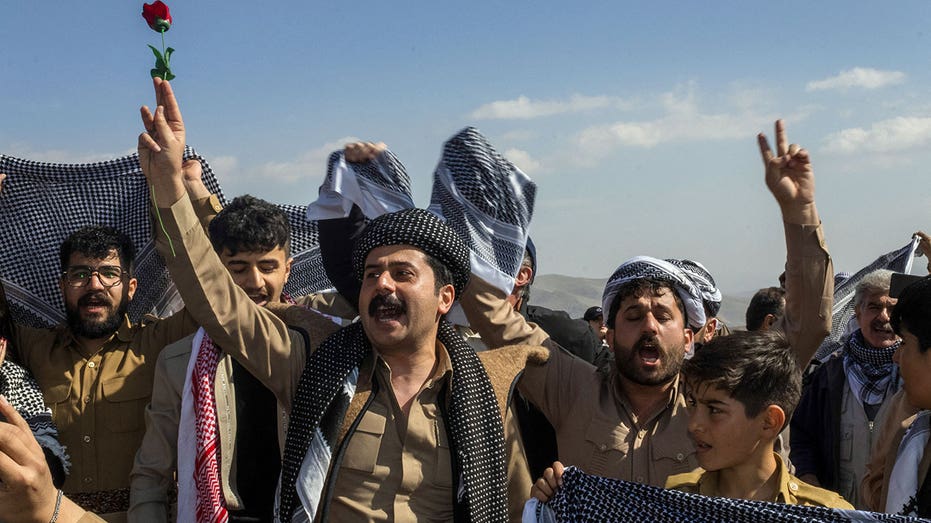
Iranian Kurdish opposition groups are positioning themselves for potential action against Tehran, although they have decided to hold off on a ground offensive for the time being. According to Khalid Azizi, spokesperson for the Democratic Party of Iranian Kurdistan (KDPI), the developments surrounding the ongoing conflict involving the United States and Israel shape their strategy.
In an exclusive interview, Azizi stated that Kurdish forces are closely monitoring the situation but currently lack plans to initiate a military strike. He noted that they are assessing the war’s evolution, which has implications for their next steps. Reports indicate discussions between U.S. officials and Kurdish leaders, yet Azizi refrained from confirming specific engagements, including any conversations with former President Donald Trump regarding Kurdish participation in pressuring Iran.
Azizi’s experience with Iranian military aggression is personal and traumatic. In 2018, the Islamic Revolutionary Guard Corps targeted the KDPI’s headquarters in Koy Sanjaq, Iraq, resulting in the deaths of at least 18 individuals and injuries to many others. “We have been targeted by the Islamic Republic,” Azizi recounted. “The first Iranian missile was sent to my headquarters, and I was personally injured in that attack.” These past confrontations underscore the stakes involved in any future military action.
Despite the inherent risks, Azizi emphasized the resilience of Kurdish forces. “The Iranian Kurdish resistance movement is actually very strong because we have been on the ground since the Iranian revolution,” he stated. Currently, Kurdish representatives are in Washington, D.C., engaging with policymakers to discuss the implications of the conflict in Iran and the potential role of Kurdish groups.
While Kurdish forces are organized and prepared, Azizi clarified that they do not intend to cross into Iranian territory just yet. “It’s very easy to start a war,” he noted, “but it will be more complicated how to end this war.” He expressed that the focus remains on understanding the broader conflict before making any definitive moves.
The KDPI is one of the longstanding Kurdish opposition movements, actively resisting the Islamic Republic since the 1979 Iranian Revolution. In recent developments, Kurdish political factions have formed a new alliance called the Coalition of Political Forces of Iranian Kurdistan. This coalition aims to unify various Kurdish parties that oppose Tehran, a significant step toward coordinated political strategy.
Azizi pointed out that the future of Iran hinges not only on external pressures but also on an internal uprising. “If you look at the goal of the United States and Israel in this war, they have been targeting the Iranian military, security, and political institutions,” he explained. While Iran has been weakened to some extent, the regime remains intact due to a lack of popular uprising and viable alternatives.
He urged Western governments to support Iranian opposition groups in their political coordination, highlighting the multi-ethnic nature of Iran. “The path and the roadmap for rebuilding Iran must be based on the participation of all ethnic groups,” Azizi said. This perspective is critical, as a comprehensive approach may foster long-term stability in the region.
As tensions escalate, Kurdish fighters remain vigilant but cautious. “We have the ability and we have the capacity,” Azizi concluded. “But it is not easy right now for us to make any decision regarding entering Iranian Kurdistan.” The situation continues to unfold, and the Kurdish forces are prepared to adapt as necessary.

Funko’s Price Target Increased to $4.00 as Analysts React

Humboldt Celebrates as ‘One Battle After Another’ Claims Best Picture

GSK Faces Backlash Over Asthma Inhaler Scrapping, Children Suffer

Adorable Sandhill Crane Colt Hugs Mom in The Villages

USA Unveils Star-Spangled Jerseys Ahead of March Friendlies

Newport Plans Colorful Lighting for Fourth Street Bridge

Sandia Scientists Honored for Innovative Career Journeys

Urgent: Charles M. Payment Passes Away at 78, Memorial Details Inside

NFL Free Agency: Key Moves and Player Signings in Week One

Researchers Launch $1.25M Project for Real-Time Hazard Monitoring in Hawaiʻi

Send It South Revives Culture and Community at The Momentary

UK Government Borrowing Hits £20.2 Billion in September Surge

Flipkart Republic Day Sale: iPhone 16 Plus Price Slashed by ₹23,900

Adecco SA Secures Mixed Ratings from Analysts Amid Earnings Update

Researchers Achieve Record 15.1 mA/cm² Hydrogen Production Efficiency

Globant Reveals Key Tech Forces Shaping Business in 2026

Dua Lipa Aces GCSE Spanish, Sparks Super Bowl Buzz with Fans

Inventor Achieves Breakthrough with 2 Billion FPS Laser Video
-
 Science8 months ago
Researchers Launch $1.25M Project for Real-Time Hazard Monitoring in Hawaiʻi
-
 Entertainment7 months ago
Send It South Revives Culture and Community at The Momentary
-
 World10 months ago
UK Government Borrowing Hits £20.2 Billion in September Surge
-
 Business6 months ago
Flipkart Republic Day Sale: iPhone 16 Plus Price Slashed by ₹23,900
-
 Sports8 months ago
Adecco SA Secures Mixed Ratings from Analysts Amid Earnings Update
-
 Top Stories5 months ago
Researchers Achieve Record 15.1 mA/cm² Hydrogen Production Efficiency
-
 Business8 months ago
Globant Reveals Key Tech Forces Shaping Business in 2026
-
 Entertainment10 months ago
Dua Lipa Aces GCSE Spanish, Sparks Super Bowl Buzz with Fans
-
 Science10 months ago
Inventor Achieves Breakthrough with 2 Billion FPS Laser Video
-

 Top Stories10 months ago
Charlie Sheen’s New Romance: ‘Glowing’ with Younger Partner
-

 Top Stories8 months ago
JSerra Names Hardy Nickerson as First Black Football Coach
-

 Health10 months ago
Community Unites for 7th Annual Into the Light Walk for Mental Health