
Top Stories
Korean Researchers Unveil 4D Printing Tech Using Waste Sulfur

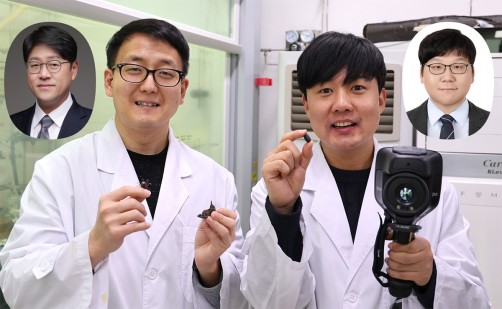
URGENT UPDATE: A groundbreaking breakthrough in 4D printing has just been announced by a research team from Korea, utilizing waste sulfur from petroleum refining to create self-actuating soft robots. This innovative technology, developed by Dr. Dong-Gyun Kim of the Korea Research Institute of Chemical Technology (KRICT), promises to revolutionize robotics and sustainability.
The team, including experts from Hanyang University and Sejong University, has engineered a method to turn industrial sulfur waste into recyclable structures that can respond to heat, light, and magnetic fields. This is crucial as global sulfur production reached approximately 85 million tons in 2024, with significant waste generated during petroleum refining processes, as outlined in the Mineral Commodity Summaries 2025 by the United States Geological Survey (USGS).
The implications of this technology are immense. By transforming a simple industrial by-product into a valuable resource, researchers are addressing critical environmental challenges while paving the way for advanced robotics. The newly developed “sulfur plastics” have unique properties, such as the ability to transmit infrared light, making them ideal for applications like infrared camera lenses and water purification systems.
Despite their advantages, sulfur plastics faced challenges in 3D printing due to low flowability. The research team overcame this by creating a loosely cross-linked sulfur polymer network, allowing for the fabrication of complex 4D structures that can autonomously reshape in response to external stimuli. For example, a mere eight seconds of exposure to a near-infrared laser triggers a chemical welding process that connects printed components without adhesives—similar to assembling LEGO blocks.
Moreover, by integrating 20% magnetic particles, the team has produced soft robots smaller than 1 cm that operate autonomously without any external power. These robots can perform intricate movements by responding to external magnetic fields, showcasing the versatility of this innovative technology.
In a remarkable move towards sustainability, the research also reveals that these 4D printed structures can be melted down and fully reused, creating a 100% recycling loop. Dr. Dong-Gyun Kim stated, “This study represents the first example of upcycling industrial sulfur waste into advanced robotic materials. Smart materials that can move autonomously and be recycled are expected to become key drivers of future soft robotics and automation technologies.”
The findings of this transformative research have been published in the prestigious journal Advanced Materials, highlighting the potential for a new era in robotic technology and environmental conservation.
As the world grapples with sustainability challenges, this innovative approach not only promises to enhance automation but also sets a precedent for how waste materials can be repurposed into valuable technologies. Watch for further updates on this developing story as KRICT continues to lead the way in chemical technologies that benefit the planet.
For more details, visit the official KRICT website at https://www.krict.re.kr/eng/. The research received support from the KRICT core research program, the Ministry of Science and ICT of Korea, and the U.S. Army International Technology Center.

Funko’s Price Target Increased to $4.00 as Analysts React

Humboldt Celebrates as ‘One Battle After Another’ Claims Best Picture

GSK Faces Backlash Over Asthma Inhaler Scrapping, Children Suffer

Adorable Sandhill Crane Colt Hugs Mom in The Villages

USA Unveils Star-Spangled Jerseys Ahead of March Friendlies

Newport Plans Colorful Lighting for Fourth Street Bridge

Sandia Scientists Honored for Innovative Career Journeys

Urgent: Charles M. Payment Passes Away at 78, Memorial Details Inside

NFL Free Agency: Key Moves and Player Signings in Week One

Researchers Launch $1.25M Project for Real-Time Hazard Monitoring in Hawaiʻi

UK Government Borrowing Hits £20.2 Billion in September Surge

Flipkart Republic Day Sale: iPhone 16 Plus Price Slashed by ₹23,900

Inventor Achieves Breakthrough with 2 Billion FPS Laser Video

Dua Lipa Aces GCSE Spanish, Sparks Super Bowl Buzz with Fans

Charlie Sheen’s New Romance: ‘Glowing’ with Younger Partner

Community Unites for 7th Annual Into the Light Walk for Mental Health

Mother Fights to Reunite with Children After Kidnapping in New Drama

Olivia Plath Opens Up About Her Marriage Struggles and Divorce
-
 Science4 months ago
Researchers Launch $1.25M Project for Real-Time Hazard Monitoring in Hawaiʻi
-
 World6 months ago
UK Government Borrowing Hits £20.2 Billion in September Surge
-
 Business3 months ago
Flipkart Republic Day Sale: iPhone 16 Plus Price Slashed by ₹23,900
-
 Science6 months ago
Inventor Achieves Breakthrough with 2 Billion FPS Laser Video
-
 Entertainment6 months ago
Dua Lipa Aces GCSE Spanish, Sparks Super Bowl Buzz with Fans
-
 Top Stories6 months ago
Charlie Sheen’s New Romance: ‘Glowing’ with Younger Partner
-
 Health6 months ago
Community Unites for 7th Annual Into the Light Walk for Mental Health
-
 Entertainment6 months ago
Mother Fights to Reunite with Children After Kidnapping in New Drama
-
 Entertainment6 months ago
Olivia Plath Opens Up About Her Marriage Struggles and Divorce
-

 Top Stories5 months ago
T-Mobile Faces Backlash Over New Late Fees, Customers Flee
-
 Science6 months ago
AI Gun Detection System Mistakes Doritos for Weapon, Sparks Outrage
-

 Entertainment6 months ago
Skrilla and Lil Yachty Drop New Track “Rich Sinners” Ahead of Release