
Politics
Pentagon Tightens News Access, Press Faces New Challenges

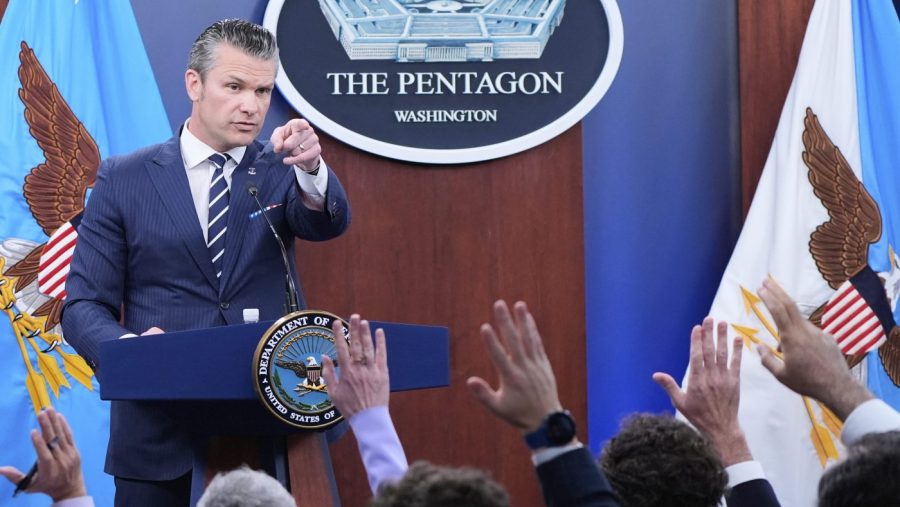
The U.S. Department of Defense has implemented new restrictions on media access within the Pentagon, a move that has raised concerns among journalists and press freedom advocates. According to statements made by Pete Hegseth, a prominent media personality, the government will no longer assist journalists in gathering news, emphasizing that the press must operate independently without government support.
These changes were announced in November 2023, coinciding with ongoing debates about the role of the media in national security and the transparency of government operations. Hegseth’s remarks highlight a significant shift in the relationship between the press and the military, which traditionally has provided some level of cooperation to facilitate reporting.
Implications for Journalists
The new policy means that journalists will need to rely solely on their own resources and investigative skills to gather information about military operations and policies. This could hinder the ability to report comprehensively on issues that affect national security and public interest, as access to key officials and information sources becomes more limited.
Press freedom organizations have expressed alarm over the potential impact of these restrictions. They argue that limiting access to information not only undermines the work of journalists but also poses a threat to public accountability. The Committee to Protect Journalists issued a statement condemning the policy, underscoring that the media plays a crucial role in ensuring government transparency.
Public Response and Future Actions
The announcement has sparked a broader discussion about the importance of press freedom in a democratic society. Many advocates are calling for a reevaluation of the Pentagon’s approach to media relations, urging the government to foster an environment that supports robust journalism rather than stifling it.
As journalists adapt to these new conditions, the public may face a future where access to vital information is constrained. The implications of this policy could resonate for years, impacting not only media organizations but also the citizens they serve. By limiting the press’s ability to report effectively, the government risks reducing public engagement and awareness on critical issues.
In conclusion, the Pentagon’s decision to impose stricter limitations on media access represents a significant moment for press freedom in the United States. As journalists navigate this new terrain, the essential role of an independent press in a democratic society will become even more challenging. The consequences of these changes will likely unfold in the coming months, with ongoing scrutiny from both the media and the public.

Funko’s Price Target Increased to $4.00 as Analysts React

Humboldt Celebrates as ‘One Battle After Another’ Claims Best Picture

GSK Faces Backlash Over Asthma Inhaler Scrapping, Children Suffer

Adorable Sandhill Crane Colt Hugs Mom in The Villages

USA Unveils Star-Spangled Jerseys Ahead of March Friendlies

Newport Plans Colorful Lighting for Fourth Street Bridge

Sandia Scientists Honored for Innovative Career Journeys

Urgent: Charles M. Payment Passes Away at 78, Memorial Details Inside

NFL Free Agency: Key Moves and Player Signings in Week One

Researchers Launch $1.25M Project for Real-Time Hazard Monitoring in Hawaiʻi

Send It South Revives Culture and Community at The Momentary

UK Government Borrowing Hits £20.2 Billion in September Surge

Flipkart Republic Day Sale: iPhone 16 Plus Price Slashed by ₹23,900

Adecco SA Secures Mixed Ratings from Analysts Amid Earnings Update

Researchers Achieve Record 15.1 mA/cm² Hydrogen Production Efficiency

Globant Reveals Key Tech Forces Shaping Business in 2026

Dua Lipa Aces GCSE Spanish, Sparks Super Bowl Buzz with Fans

Inventor Achieves Breakthrough with 2 Billion FPS Laser Video
-
 Science8 months ago
Researchers Launch $1.25M Project for Real-Time Hazard Monitoring in Hawaiʻi
-
 Entertainment7 months ago
Send It South Revives Culture and Community at The Momentary
-
 World9 months ago
UK Government Borrowing Hits £20.2 Billion in September Surge
-
 Business6 months ago
Flipkart Republic Day Sale: iPhone 16 Plus Price Slashed by ₹23,900
-
 Sports8 months ago
Adecco SA Secures Mixed Ratings from Analysts Amid Earnings Update
-
 Top Stories5 months ago
Researchers Achieve Record 15.1 mA/cm² Hydrogen Production Efficiency
-
 Business8 months ago
Globant Reveals Key Tech Forces Shaping Business in 2026
-
 Entertainment10 months ago
Dua Lipa Aces GCSE Spanish, Sparks Super Bowl Buzz with Fans
-
 Science10 months ago
Inventor Achieves Breakthrough with 2 Billion FPS Laser Video
-

 Top Stories10 months ago
Charlie Sheen’s New Romance: ‘Glowing’ with Younger Partner
-

 Top Stories8 months ago
JSerra Names Hardy Nickerson as First Black Football Coach
-

 Health10 months ago
Community Unites for 7th Annual Into the Light Walk for Mental Health