
Business
Algae-Based Bioplastics Market Set for Growth with Key Innovations

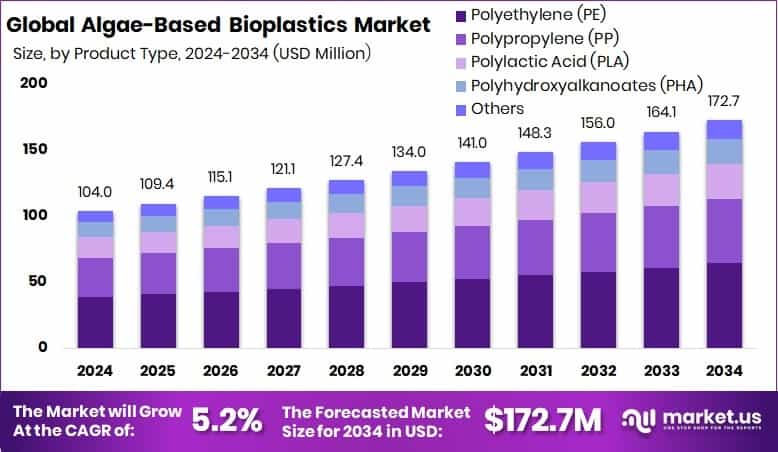
The global market for algae-based bioplastics is on a steady path toward commercial maturity, driven by increasing demand for sustainable materials and robust institutional support. Valued at USD 104 million in 2024, the sector is expected to expand to USD 172.7 million by 2034, advancing at a compound annual growth rate (CAGR) of 5.2%. In particular, the Asia Pacific bioplastics market is witnessing rapid growth, projected to reach USD 47.6 million with a remarkable 45.8% growth rate, largely fueled by packaging needs.
Algae-based bioplastics are derived from fast-growing, low-resource algae biomass, providing biodegradable and compostable alternatives that do not compete with food crops. Their versatility for applications in packaging, films, coatings, and molded goods positions them as a viable substitute for traditional plastics. A significant factor behind this momentum is the ongoing investment from both public and private sectors. For instance, Umaro and Sway Innovation Co. secured a USD 1.5 million grant from the U.S. Department of Energy aimed at converting seaweed waste into bioplastics, while the UK’s CAER received USD 1.2 million to enhance research into algae-based carbon utilization.
Key Players in the Algae-Based Bioplastics Market
Several companies are leading the charge in the algae-based bioplastics arena.
Notpla Limited, based in London, UK, focuses on creating sustainable packaging solutions from seaweed and plants. Their mission is to replace single-use plastics with biodegradable or edible options across various industries. Notpla’s product line includes seaweed-coated food containers, rigid cutlery, and edible energy gel pods. The company has gained recognition for its innovative approach, winning the Earthshot Prize and establishing partnerships with major brands to scale sustainable packaging solutions.
Algix LLC, a U.S.-based sustainable technology firm, specializes in transforming algae biomass into eco-friendly plastics. Their flagship product, the Solaplast bioplastic resin, combines algae biomass with polymers, offering a sustainable alternative to fossil-based plastics. Although specific financial data is limited, Algix is recognized as a key player in algae-derived bioplastic development, collaborating with industry partners to enhance its innovations.
Lifeasible is a biotechnology company dedicated to agricultural science and environmental solutions. It offers services related to plant breeding, genetic analysis, and tissue culture. While specific operational details are not publicly available, Lifeasible positions itself as a comprehensive provider of plant biotechnology services, contributing to advancements in agriculture and ecology.
Evoware focuses on sustainable packaging solutions that aim to mitigate plastic pollution. Their product range includes biodegradable bags, mailers, and containers made from seaweed. Founded with a vision for a greener future, Evoware has reported the replacement of millions of single-use plastics and actively participates in global sustainability trade events.
BZEOS is a blue-tech company emphasizing the use of seaweed to create sustainable packaging alternatives. Its vision centers on transitioning the packaging industry towards seaweed-derived solutions, addressing the pressing issue of plastic pollution.
Eranova transforms green macroalgae, often seen as a pollutant, into bio-based, recyclable, and compostable resins. Their patented technology upcycles macroalgae stranded on beaches into sustainable bioplastic materials, adding environmental value by reducing land use and providing a productive use for waste biomass.
Lastly, Sway Innovation Co. creates home-compostable replacements for single-use plastic packaging from seaweed and plant feedstocks. Their products, including polybags and die-cut bags, support a circular economy and are designed to perform similarly to traditional plastics while being environmentally friendly.
The Future of Algae-Based Bioplastics
The potential of algae-based bioplastics to replace conventional plastics is significant, particularly in packaging, consumer goods, and industrial applications. Their production utilizes rapidly growing natural biomass that does not strain agricultural resources or compete with food systems.
As industries and governments increasingly seek reliable ecological solutions, algae-based bioplastics are emerging as a promising pathway toward a more circular and regenerative materials economy. Ongoing scientific interest and technological developments, coupled with supportive sustainability initiatives, continue to enhance the relevance of these innovative materials.
As this market evolves, key players are likely to play a crucial role in shaping the future landscape of sustainable materials. The ongoing trend toward environmental responsibility demonstrates a collective commitment to reducing plastic waste and fostering a more sustainable future.

Funko’s Price Target Increased to $4.00 as Analysts React

Humboldt Celebrates as ‘One Battle After Another’ Claims Best Picture

GSK Faces Backlash Over Asthma Inhaler Scrapping, Children Suffer

Adorable Sandhill Crane Colt Hugs Mom in The Villages

USA Unveils Star-Spangled Jerseys Ahead of March Friendlies

Newport Plans Colorful Lighting for Fourth Street Bridge

Sandia Scientists Honored for Innovative Career Journeys

Urgent: Charles M. Payment Passes Away at 78, Memorial Details Inside

NFL Free Agency: Key Moves and Player Signings in Week One

Researchers Launch $1.25M Project for Real-Time Hazard Monitoring in Hawaiʻi

Send It South Revives Culture and Community at The Momentary

UK Government Borrowing Hits £20.2 Billion in September Surge

Flipkart Republic Day Sale: iPhone 16 Plus Price Slashed by ₹23,900

Adecco SA Secures Mixed Ratings from Analysts Amid Earnings Update

Researchers Achieve Record 15.1 mA/cm² Hydrogen Production Efficiency

Globant Reveals Key Tech Forces Shaping Business in 2026

Dua Lipa Aces GCSE Spanish, Sparks Super Bowl Buzz with Fans

Inventor Achieves Breakthrough with 2 Billion FPS Laser Video
-
 Science8 months ago
Researchers Launch $1.25M Project for Real-Time Hazard Monitoring in Hawaiʻi
-
 Entertainment7 months ago
Send It South Revives Culture and Community at The Momentary
-
 World9 months ago
UK Government Borrowing Hits £20.2 Billion in September Surge
-
 Business6 months ago
Flipkart Republic Day Sale: iPhone 16 Plus Price Slashed by ₹23,900
-
 Sports8 months ago
Adecco SA Secures Mixed Ratings from Analysts Amid Earnings Update
-
 Top Stories5 months ago
Researchers Achieve Record 15.1 mA/cm² Hydrogen Production Efficiency
-
 Business8 months ago
Globant Reveals Key Tech Forces Shaping Business in 2026
-
 Entertainment10 months ago
Dua Lipa Aces GCSE Spanish, Sparks Super Bowl Buzz with Fans
-
 Science10 months ago
Inventor Achieves Breakthrough with 2 Billion FPS Laser Video
-

 Top Stories10 months ago
Charlie Sheen’s New Romance: ‘Glowing’ with Younger Partner
-

 Top Stories8 months ago
JSerra Names Hardy Nickerson as First Black Football Coach
-

 Health10 months ago
Community Unites for 7th Annual Into the Light Walk for Mental Health