
Business
EU Court Opinion Raises Questions Over Hungary’s EUR 10.2 Billion Funding

The Advocate General of the European Union’s top court has challenged the legitimacy of the European Commission’s decision to release EUR 10.2 billion in cohesion funding to Hungary. According to Advocate General Tamara Ćapeta, the Commission erred by lifting the funding freeze at the end of 2023 without Hungary fully complying with the rule-of-law conditions, particularly concerning reforms aimed at enhancing judicial independence.
These funds are crucial for Hungary, as they are part of the EU’s primary development instruments, typically allocated for infrastructure and regional projects such as transport, utilities, and urban development. The money was transferred in December 2023, following the Commission’s decision to unfreeze it. However, should the court annul this decision, it could create a situation where the foundations for that payment are retroactively invalidated, raising the possibility of reclaiming the funds.
Orbán Balázs, political director to Prime Minister Viktor Orbán, expressed concerns over the Advocate General’s opinion, viewing it not merely as a legal issue but as a political statement. He suggested that Hungary has become a target due to its divergence from what he termed the “European elite’s script.” He believes that when a member state does not adhere to Brussels’ expectations, legal mechanisms are swiftly activated against it.
In response to the Advocate General’s assessment, Prime Minister Viktor Orbán described the notion of repaying the funds as “absurd.” This case reached the Court of Justice of the European Union after the European Parliament filed a lawsuit against the Commission in 2024. Members of the European Parliament (MEPs) contend that the Commission hastily determined Hungary had met the necessary conditions, thereby breaching the EU’s rule-of-law conditionality mechanism.
A significant aspect of the Advocate General’s opinion indicates that once specific reforms are set as prerequisites for funding release, the Commission cannot authorize payments until those reforms are enacted and demonstrated effectively. Consequently, the Advocate General has recommended that the court annul the Commission’s decision from 2023.
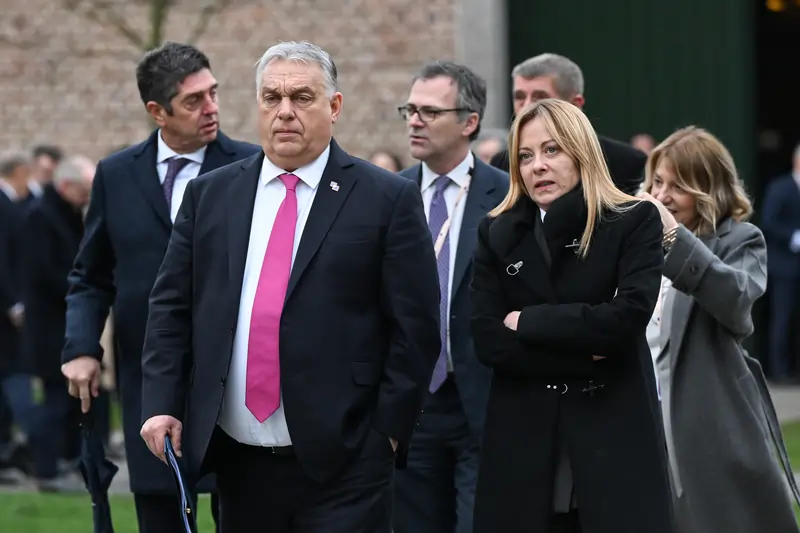
The Hungarian Prime Minister made remarks following an informal summit in Belgium, responding to a query from Politico about the ongoing legal proceedings. He reiterated his stance on the situation, dismissing the idea of a repayment demand as unreasonable.
As discussions continue, several voices within the European Parliament have highlighted potential implications should the court rule in favor of Parliament. For instance, German MEP René Repasi emphasized that if the court supports the Parliament’s position, the Commission would be obligated to act, raising the prospect of recovering the funds already disbursed. Should Hungary refuse to repay, the Commission could respond by withholding or deducting future payments due to the country.
This ongoing funding dispute not only underscores tensions between Hungary and EU institutions but also reflects broader issues regarding the enforcement of rule-of-law conditions within the EU.
While the Advocate General’s opinion is not legally binding, the Luxembourg court often aligns with such recommendations. A final ruling is anticipated before the summer of 2024. Although the immediate financial stakes involve EUR 10.2 billion, the broader implications concern the EU’s commitment to enforcing its rule-of-law standards and the political dynamics at play in Brussels.

Funko’s Price Target Increased to $4.00 as Analysts React

Humboldt Celebrates as ‘One Battle After Another’ Claims Best Picture

GSK Faces Backlash Over Asthma Inhaler Scrapping, Children Suffer

Adorable Sandhill Crane Colt Hugs Mom in The Villages

USA Unveils Star-Spangled Jerseys Ahead of March Friendlies

Newport Plans Colorful Lighting for Fourth Street Bridge

Sandia Scientists Honored for Innovative Career Journeys

Urgent: Charles M. Payment Passes Away at 78, Memorial Details Inside

NFL Free Agency: Key Moves and Player Signings in Week One

Researchers Launch $1.25M Project for Real-Time Hazard Monitoring in Hawaiʻi

Send It South Revives Culture and Community at The Momentary

UK Government Borrowing Hits £20.2 Billion in September Surge

Flipkart Republic Day Sale: iPhone 16 Plus Price Slashed by ₹23,900

Adecco SA Secures Mixed Ratings from Analysts Amid Earnings Update

Researchers Achieve Record 15.1 mA/cm² Hydrogen Production Efficiency

Globant Reveals Key Tech Forces Shaping Business in 2026

Dua Lipa Aces GCSE Spanish, Sparks Super Bowl Buzz with Fans

Inventor Achieves Breakthrough with 2 Billion FPS Laser Video
-
 Science8 months ago
Researchers Launch $1.25M Project for Real-Time Hazard Monitoring in Hawaiʻi
-
 Entertainment7 months ago
Send It South Revives Culture and Community at The Momentary
-
 World9 months ago
UK Government Borrowing Hits £20.2 Billion in September Surge
-
 Business6 months ago
Flipkart Republic Day Sale: iPhone 16 Plus Price Slashed by ₹23,900
-
 Sports8 months ago
Adecco SA Secures Mixed Ratings from Analysts Amid Earnings Update
-
 Top Stories5 months ago
Researchers Achieve Record 15.1 mA/cm² Hydrogen Production Efficiency
-
 Business8 months ago
Globant Reveals Key Tech Forces Shaping Business in 2026
-
 Entertainment10 months ago
Dua Lipa Aces GCSE Spanish, Sparks Super Bowl Buzz with Fans
-
 Science10 months ago
Inventor Achieves Breakthrough with 2 Billion FPS Laser Video
-

 Top Stories10 months ago
Charlie Sheen’s New Romance: ‘Glowing’ with Younger Partner
-

 Top Stories8 months ago
JSerra Names Hardy Nickerson as First Black Football Coach
-

 Health10 months ago
Community Unites for 7th Annual Into the Light Walk for Mental Health