
Business
U.S. Cities Face Rising Financial Distress, Chicago Tops List

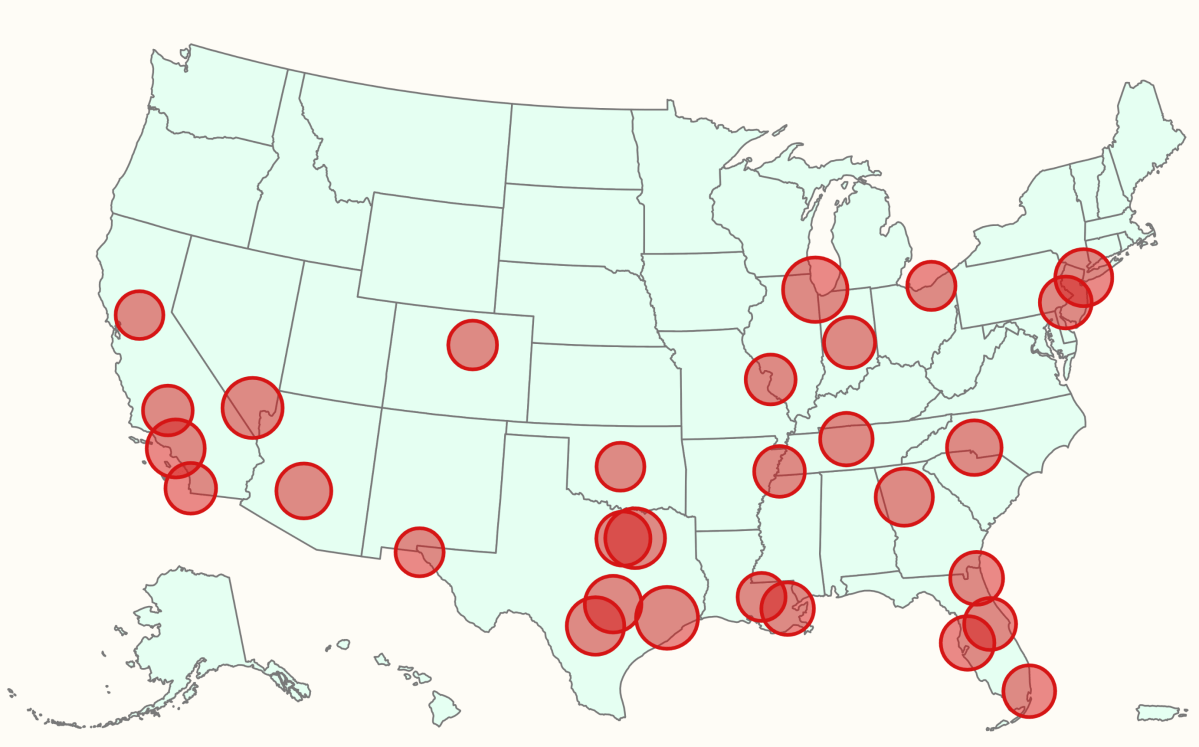
A new study from the personal finance website WalletHub reveals that millions of Americans are grappling with significant financial challenges. Released on March 15, 2024, the report highlights a troubling rise in “financial distress,” characterized by a growing number of credit accounts in forbearance or with deferred payments. This financial strain has intensified in various U.S. cities, with Chicago, Illinois, emerging as the most affected.
The findings underscore a broader trend affecting American households. Rising inflation and uncertainties in the labor market have placed substantial pressure on budgets, leading to declining consumer confidence. Surveys indicate that consumer sentiment has dropped to levels typically associated with economic recessions. Many Americans are now living paycheck to paycheck, resulting in a surge in credit reliance and record-high household debt levels.
Key Findings from the WalletHub Report
According to WalletHub’s analysis of the 100 largest U.S. cities, financial distress levels are assessed based on several metrics, including the share of credit accounts in distress, increases in bankruptcy filings, and online search interest for terms such as “debt” and “loans.”
Chip Lupo, a WalletHub analyst, explained that financial distress varies significantly by region. He noted that it is influenced not only by current economic conditions but also by how quickly financial difficulties are spreading among residents and their resulting credit behaviors.
Chicago received the highest score of 77.74 out of 100, leading in both the percentage of residents with distressed accounts and the average number of such accounts per person. Lupo points out that the city experienced a staggering 29.64 percent year-over-year increase in the share of people with distressed accounts, along with a 126.99 percent jump in the average number of distressed accounts per individual. Furthermore, Chicago ranks first in online search interest for “debt” and “loans,” indicating heightened borrowing demand.
Impact Across the Nation
The financial struggles observed in Chicago are echoed in other cities. Rodney Williams, co-founder of the community finance platform SoLo Funds, noted a rise in borrower activity, with many members citing unemployment and layoffs as reasons for seeking loans. He remarked, “The reality for many Americans is that finding meaningful work and building financial resilience feels tougher than ever.”
Following Chicago, Houston, Texas, also shows significant financial distress with an overall score of 71.10. The top five cities further include Las Vegas, Nevada, Dallas, Texas, and Los Angeles, California. In stark contrast, Anchorage, Alaska, ranked last in WalletHub’s analysis, with only 2.5 percent of residents having distressed accounts, a notable decline compared to previous years.
Lupo emphasized that cities like Chicago appear more distressed due to widespread financial strain and an accelerating number of residents falling behind on their payments. Conversely, cities such as Anchorage have fewer residents facing financial challenges, with key distress metrics trending downwards.
Recent economic data suggest signs of improvement in the U.S. economy, as recent employment and inflation reports from the Department of Labor have surpassed analysts’ expectations. Despite this glimmer of hope, the immediate financial outlook for many Americans remains precarious, underscoring the urgent need for financial literacy and accessible support systems.

Funko’s Price Target Increased to $4.00 as Analysts React

Humboldt Celebrates as ‘One Battle After Another’ Claims Best Picture

GSK Faces Backlash Over Asthma Inhaler Scrapping, Children Suffer

Adorable Sandhill Crane Colt Hugs Mom in The Villages

USA Unveils Star-Spangled Jerseys Ahead of March Friendlies

Newport Plans Colorful Lighting for Fourth Street Bridge

Sandia Scientists Honored for Innovative Career Journeys

Urgent: Charles M. Payment Passes Away at 78, Memorial Details Inside

NFL Free Agency: Key Moves and Player Signings in Week One

Researchers Launch $1.25M Project for Real-Time Hazard Monitoring in Hawaiʻi

Send It South Revives Culture and Community at The Momentary

UK Government Borrowing Hits £20.2 Billion in September Surge

Flipkart Republic Day Sale: iPhone 16 Plus Price Slashed by ₹23,900

Adecco SA Secures Mixed Ratings from Analysts Amid Earnings Update

Researchers Achieve Record 15.1 mA/cm² Hydrogen Production Efficiency

Globant Reveals Key Tech Forces Shaping Business in 2026

Dua Lipa Aces GCSE Spanish, Sparks Super Bowl Buzz with Fans

Inventor Achieves Breakthrough with 2 Billion FPS Laser Video
-
 Science8 months ago
Researchers Launch $1.25M Project for Real-Time Hazard Monitoring in Hawaiʻi
-
 Entertainment7 months ago
Send It South Revives Culture and Community at The Momentary
-
 World9 months ago
UK Government Borrowing Hits £20.2 Billion in September Surge
-
 Business6 months ago
Flipkart Republic Day Sale: iPhone 16 Plus Price Slashed by ₹23,900
-
 Sports8 months ago
Adecco SA Secures Mixed Ratings from Analysts Amid Earnings Update
-
 Top Stories5 months ago
Researchers Achieve Record 15.1 mA/cm² Hydrogen Production Efficiency
-
 Business8 months ago
Globant Reveals Key Tech Forces Shaping Business in 2026
-
 Entertainment10 months ago
Dua Lipa Aces GCSE Spanish, Sparks Super Bowl Buzz with Fans
-
 Science10 months ago
Inventor Achieves Breakthrough with 2 Billion FPS Laser Video
-

 Top Stories10 months ago
Charlie Sheen’s New Romance: ‘Glowing’ with Younger Partner
-
 Top Stories8 months ago
JSerra Names Hardy Nickerson as First Black Football Coach
-

 Health10 months ago
Community Unites for 7th Annual Into the Light Walk for Mental Health