
Entertainment
Engaging Public with Creative Terms for On-Hold Music

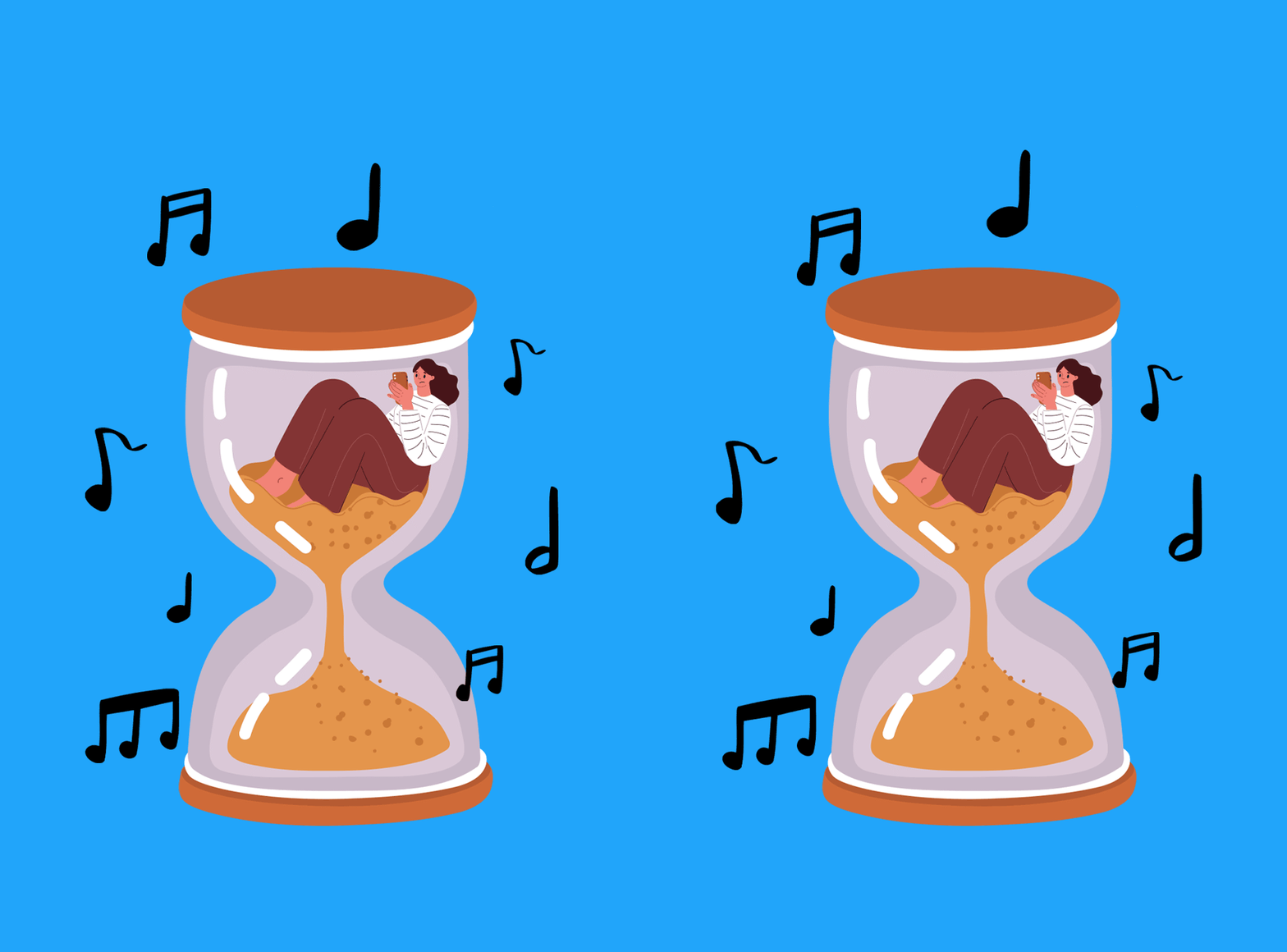
A recent discussion prompted by writer and editor Barbara Wallraff has sparked a lively exchange over the terminology for the music played while customers are on hold. This conversation, featured in Wallraff’s column on Substack, highlights the nuanced differences between what some call “elevator music” and the often dreaded “on-hold music.”
One notable contributor, James L. Sherley from Boston, argued against equating the two genres. He suggested the term “time-out music,” emphasizing that this style serves to distract listeners from the time they spend waiting. Sherley described this music as a reflection of the frustrating experience of being put on hold, suggesting it feels more like a punishment than a pleasant ambiance.
While some readers echoed Sherley’s sentiments, others offered more light-hearted alternatives. John Michaels from Peabody proposed “cell-evator music,” while Daniel R. Spirer from the Berkshires suggested “ringtunes.” Another reader, Marjory Wunsch from Cambridge, coined “musicallwait,” combining “music” with “wait” to capture the essence of the experience.
Yet, not all responses were positive. Many participants expressed their disdain for on-hold music. Ann Souto from Portsmouth described it as “earitating,” while Joyce Bohnen from Newton labeled it an “annoisance.” The creativity continued with Mitty Shaughnessy from Dartmouth, who introduced “dronetone,” and David Raines from Lunenburg, who coined “malodies.”
Some responses took a more humorous turn. Marc McGarry from Newton suggested “callimbo,” arguing that it encapsulates both the act of calling and the feeling of an interminable wait. Meanwhile, Bob Smith from Roslindale proposed “torture chamber musak,” humorously characterizing the experience as one that could either lull listeners to sleep or push them to hang up in frustration.
In a more reflective take, Steve Rivers from Swansea introduced the term “earbug,” highlighting how the catchy tunes often linger long after the call has ended. Drawing parallels to the concept of an “earworm,” which refers to a song that repetitively plays in one’s mind, Rivers noted that many people experience these melodies for days, not just hours.
The conversation also inspired some to delve deeper into the statistics surrounding customer service calls. Mark Wagner from Dudley revealed that Americans collectively spend an astonishing 900 million hours on hold each year, which equates to approximately 102,739 years of waiting for assistance.
As the dialogue continues, another contributor, Chris Osborne from Cambridge, is now seeking a new term for “acquaintances,” people one knows but does not consider friends. He argues that “acquaintances” sounds overly formal, while “friends” is often overused, particularly on social media platforms.
Osborne’s request follows a previous challenge that resulted in the term “nodders,” referring to those individuals one recognizes but has never spoken to. Joel Angiolillo from Weston previously devised an eleven-rung “friendship ladder,” ranging from “soulmate” to “alien,” with distinct classifications in between.
Osborne invites readers to contribute their suggestions for this new term by January 9, 2024, encouraging creativity and engagement in the evolving nature of language. The ongoing discourse not only highlights the richness of vocabulary but also underscores the shared experiences and frustrations individuals encounter in everyday life.
Responses can be sent to Wallraff at her email address, and she notes that submissions may be edited for clarity and brevity. This interaction serves as a reminder that language is always evolving and that there is always room for new words to describe the unique aspects of modern life.

Funko’s Price Target Increased to $4.00 as Analysts React

Humboldt Celebrates as ‘One Battle After Another’ Claims Best Picture

GSK Faces Backlash Over Asthma Inhaler Scrapping, Children Suffer

Adorable Sandhill Crane Colt Hugs Mom in The Villages

USA Unveils Star-Spangled Jerseys Ahead of March Friendlies

Newport Plans Colorful Lighting for Fourth Street Bridge

Sandia Scientists Honored for Innovative Career Journeys

Urgent: Charles M. Payment Passes Away at 78, Memorial Details Inside

NFL Free Agency: Key Moves and Player Signings in Week One

Researchers Launch $1.25M Project for Real-Time Hazard Monitoring in Hawaiʻi

Send It South Revives Culture and Community at The Momentary

UK Government Borrowing Hits £20.2 Billion in September Surge

Flipkart Republic Day Sale: iPhone 16 Plus Price Slashed by ₹23,900

Adecco SA Secures Mixed Ratings from Analysts Amid Earnings Update

Researchers Achieve Record 15.1 mA/cm² Hydrogen Production Efficiency

Globant Reveals Key Tech Forces Shaping Business in 2026

Dua Lipa Aces GCSE Spanish, Sparks Super Bowl Buzz with Fans

Inventor Achieves Breakthrough with 2 Billion FPS Laser Video
-
 Science8 months ago
Researchers Launch $1.25M Project for Real-Time Hazard Monitoring in Hawaiʻi
-
 Entertainment7 months ago
Send It South Revives Culture and Community at The Momentary
-
 World10 months ago
UK Government Borrowing Hits £20.2 Billion in September Surge
-
 Business6 months ago
Flipkart Republic Day Sale: iPhone 16 Plus Price Slashed by ₹23,900
-
 Sports8 months ago
Adecco SA Secures Mixed Ratings from Analysts Amid Earnings Update
-
 Top Stories5 months ago
Researchers Achieve Record 15.1 mA/cm² Hydrogen Production Efficiency
-
 Business8 months ago
Globant Reveals Key Tech Forces Shaping Business in 2026
-
 Entertainment10 months ago
Dua Lipa Aces GCSE Spanish, Sparks Super Bowl Buzz with Fans
-
 Science10 months ago
Inventor Achieves Breakthrough with 2 Billion FPS Laser Video
-

 Top Stories10 months ago
Charlie Sheen’s New Romance: ‘Glowing’ with Younger Partner
-

 Top Stories8 months ago
JSerra Names Hardy Nickerson as First Black Football Coach
-

 Health10 months ago
Community Unites for 7th Annual Into the Light Walk for Mental Health