
Entertainment
Maine’s Arts Sector: A Call to Revitalize Rural Communities

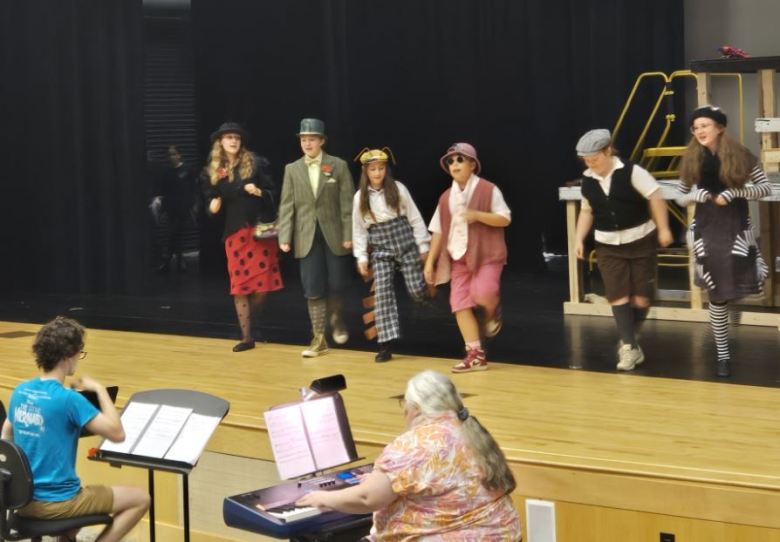
Efforts to bolster the arts sector in rural Maine could significantly impact local economies and community identity. According to Katie Gilman, a Portland native now residing in New York City, “We’re going to rebuild the stages, reopen the rehearsal halls and bring thousands of performances back into our small towns.” This vision reflects a growing recognition of the arts as a potential economic powerhouse, particularly in regions that have historically been overlooked.
Maine’s creative industries, including museums, performance theaters, and crafts, contribute over $2.5 billion to the state’s GDP and employ more than 18,000 workers. Despite this substantial economic impact, Maine consistently ranks among the lowest-spending states on the arts. This funding gap is most pronounced in rural areas, where over 60% of Mainers reside. In these regions, social isolation and struggling local economies present significant challenges that the arts could help address.
The arts generate a remarkable $550.3 million annually in Maine, serving as an essential economic infrastructure. As traditional industries like logging decline, the arts could provide a vital source of revenue and employment. Nonetheless, most state arts funding is concentrated in Greater Portland, leaving rural communities without access to these economic benefits.
Rural Maine residents have a strong desire for arts engagement. The state ranks second in the nation for creative participation, with 42% of adults attending live arts performances in 2022. This level of engagement is comparable to, or even exceeds, that of states with much larger cultural budgets. Yet, the infrastructure to support this demand is severely lacking outside Portland, which hinders both community identity and economic opportunity.
Art plays a critical role in how individuals express their experiences and connect with one another. In rural areas, where opportunities for social interaction can be limited, arts initiatives are crucial for revitalizing communities. Particularly during Maine’s long winters, local arts centers could serve as welcoming spaces for cultural life. Research into rural creative placemaking indicates that towns benefit significantly from the arts, enhancing local traditions and fostering community connections.
While some might argue that Maine is adequately funding its arts economy, the reality is more complicated. Portland is well recognized for its vibrant arts scene, and programs like Maine Expansion Arts awarded over $130,000 in rural grants in 2021. However, these scattered efforts do little to address the broader needs of rural communities. Comparatively, $5.6 million in government grants was allocated to arts and culture initiatives in Portland in 2024.
What is needed is a comprehensive statewide strategy that revitalizes rural areas through investments in local venues, nonprofit arts programs, and creative workforce development. The arts have significantly influenced Gilman’s life, shaping her self-confidence and discipline through early exposure to performances and community involvement. She reflects that if she had grown up in rural Maine instead of Portland, she would not have had the same access to formative opportunities that contributed to her success.
As Maine considers its future, recognizing the arts as a crucial element of economic development could lead to a more equitable distribution of resources, ultimately benefiting all Mainers. The arts are not merely a niche interest; they are a vital market that holds the potential to transform communities across the state. By addressing the funding shortfall and promoting arts initiatives in rural regions, Maine can harness the transformative power of creativity to build stronger, more connected communities.

Funko’s Price Target Increased to $4.00 as Analysts React

Humboldt Celebrates as ‘One Battle After Another’ Claims Best Picture

GSK Faces Backlash Over Asthma Inhaler Scrapping, Children Suffer

Adorable Sandhill Crane Colt Hugs Mom in The Villages

USA Unveils Star-Spangled Jerseys Ahead of March Friendlies

Newport Plans Colorful Lighting for Fourth Street Bridge

Sandia Scientists Honored for Innovative Career Journeys

Urgent: Charles M. Payment Passes Away at 78, Memorial Details Inside

NFL Free Agency: Key Moves and Player Signings in Week One

Researchers Launch $1.25M Project for Real-Time Hazard Monitoring in Hawaiʻi

Send It South Revives Culture and Community at The Momentary

UK Government Borrowing Hits £20.2 Billion in September Surge

Flipkart Republic Day Sale: iPhone 16 Plus Price Slashed by ₹23,900

Adecco SA Secures Mixed Ratings from Analysts Amid Earnings Update

Researchers Achieve Record 15.1 mA/cm² Hydrogen Production Efficiency

Globant Reveals Key Tech Forces Shaping Business in 2026

Dua Lipa Aces GCSE Spanish, Sparks Super Bowl Buzz with Fans

Inventor Achieves Breakthrough with 2 Billion FPS Laser Video
-
 Science8 months ago
Researchers Launch $1.25M Project for Real-Time Hazard Monitoring in Hawaiʻi
-
 Entertainment7 months ago
Send It South Revives Culture and Community at The Momentary
-
 World10 months ago
UK Government Borrowing Hits £20.2 Billion in September Surge
-
 Business6 months ago
Flipkart Republic Day Sale: iPhone 16 Plus Price Slashed by ₹23,900
-
 Sports8 months ago
Adecco SA Secures Mixed Ratings from Analysts Amid Earnings Update
-
 Top Stories5 months ago
Researchers Achieve Record 15.1 mA/cm² Hydrogen Production Efficiency
-
 Business8 months ago
Globant Reveals Key Tech Forces Shaping Business in 2026
-
 Entertainment10 months ago
Dua Lipa Aces GCSE Spanish, Sparks Super Bowl Buzz with Fans
-
 Science10 months ago
Inventor Achieves Breakthrough with 2 Billion FPS Laser Video
-

 Top Stories10 months ago
Charlie Sheen’s New Romance: ‘Glowing’ with Younger Partner
-

 Top Stories8 months ago
JSerra Names Hardy Nickerson as First Black Football Coach
-

 Health10 months ago
Community Unites for 7th Annual Into the Light Walk for Mental Health