
Entertainment
Minnesotans Face Immigration Scrutiny Amid Federal Crackdown

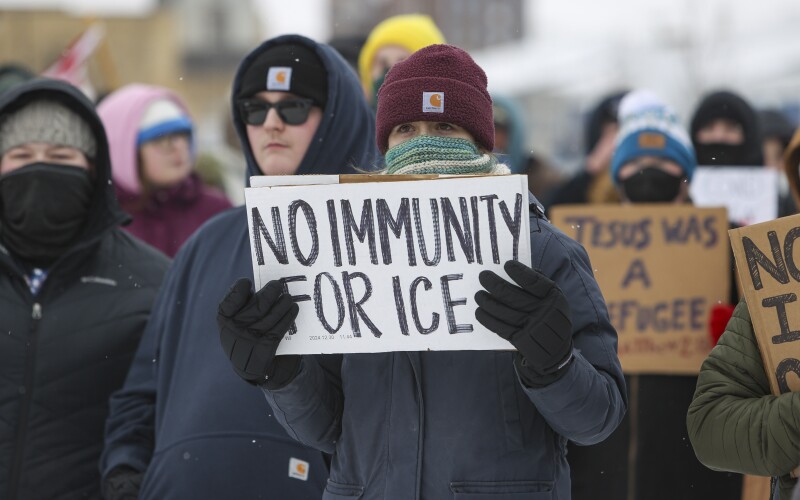
The lives of many Minnesotans are being affected by a rigorous enforcement of immigration policies, as individuals discover that state-issued Real IDs do not suffice to prove citizenship. This situation is compounded by a broader national climate of heightened scrutiny under the administration of former President Donald Trump, which has led to significant fears among immigrant communities.
Real ID Limitations Create Uncertainty
According to a statement from the Department of Homeland Security, “Real IDs are not immigration documents. Real ID can confirm identity but does not confirm legal status.” This revelation has prompted citizens to carry additional documentation, such as passports or proof of immigration status, to avoid potential complications.
The implications of this policy are stark. For instance, Kilmar Abrego Garcia, who had previously been granted withholding of removal status by a federal immigration judge, experienced a grave injustice despite complying with regular check-ins. His lawful status was disregarded, resulting in his deportation to El Salvador, a move later deemed an “administrative error” by the Trump administration. This incident underscores the precariousness of legal protections within the current immigration enforcement framework.
Community Leaders Voice Concerns
The environment of fear is not limited to undocumented individuals. Leaders within the community, such as Hamida Dakane, a citizen and the first Black and Muslim woman elected to the North Dakota Legislature, have raised alarm over the potential for wrongful detentions. Dakane, who represents a diverse constituency, expressed deep concern about how individuals from minority backgrounds might be unfairly targeted by immigration enforcement agents.
“Where is our home if America is not our home?”
Her question highlights the existential crisis faced by many who feel increasingly alienated in their own country. Dakane fears that, without proper identification, she may be mistaken for someone without legal status, despite her citizenship and public service.
As reports continue to emerge about aggressive tactics employed by Immigration and Customs Enforcement (ICE), including monitoring of phone and internet activity, the atmosphere grows more oppressive. The recent comments by Tom Homan, the Trump administration’s “border czar,” about creating a database to track individuals who protest against ICE actions further illustrate this trend. Such measures suggest a shift towards a governance style that prioritizes control over community rights.
While individuals with lighter skin tones may feel less at risk, the reality for many in minority communities is starkly different. The fear of being misidentified or wrongfully detained looms large, creating a chilling effect on free expression and community engagement. The ongoing crackdown illustrates the erosion of due process and raises questions about the balance between national security and individual rights.
The current situation reflects a broader trend towards increased surveillance and policing in everyday life, reminiscent of authoritarian regimes where the government often bypasses traditional judicial processes. As America grapples with these challenges, the fundamental question remains: How will communities respond to an environment that increasingly resembles a police state?

Funko’s Price Target Increased to $4.00 as Analysts React

Humboldt Celebrates as ‘One Battle After Another’ Claims Best Picture

GSK Faces Backlash Over Asthma Inhaler Scrapping, Children Suffer

Adorable Sandhill Crane Colt Hugs Mom in The Villages

USA Unveils Star-Spangled Jerseys Ahead of March Friendlies

Newport Plans Colorful Lighting for Fourth Street Bridge

Sandia Scientists Honored for Innovative Career Journeys

Urgent: Charles M. Payment Passes Away at 78, Memorial Details Inside

NFL Free Agency: Key Moves and Player Signings in Week One

Researchers Launch $1.25M Project for Real-Time Hazard Monitoring in Hawaiʻi

Send It South Revives Culture and Community at The Momentary

UK Government Borrowing Hits £20.2 Billion in September Surge

Flipkart Republic Day Sale: iPhone 16 Plus Price Slashed by ₹23,900

Adecco SA Secures Mixed Ratings from Analysts Amid Earnings Update

Researchers Achieve Record 15.1 mA/cm² Hydrogen Production Efficiency

Globant Reveals Key Tech Forces Shaping Business in 2026

Dua Lipa Aces GCSE Spanish, Sparks Super Bowl Buzz with Fans

Inventor Achieves Breakthrough with 2 Billion FPS Laser Video
-
 Science8 months ago
Researchers Launch $1.25M Project for Real-Time Hazard Monitoring in Hawaiʻi
-
 Entertainment7 months ago
Send It South Revives Culture and Community at The Momentary
-
 World9 months ago
UK Government Borrowing Hits £20.2 Billion in September Surge
-
 Business6 months ago
Flipkart Republic Day Sale: iPhone 16 Plus Price Slashed by ₹23,900
-
 Sports8 months ago
Adecco SA Secures Mixed Ratings from Analysts Amid Earnings Update
-
 Top Stories5 months ago
Researchers Achieve Record 15.1 mA/cm² Hydrogen Production Efficiency
-
 Business8 months ago
Globant Reveals Key Tech Forces Shaping Business in 2026
-
 Entertainment10 months ago
Dua Lipa Aces GCSE Spanish, Sparks Super Bowl Buzz with Fans
-
 Science10 months ago
Inventor Achieves Breakthrough with 2 Billion FPS Laser Video
-

 Top Stories10 months ago
Charlie Sheen’s New Romance: ‘Glowing’ with Younger Partner
-

 Top Stories8 months ago
JSerra Names Hardy Nickerson as First Black Football Coach
-

 Health10 months ago
Community Unites for 7th Annual Into the Light Walk for Mental Health