
Health
Chronic Wasting Disease Raises Concerns Over Human Transmission

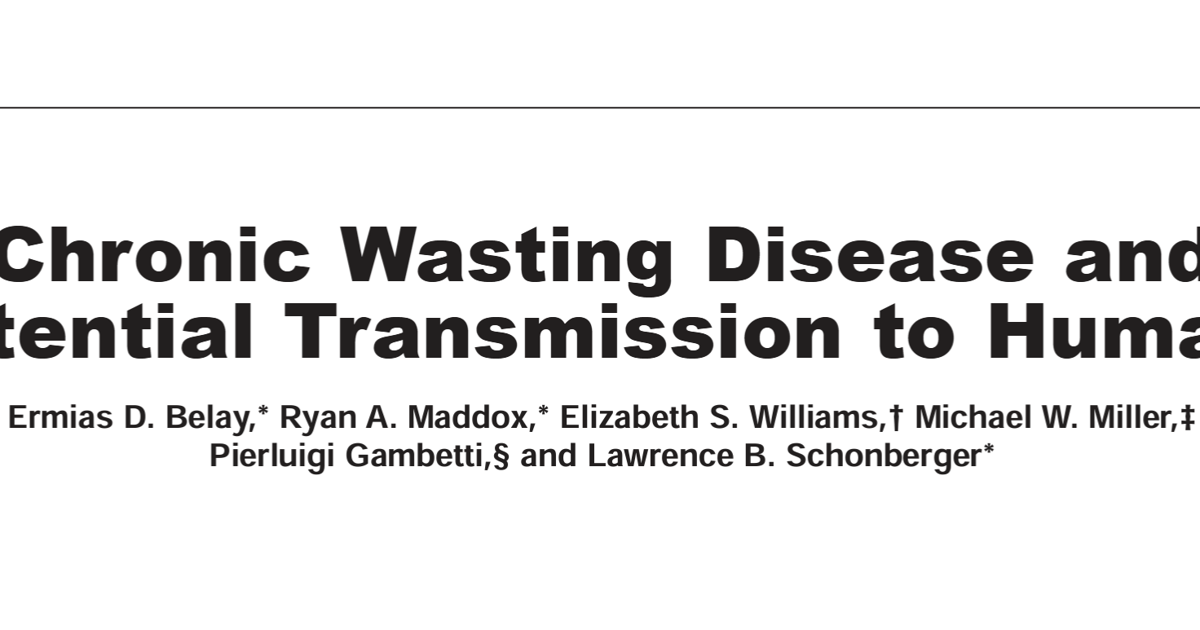
Recent studies have intensified concerns regarding chronic wasting disease (CWD), a prion disease affecting deer and elk, and its potential transmission to humans. On March 15, 2024, the Centers for Disease Control and Prevention (CDC) reported new findings suggesting that the disease could pose a risk to human health, particularly for those who consume infected game meat.
CWD is part of a group of diseases known as transmissible spongiform encephalopathies, which include other prion diseases like Creutzfeldt-Jakob disease in humans. The CDC’s research indicates that while no confirmed cases of human infection have been reported, laboratory studies have shown that the prion responsible for CWD can infect human cells. This revelation has prompted health officials to urge caution among hunters and those who engage in consuming deer and elk.
The CDC has recommended that hunters test any harvested deer or elk from areas where CWD is known to be present. The organization emphasizes that if a deer tests positive, individuals should refrain from consuming the meat. In addition, the National Institute of Health (NIH) is currently conducting further research to understand the mechanisms of CWD transmission and the implications for human health.
As CWD continues to spread across North America and parts of Europe, wildlife management agencies are stepping up monitoring efforts. In 2023, over 30 U.S. states reported confirmed cases of CWD in both wild and captive deer populations. This marks a significant increase from previous years, raising alarms about the potential for wider transmission.
Public health officials are also focusing on educating hunters about safe practices when handling game. The CDC advises wearing gloves while field dressing animals and thoroughly cooking meat from any deer or elk. These recommendations are particularly crucial in regions where CWD prevalence is high, as the disease can remain in the environment, posing risks to other wildlife.
While the primary transmission route of CWD remains between deer, the possibility of cross-species infection is a serious concern for researchers. The CDC’s findings highlight the importance of continued surveillance and research efforts to fully understand the risks associated with CWD.
With no current vaccine or treatment for CWD, prevention remains the best strategy. Health officials are collaborating with wildlife agencies to implement measures that aim to contain and reduce the spread of the disease. Public awareness campaigns are essential to inform hunters and outdoor enthusiasts about the risks and necessary precautions.
The situation underscores the interconnectedness of wildlife health and human health, emphasizing the need for vigilance in monitoring diseases that may cross species barriers. As research continues, the focus remains on ensuring public safety while managing the health of deer populations affected by chronic wasting disease.

Funko’s Price Target Increased to $4.00 as Analysts React

Humboldt Celebrates as ‘One Battle After Another’ Claims Best Picture

GSK Faces Backlash Over Asthma Inhaler Scrapping, Children Suffer

Adorable Sandhill Crane Colt Hugs Mom in The Villages

USA Unveils Star-Spangled Jerseys Ahead of March Friendlies

Newport Plans Colorful Lighting for Fourth Street Bridge

Sandia Scientists Honored for Innovative Career Journeys

Urgent: Charles M. Payment Passes Away at 78, Memorial Details Inside

NFL Free Agency: Key Moves and Player Signings in Week One

Researchers Launch $1.25M Project for Real-Time Hazard Monitoring in Hawaiʻi

Send It South Revives Culture and Community at The Momentary

UK Government Borrowing Hits £20.2 Billion in September Surge

Flipkart Republic Day Sale: iPhone 16 Plus Price Slashed by ₹23,900

Adecco SA Secures Mixed Ratings from Analysts Amid Earnings Update

Researchers Achieve Record 15.1 mA/cm² Hydrogen Production Efficiency

Globant Reveals Key Tech Forces Shaping Business in 2026

Dua Lipa Aces GCSE Spanish, Sparks Super Bowl Buzz with Fans

Inventor Achieves Breakthrough with 2 Billion FPS Laser Video
-
 Science8 months ago
Researchers Launch $1.25M Project for Real-Time Hazard Monitoring in Hawaiʻi
-
 Entertainment7 months ago
Send It South Revives Culture and Community at The Momentary
-
 World10 months ago
UK Government Borrowing Hits £20.2 Billion in September Surge
-
 Business6 months ago
Flipkart Republic Day Sale: iPhone 16 Plus Price Slashed by ₹23,900
-
 Sports8 months ago
Adecco SA Secures Mixed Ratings from Analysts Amid Earnings Update
-
 Top Stories5 months ago
Researchers Achieve Record 15.1 mA/cm² Hydrogen Production Efficiency
-
 Business8 months ago
Globant Reveals Key Tech Forces Shaping Business in 2026
-
 Entertainment10 months ago
Dua Lipa Aces GCSE Spanish, Sparks Super Bowl Buzz with Fans
-
 Science10 months ago
Inventor Achieves Breakthrough with 2 Billion FPS Laser Video
-

 Top Stories10 months ago
Charlie Sheen’s New Romance: ‘Glowing’ with Younger Partner
-

 Top Stories8 months ago
JSerra Names Hardy Nickerson as First Black Football Coach
-

 Health10 months ago
Community Unites for 7th Annual Into the Light Walk for Mental Health