
Politics
Bannister and Carpenter Clash in ASWSU Debate Ahead of Elections

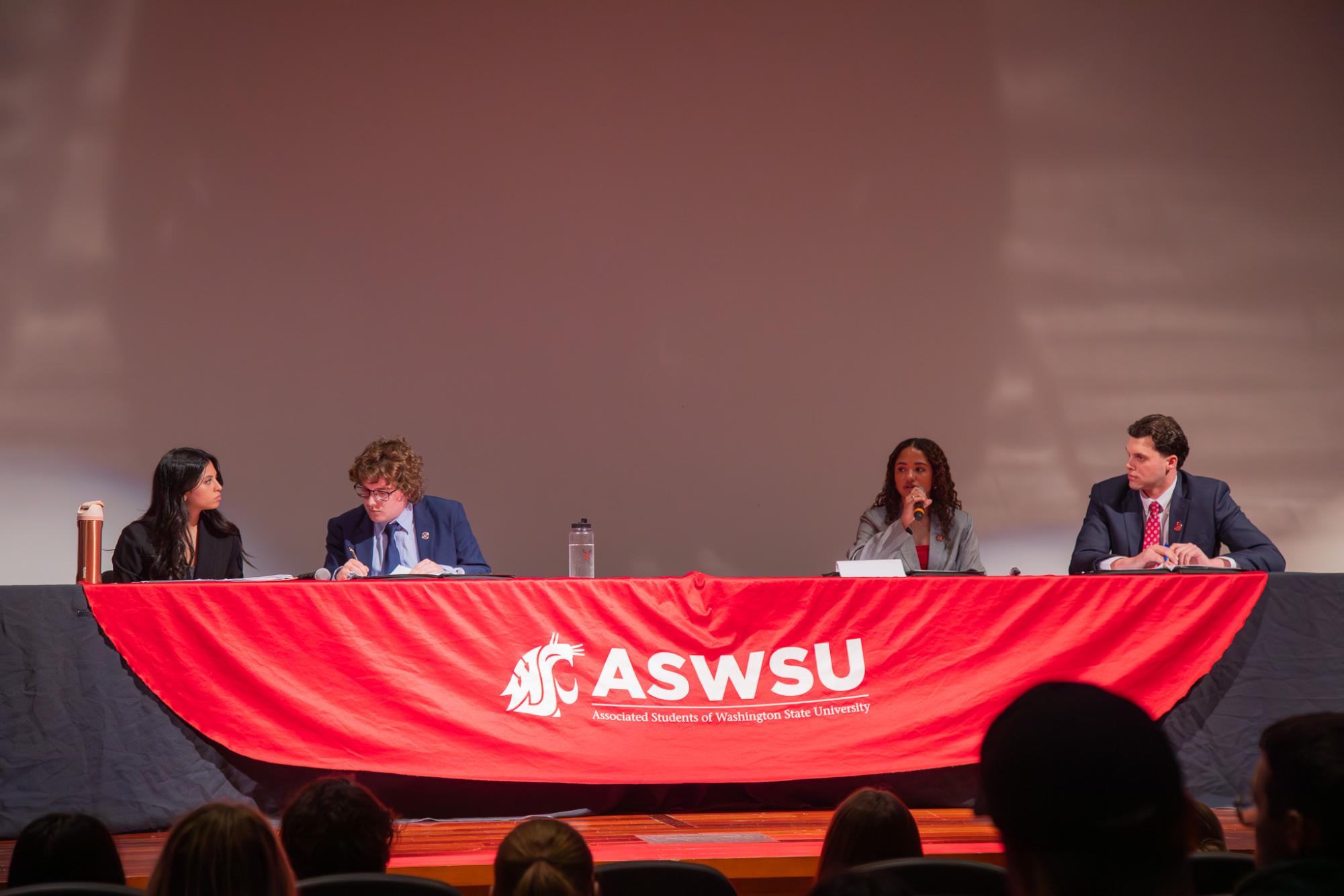
Collin Bannister and Grace Carpenter faced off in a heated debate on March 5, 2026, at the CUB auditorium, just days before the elections for the 2026-2027 academic year. The candidates sparred over critical issues such as tuition, campus safety, and the effectiveness of the Associated Students of Washington State University (ASWSU) leadership. Carpenter, the current ASWSU vice-president, is running against Bannister, who serves as president of the Washington Student Association, in the first contested election in three years.
Carpenter’s running mate, Reed Scott, and Bannister’s partner, Emily Bell, joined the debate, addressing student concerns submitted via ASWSU’s Instagram account. Both candidates expressed a commitment to improving student life, agreeing on the need for enhanced disability access and prioritizing campus safety, yet they diverged sharply on several policies.
Tuition and Retention Scholarships
A central theme of Bannister’s campaign is his pledge to combat rising tuition costs. “We want affordability,” he stated, emphasizing the need for accountability from WSU administration regarding funding. In response, Carpenter and Scott advocated for retention scholarships as a means to stabilize tuition rates. “Of course, we’re going to work towards stabilizing [tuition] and work with the Board of Regents,” Scott remarked, highlighting the importance of exploring diverse funding options.
Bannister countered that retention scholarships alone would not address the decline in undergraduate enrollment, insisting that more proactive measures are necessary. The candidates also engaged in a discussion about campus safety, with Bannister proposing the reinstatement of the Cougar Safe Rides program. Carpenter, however, highlighted alternative safety measures such as “angel shots,” a discreet way for individuals to signal bartenders when they feel unsafe. While Bannister acknowledged the potential benefits of angel shots, he criticized the current ASWSU administration for inadequate safety measures. “Leadership currently has goals around campus safety,” he said, “And I don’t know that has happened or improved.”
Carpenter defended the current administration, citing the DMAC Foundation’s Cougs Ride Safe program, which partners with Lyft to provide free late-night rides for WSU students. She argued that the Cougar Safe Rides program was discontinued due to safety concerns and misuse, stating, “We had Cougar Safe Rides taken away because it wasn’t safe for students.”
Debate Highlights and Student Engagement
As the debate progressed, candidates faced direct questions from the audience, addressing a variety of issues from support for smaller campus clubs to individual controversies. Bannister was questioned about his decision to disclose evidence of a colleague’s racist behavior shortly before an ASWSU meeting. He defended his actions as a moral obligation, despite criticisms regarding the timing.
Carpenter pointed out that the ASWSU Senate does not conduct background checks, complicating the issue of accountability. “We do not do background checks, and we don’t have time to go through every person’s social media,” she explained, emphasizing the need for a more thorough vetting process.
Another student queried Bannister about his ability to prevent tuition increases, given the history of rising costs during his tenure. Bannister maintained that he had successfully lobbied against more significant increases, claiming, “It’s not always about the result, it’s about that effort that’s put in.” He cited successful lobbying efforts for increased taxation on large corporations as a positive outcome of his advocacy.
In a notable exchange, Carpenter accused Bannister of overspending student funds during his presidency of the WSA, alleging an audit revealed overspending by $15,000. Bannister dismissed the claims, redirecting criticism toward ASWSU leadership for their lack of engagement with the WSA’s general assembly.
As the debate concluded, Bannister reiterated his frustrations with the current administration, criticizing their compliance with state laws regarding public meetings. “Agendas are not being posted to the public website; that’s a violation of the Open Public Meetings Act,” he asserted.
In her closing remarks, Carpenter emphasized her experience and dedication. “I really ask that when you are voting, you are looking at past experience,” she urged voters. Following the debate, candidates expressed a sense of accomplishment, noting the importance of addressing student concerns. Scott shared his comfort in the debate setting, stating, “I think it was a super positive debate with a lot of respectful conversations.”
Carpenter reflected on her pre-debate nerves, crediting a prayer with a church leader for helping her maintain composure. “Even though the debate did get a little heated, bringing it back to the students is the most important thing,” she said.
As the candidates left the stage, Bannister acknowledged the debate’s intensity but underscored the necessity of discussing pertinent issues affecting the student body. “It’s important to discuss these things publicly because, at the end of the day, we are running for leadership of the student body,” he said, calling for voter engagement in the upcoming election.
Balloting for the ASWSU elections begins on March 10 and concludes on March 11, with ballots sent via email to students.

Funko’s Price Target Increased to $4.00 as Analysts React

Humboldt Celebrates as ‘One Battle After Another’ Claims Best Picture

GSK Faces Backlash Over Asthma Inhaler Scrapping, Children Suffer

Adorable Sandhill Crane Colt Hugs Mom in The Villages

USA Unveils Star-Spangled Jerseys Ahead of March Friendlies

Newport Plans Colorful Lighting for Fourth Street Bridge

Sandia Scientists Honored for Innovative Career Journeys

Urgent: Charles M. Payment Passes Away at 78, Memorial Details Inside

NFL Free Agency: Key Moves and Player Signings in Week One

Researchers Launch $1.25M Project for Real-Time Hazard Monitoring in Hawaiʻi

UK Government Borrowing Hits £20.2 Billion in September Surge

Flipkart Republic Day Sale: iPhone 16 Plus Price Slashed by ₹23,900

Inventor Achieves Breakthrough with 2 Billion FPS Laser Video

Dua Lipa Aces GCSE Spanish, Sparks Super Bowl Buzz with Fans

Charlie Sheen’s New Romance: ‘Glowing’ with Younger Partner

Send It South Revives Culture and Community at The Momentary

Community Unites for 7th Annual Into the Light Walk for Mental Health

Mother Fights to Reunite with Children After Kidnapping in New Drama
-
 Science4 months ago
Researchers Launch $1.25M Project for Real-Time Hazard Monitoring in Hawaiʻi
-
 World6 months ago
UK Government Borrowing Hits £20.2 Billion in September Surge
-
 Business3 months ago
Flipkart Republic Day Sale: iPhone 16 Plus Price Slashed by ₹23,900
-
 Science6 months ago
Inventor Achieves Breakthrough with 2 Billion FPS Laser Video
-
 Entertainment6 months ago
Dua Lipa Aces GCSE Spanish, Sparks Super Bowl Buzz with Fans
-
 Top Stories6 months ago
Charlie Sheen’s New Romance: ‘Glowing’ with Younger Partner
-
 Entertainment4 months ago
Send It South Revives Culture and Community at The Momentary
-
 Health6 months ago
Community Unites for 7th Annual Into the Light Walk for Mental Health
-
 Entertainment6 months ago
Mother Fights to Reunite with Children After Kidnapping in New Drama
-
 Entertainment6 months ago
Olivia Plath Opens Up About Her Marriage Struggles and Divorce
-

 Top Stories5 months ago
T-Mobile Faces Backlash Over New Late Fees, Customers Flee
-

 Science6 months ago
AI Gun Detection System Mistakes Doritos for Weapon, Sparks Outrage