
Politics
Campaign Finance Reform: A Call for Transparency and Action

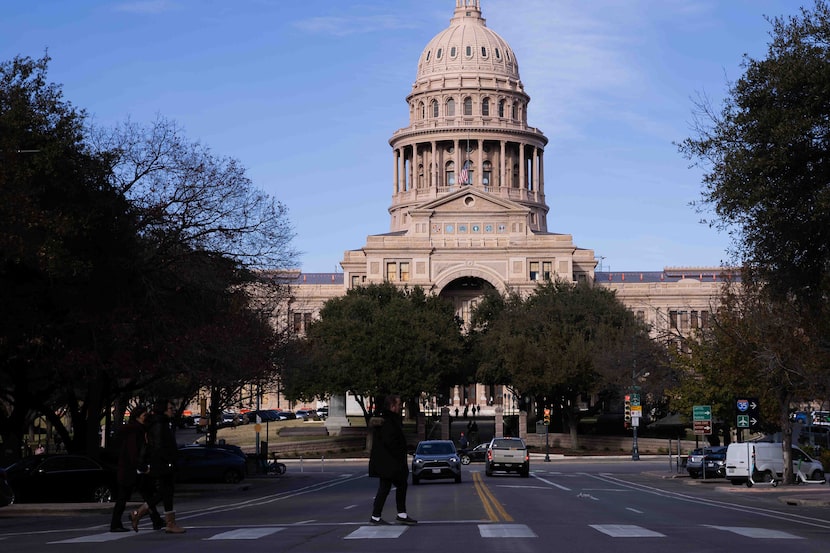
As the primary season concludes, the impact of political campaigning remains palpable, with an influx of misleading texts, advertisements, and mailers flooding voters’ inboxes. Local elections are scheduled for May 2024, and the general election is only eight months away. To enhance the democratic process and reduce voter frustration, reforming campaign finance laws has become imperative. The focus must be on limiting corporate spending and improving transparency in campaign financing.
The landscape of political contributions was substantially altered by two landmark U.S. Supreme Court rulings. In the case of Citizens United v. FEC, restrictions on campaign spending by corporations and unions were lifted. Additionally, Speechnow.org v. FEC paved the way for the rise of super PACs, allowing them to raise unlimited funds as long as they do not coordinate directly with candidates. According to Americans for Tax Fairness, this shift has led to a staggering 160-fold increase in political contributions from billionaires since 2010.
This surge in corporate donations, coupled with the troubling rise of dark money strategies, has severely undermined the principle of representative government. Candidates often prioritize the interests of wealthy donors over the needs of the constituents they are elected to serve. Legislators who attempt to champion the interests of their districts frequently find themselves facing well-funded primary challengers and aggressive smear campaigns financed by these large donations.
A conservative viewpoint on wealth does not preclude criticism of its influence in politics. The misuse of significant financial resources to sway political outcomes raises concerns about democratic integrity. In 2019, during a campaign for state representative in Texas, a meeting intended to be private quickly turned into an interrogation focused on my commitment to specific political stances. The atmosphere felt more like an inquisition, influenced by powerful donors rather than a genuine discussion on policy.
To address these issues, two critical areas of reform are necessary: reversing or weakening the damaging Supreme Court decisions and enacting laws that enhance campaign transparency. The decisions have allowed corporate influence over government policies to flourish, creating an uneven playing field that marginalizes individual citizens and small businesses. A recent survey indicated that 70% of Republicans support campaign finance reform, highlighting that this is not merely a partisan issue.
While the Citizens United decision may not be easily overturned, states can enact “trigger” legislation similar to those used in Texas prior to the reversal of Roe v. Wade. These laws could redefine corporate powers, limiting their ability to spend on elections by characterizing corporate entities as creations of state law without the same political rights as individuals.
Improving transparency regarding the sources of campaign financing could also deter unethical political practices. Currently, dark money PACs are only required to report the total amount spent in an election cycle without disclosing which candidates they support. In the 88th Legislature, I proposed House Bill 2629, aimed at addressing this transparency gap, but it was vetoed by Gov. Greg Abbott. In the subsequent 89th session, Rep. Dade Phelan introduced two significant bills designed to enhance transparency in campaign financing. One of these, the Deep Fake Disclosure Bill, sought to mandate that political advertisements disclose if they contained altered imagery or audio. Although it passed the House, it failed to advance in the Senate.
Another proposed bill aimed to limit out-of-state campaign contributions, capping donations from outside Texas at $5,000 for statewide races, $2,500 for district offices, and $1,000 for county offices. This legislation was in response to substantial financial influence from out-of-state interests, exemplified by the record contribution from Pennsylvania investor Jeff Yass to Abbott’s campaign.
The significant barriers to campaign finance reform appear to stem from the current governor and state senators who are resistant to changing a system that many perceive as corrupt. The founders of the United States, including Thomas Jefferson and James Madison, expressed concerns that concentrated wealth in politics could lead to corruption and oligarchy—a warning that seems increasingly relevant today.
As the May elections approach, the urgency for reform grows. Engaging in dialogues about campaign finance and advocating for transparency is essential to restoring faith in the electoral process. Readers are encouraged to share their perspectives on this pressing issue.

Funko’s Price Target Increased to $4.00 as Analysts React

Humboldt Celebrates as ‘One Battle After Another’ Claims Best Picture

GSK Faces Backlash Over Asthma Inhaler Scrapping, Children Suffer

Adorable Sandhill Crane Colt Hugs Mom in The Villages

USA Unveils Star-Spangled Jerseys Ahead of March Friendlies

Newport Plans Colorful Lighting for Fourth Street Bridge

Sandia Scientists Honored for Innovative Career Journeys

Urgent: Charles M. Payment Passes Away at 78, Memorial Details Inside

NFL Free Agency: Key Moves and Player Signings in Week One

Researchers Launch $1.25M Project for Real-Time Hazard Monitoring in Hawaiʻi

Send It South Revives Culture and Community at The Momentary

UK Government Borrowing Hits £20.2 Billion in September Surge

Flipkart Republic Day Sale: iPhone 16 Plus Price Slashed by ₹23,900

Adecco SA Secures Mixed Ratings from Analysts Amid Earnings Update

Researchers Achieve Record 15.1 mA/cm² Hydrogen Production Efficiency

Globant Reveals Key Tech Forces Shaping Business in 2026

Dua Lipa Aces GCSE Spanish, Sparks Super Bowl Buzz with Fans

Inventor Achieves Breakthrough with 2 Billion FPS Laser Video
-
 Science8 months ago
Researchers Launch $1.25M Project for Real-Time Hazard Monitoring in Hawaiʻi
-
 Entertainment7 months ago
Send It South Revives Culture and Community at The Momentary
-
 World9 months ago
UK Government Borrowing Hits £20.2 Billion in September Surge
-
 Business6 months ago
Flipkart Republic Day Sale: iPhone 16 Plus Price Slashed by ₹23,900
-
 Sports8 months ago
Adecco SA Secures Mixed Ratings from Analysts Amid Earnings Update
-
 Top Stories5 months ago
Researchers Achieve Record 15.1 mA/cm² Hydrogen Production Efficiency
-
 Business8 months ago
Globant Reveals Key Tech Forces Shaping Business in 2026
-
 Entertainment10 months ago
Dua Lipa Aces GCSE Spanish, Sparks Super Bowl Buzz with Fans
-
 Science10 months ago
Inventor Achieves Breakthrough with 2 Billion FPS Laser Video
-

 Top Stories10 months ago
Charlie Sheen’s New Romance: ‘Glowing’ with Younger Partner
-

 Top Stories8 months ago
JSerra Names Hardy Nickerson as First Black Football Coach
-

 Health10 months ago
Community Unites for 7th Annual Into the Light Walk for Mental Health