
Politics
Drones Transform Security Landscape Across Africa by 2025

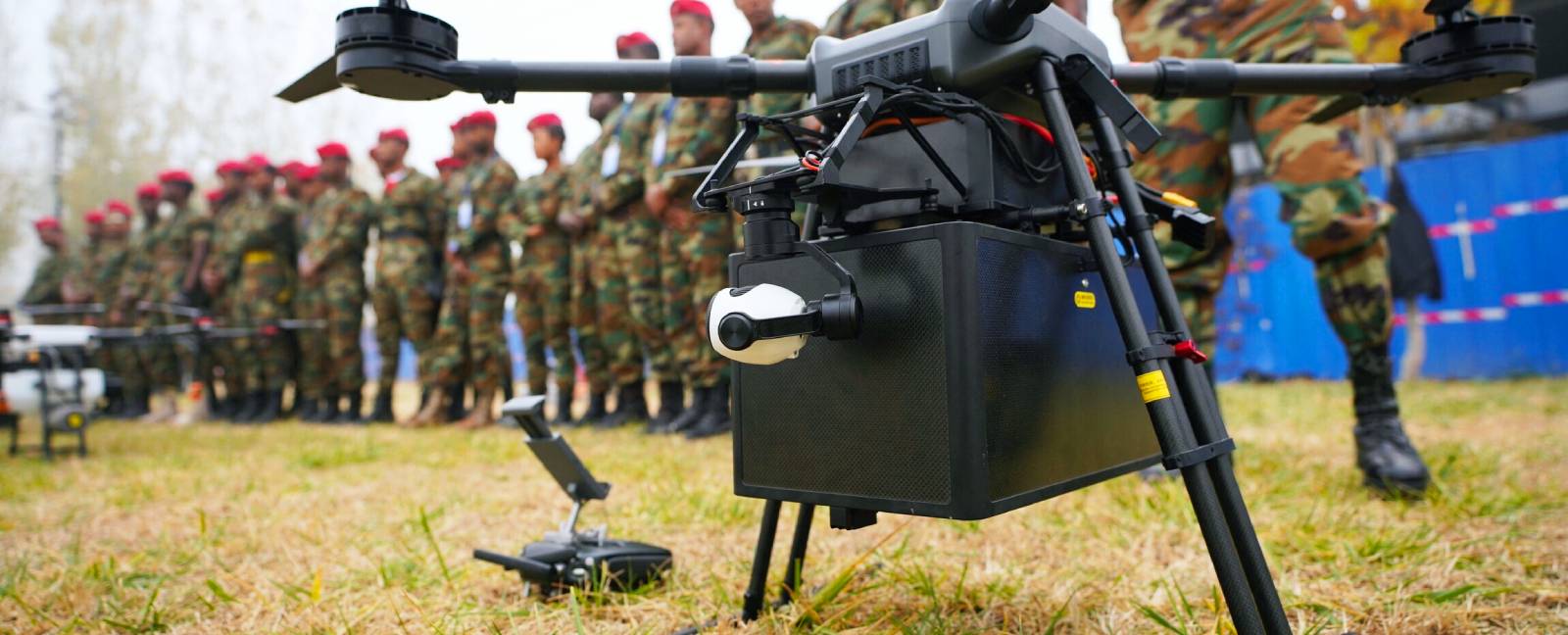
The security landscape in Africa has experienced significant changes by 2025, driven by increased external interventions, a surge in military power consolidation, and the expanding use of drones in conflicts. The Africa Center of Security Studies has released a collection of graphics that illustrate these trends, highlighting the evolving dynamics of security across the continent.
The report emphasizes that the rise of drone technology is reshaping armed conflicts in Africa. Drones, which have become more affordable and accessible, are providing capabilities akin to a small air force for various armed groups. At least 31 African countries have acquired thousands of unmanned aerial vehicles (UAVs), with government military purchases rapidly increasing.
Armed non-state actors in countries such as Burkina Faso, the Democratic Republic of the Congo, Kenya, Libya, Mali, Mozambique, Nigeria, Somalia, and Sudan have also begun to utilize military drones. This trend has raised concerns about the implications for civilian safety, particularly as drone strikes have resulted in significant civilian casualties in urban areas, such as those witnessed in Sudan.
Regional Impacts of Drone Proliferation
The report highlights that middle powers, notably Türkiye, are expanding their influence in Africa by meeting the continent’s growing demand for drones. Türkiye has established itself as Africa’s leading supplier, having secured a total of 32 agreements related to drone sales. Other nations, including Israel, the United Arab Emirates, and Iran, have also increased their presence by supplying drones to various African nations.
In response to the rising demand for drone technology, several African countries are working to develop their own indigenous production capabilities. Nine nations, including Algeria, Egypt, Ethiopia, Kenya, Morocco, Nigeria, South Africa, Sudan, and Tunisia, are now producing military drones, accounting for approximately 12 percent of Africa’s overall drone market.
As urbanization and demographic pressures increase, the security environment in Africa remains fragile. The combination of these factors, along with the ongoing regionalization of conflicts, continues to strain the continent’s security landscape. Despite these challenges, many African nations have made strides in enhancing their communications and infrastructure, which is crucial for boosting economic productivity and creating opportunities for the continent’s youthful population of approximately 1.5 billion people.
The findings from the Africa Center of Security Studies paint a complex picture of the current and future security dynamics in Africa. The interplay of drone technology, regional conflicts, and external influences will likely shape the continent’s security policies and military strategies in the years to come. As the situation evolves, the need for comprehensive strategies that address both the opportunities and risks presented by these trends will be critical for ensuring stability across the region.

Funko’s Price Target Increased to $4.00 as Analysts React

Humboldt Celebrates as ‘One Battle After Another’ Claims Best Picture

GSK Faces Backlash Over Asthma Inhaler Scrapping, Children Suffer

Adorable Sandhill Crane Colt Hugs Mom in The Villages

USA Unveils Star-Spangled Jerseys Ahead of March Friendlies

Newport Plans Colorful Lighting for Fourth Street Bridge

Sandia Scientists Honored for Innovative Career Journeys

Urgent: Charles M. Payment Passes Away at 78, Memorial Details Inside

NFL Free Agency: Key Moves and Player Signings in Week One

Researchers Launch $1.25M Project for Real-Time Hazard Monitoring in Hawaiʻi

Send It South Revives Culture and Community at The Momentary

UK Government Borrowing Hits £20.2 Billion in September Surge

Flipkart Republic Day Sale: iPhone 16 Plus Price Slashed by ₹23,900

Adecco SA Secures Mixed Ratings from Analysts Amid Earnings Update

Researchers Achieve Record 15.1 mA/cm² Hydrogen Production Efficiency

Globant Reveals Key Tech Forces Shaping Business in 2026

Inventor Achieves Breakthrough with 2 Billion FPS Laser Video

Dua Lipa Aces GCSE Spanish, Sparks Super Bowl Buzz with Fans
-
 Science8 months ago
Researchers Launch $1.25M Project for Real-Time Hazard Monitoring in Hawaiʻi
-
 Entertainment7 months ago
Send It South Revives Culture and Community at The Momentary
-
 World10 months ago
UK Government Borrowing Hits £20.2 Billion in September Surge
-
 Business6 months ago
Flipkart Republic Day Sale: iPhone 16 Plus Price Slashed by ₹23,900
-
 Sports8 months ago
Adecco SA Secures Mixed Ratings from Analysts Amid Earnings Update
-
 Top Stories5 months ago
Researchers Achieve Record 15.1 mA/cm² Hydrogen Production Efficiency
-
 Business8 months ago
Globant Reveals Key Tech Forces Shaping Business in 2026
-
 Science10 months ago
Inventor Achieves Breakthrough with 2 Billion FPS Laser Video
-
 Entertainment10 months ago
Dua Lipa Aces GCSE Spanish, Sparks Super Bowl Buzz with Fans
-

 Top Stories10 months ago
Charlie Sheen’s New Romance: ‘Glowing’ with Younger Partner
-

 Top Stories8 months ago
JSerra Names Hardy Nickerson as First Black Football Coach
-

 Health10 months ago
Community Unites for 7th Annual Into the Light Walk for Mental Health