
Politics
Transgender Rights Spark Controversy in Sports Arena

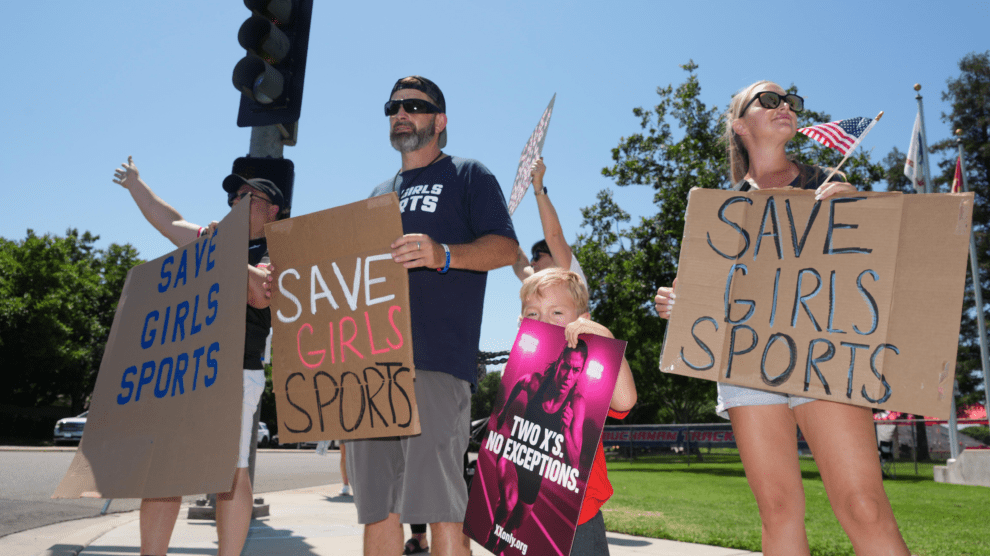
Recent events in sports have ignited a heated debate over transgender rights, particularly concerning the participation of transgender women in women’s competitions. A pivotal moment occurred during the NCAA women’s swimming championship in March 2022, when Lia Thomas, a transgender woman, tied for fifth place with fellow swimmer Riley Gaines. This seemingly ordinary race has since become a flashpoint in the ongoing struggle over inclusivity and fairness in athletics.
Riley Gaines‘ objections to Thomas‘ participation have transformed her into a prominent anti-trans activist. She argues that allowing transgender women to compete against cisgender women undermines the integrity of women’s sports. This controversy has fueled a broader conservative movement aimed at restricting transgender rights, with advocates claiming that these policies are essential to “save women’s sports.”
The anti-trans movement appears to have reached a critical juncture. A significant number of states have enacted bans on transgender girls competing in girls’ school sports. Additionally, both the NCAA and the US Olympic and Paralympic committees have implemented restrictions that exclude trans women from women’s competitions. Now, the issue is also under scrutiny by the Supreme Court, which is set to consider various cases that may shape the future of trans rights in sports.
Examining the Science Behind Performance
To better understand the implications of these policies, it is essential to delve into the science surrounding gender-affirming hormone therapy. This treatment can impact physical performance, yet questions remain about the extent of these effects and their relevance to competitive fairness in women’s sports. Research is ongoing, and many experts are still examining how such therapies influence strength, endurance, and overall athletic capability.
The conversation surrounding these issues is not merely theoretical. Imogen Sayers, a reporter who has investigated this topic extensively, speaks with Meghan Cortez-Fields, one of the last transgender swimmers to compete as a woman in the NCAA. Cortez-Fields shares her experiences and the challenges she faced within a sporting environment that is increasingly polarized around gender identity.
This evolving landscape reflects broader societal tensions regarding transgender rights. As the debate continues, the implications for young athletes, both cisgender and transgender, remain profound. The choices made now will undoubtedly influence the future of sports and the principles of inclusion and fairness that govern them.
The intersection of sports and transgender rights is a complex battleground, one that will require careful navigation as stakeholders from various backgrounds weigh in on the implications for athletes and the integrity of competitive sports. As discussions progress, the focus will remain on finding a balance that respects both the rights of athletes and the principles of fair competition.

Funko’s Price Target Increased to $4.00 as Analysts React

Humboldt Celebrates as ‘One Battle After Another’ Claims Best Picture

GSK Faces Backlash Over Asthma Inhaler Scrapping, Children Suffer

Adorable Sandhill Crane Colt Hugs Mom in The Villages

USA Unveils Star-Spangled Jerseys Ahead of March Friendlies

Newport Plans Colorful Lighting for Fourth Street Bridge

Sandia Scientists Honored for Innovative Career Journeys

Urgent: Charles M. Payment Passes Away at 78, Memorial Details Inside

NFL Free Agency: Key Moves and Player Signings in Week One

Researchers Launch $1.25M Project for Real-Time Hazard Monitoring in Hawaiʻi

Send It South Revives Culture and Community at The Momentary

UK Government Borrowing Hits £20.2 Billion in September Surge

Flipkart Republic Day Sale: iPhone 16 Plus Price Slashed by ₹23,900

Adecco SA Secures Mixed Ratings from Analysts Amid Earnings Update

Researchers Achieve Record 15.1 mA/cm² Hydrogen Production Efficiency

Globant Reveals Key Tech Forces Shaping Business in 2026

Dua Lipa Aces GCSE Spanish, Sparks Super Bowl Buzz with Fans

Inventor Achieves Breakthrough with 2 Billion FPS Laser Video
-
 Science8 months ago
Researchers Launch $1.25M Project for Real-Time Hazard Monitoring in Hawaiʻi
-
 Entertainment7 months ago
Send It South Revives Culture and Community at The Momentary
-
 World10 months ago
UK Government Borrowing Hits £20.2 Billion in September Surge
-
 Business6 months ago
Flipkart Republic Day Sale: iPhone 16 Plus Price Slashed by ₹23,900
-
 Sports8 months ago
Adecco SA Secures Mixed Ratings from Analysts Amid Earnings Update
-
 Top Stories5 months ago
Researchers Achieve Record 15.1 mA/cm² Hydrogen Production Efficiency
-
 Business8 months ago
Globant Reveals Key Tech Forces Shaping Business in 2026
-
 Entertainment10 months ago
Dua Lipa Aces GCSE Spanish, Sparks Super Bowl Buzz with Fans
-
 Science10 months ago
Inventor Achieves Breakthrough with 2 Billion FPS Laser Video
-

 Top Stories10 months ago
Charlie Sheen’s New Romance: ‘Glowing’ with Younger Partner
-

 Top Stories8 months ago
JSerra Names Hardy Nickerson as First Black Football Coach
-

 Health10 months ago
Community Unites for 7th Annual Into the Light Walk for Mental Health