
Politics
Trump’s Iran Strategy Challenges Long-Standing Assumptions

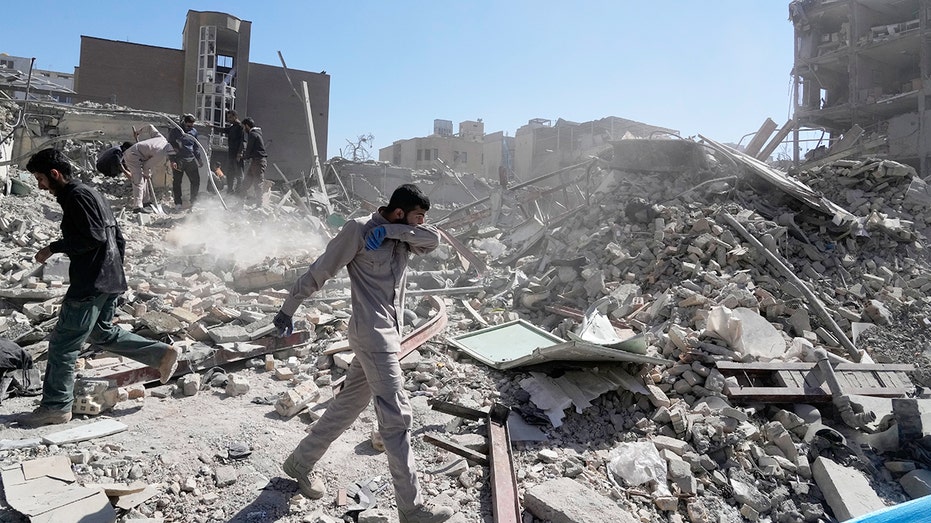
In a significant shift in U.S. foreign policy, President Donald Trump has challenged four longstanding assumptions regarding military engagement with Iran. During a recent session, House Democrats interrogated Elbridge Colby, the Under Secretary of War for Policy, concerning Trump’s previous assertions about a potential conflict with Iran, suggesting that he deviated from his campaign pledges.
The backdrop of this discussion is the unfolding Operation Epic Fury, which has revealed a stark contrast between the established foreign policy narratives and the realities on the ground. Traditionally, analysts believed that significant military action against Iran would lead to four inevitable outcomes: the supreme leader would remain untouchable, the Islamic Revolutionary Guard Corps would unleash its proxies to ignite a regional conflict, Israel would find itself isolated and vulnerable, and the U.S. would face global isolation, particularly from nations like Russia and China.
Reality on the Ground Defies Expectations
All four of these assumptions have proven incorrect. The Iranian supreme leader was not only vulnerable but was eliminated in the early stages of the operation, along with many senior officials. This decisive action was catalyzed by their own miscalculation of safety in numbers, leading to a collapse in command and control within the Iranian regime.
Contrary to predictions, there has been no widespread regional assault on Israel. Iran’s aggressive missile strikes against neighboring countries, including those that had previously mediated conflicts, have instead united regional adversaries against Tehran. Reports indicate that Arab nations may even consider joining forces with the U.S. and Israel in retaliatory actions against Iran.
The Abraham Accords, despite strains following the October 7, 2023 Hamas attack on Israel, have largely held intact. Meanwhile, Iran’s proxies, including Hamas in Gaza and Hezbollah in Lebanon, have displayed a striking lack of activity, contrary to the expected escalation of regional violence. The Houthis in Yemen have similarly opted for threats rather than significant military action.
Global Political Dynamics Shift
While Vladimir Putin and Xi Jinping have publicly condemned U.S. actions, their support for Iran has been minimal, with reports of Iranian dissatisfaction regarding the effectiveness of Russian-supplied missile defense systems. Rather than experiencing international isolation, the U.S. is reaffirming its status as a leading military power, with even European allies beginning to bolster support for the operation.
This conflict, while undeniably complex and costly, diverges sharply from the predictions made by analysts over the past decades. The operational landscape presents both risks and opportunities, prompting a reassessment of the strategic constraints that have previously hindered U.S. actions against Iran.
Trump’s approach to the Middle East has consistently defied conventional wisdom. Past predictions suggested that relocating the U.S. Embassy from Tel Aviv to Jerusalem would provoke widespread violence, or that eliminating key figures like Qasem Soleimani would lead to regional chaos. Yet, we have witnessed a different trajectory.
The notion of the “Pottery Barn Rule” in relation to regime change—suggesting that the U.S. must rebuild a nation after deposing its government—has led to protracted conflicts in Afghanistan and Iraq. With these lessons in mind, Trump appears focused on concluding military operations swiftly, allowing the Iranian populace the chance to reclaim their government without the burden of prolonged American nation-building.
Ultimately, the future of Iran is in the hands of its people, not as a fragile entity to be reconstructed, but as a sovereign nation capable of shaking off the influence of the Islamic Republic. The ongoing situation presents a unique opportunity for meaningful change, free from the imminent threat posed by a nuclear-capable Iran.

Funko’s Price Target Increased to $4.00 as Analysts React

Humboldt Celebrates as ‘One Battle After Another’ Claims Best Picture

GSK Faces Backlash Over Asthma Inhaler Scrapping, Children Suffer

Adorable Sandhill Crane Colt Hugs Mom in The Villages

USA Unveils Star-Spangled Jerseys Ahead of March Friendlies

Newport Plans Colorful Lighting for Fourth Street Bridge

Sandia Scientists Honored for Innovative Career Journeys

Urgent: Charles M. Payment Passes Away at 78, Memorial Details Inside

NFL Free Agency: Key Moves and Player Signings in Week One

Researchers Launch $1.25M Project for Real-Time Hazard Monitoring in Hawaiʻi

Send It South Revives Culture and Community at The Momentary

UK Government Borrowing Hits £20.2 Billion in September Surge

Flipkart Republic Day Sale: iPhone 16 Plus Price Slashed by ₹23,900

Adecco SA Secures Mixed Ratings from Analysts Amid Earnings Update

Researchers Achieve Record 15.1 mA/cm² Hydrogen Production Efficiency

Globant Reveals Key Tech Forces Shaping Business in 2026

Dua Lipa Aces GCSE Spanish, Sparks Super Bowl Buzz with Fans

Inventor Achieves Breakthrough with 2 Billion FPS Laser Video
-
 Science8 months ago
Researchers Launch $1.25M Project for Real-Time Hazard Monitoring in Hawaiʻi
-
 Entertainment7 months ago
Send It South Revives Culture and Community at The Momentary
-
 World9 months ago
UK Government Borrowing Hits £20.2 Billion in September Surge
-
 Business6 months ago
Flipkart Republic Day Sale: iPhone 16 Plus Price Slashed by ₹23,900
-
 Sports8 months ago
Adecco SA Secures Mixed Ratings from Analysts Amid Earnings Update
-
 Top Stories5 months ago
Researchers Achieve Record 15.1 mA/cm² Hydrogen Production Efficiency
-
 Business8 months ago
Globant Reveals Key Tech Forces Shaping Business in 2026
-
 Entertainment10 months ago
Dua Lipa Aces GCSE Spanish, Sparks Super Bowl Buzz with Fans
-
 Science10 months ago
Inventor Achieves Breakthrough with 2 Billion FPS Laser Video
-

 Top Stories10 months ago
Charlie Sheen’s New Romance: ‘Glowing’ with Younger Partner
-
 Top Stories8 months ago
JSerra Names Hardy Nickerson as First Black Football Coach
-

 Health10 months ago
Community Unites for 7th Annual Into the Light Walk for Mental Health