
Politics
U.S. Military Action in Venezuela: Implications for Latin America

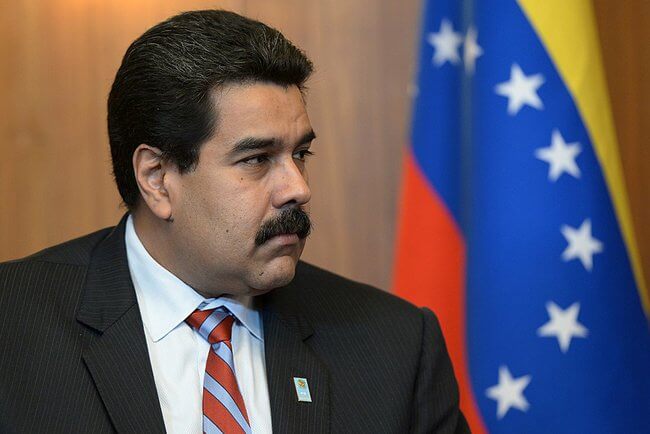
The recent arrest of Venezuelan leader Nicolás Maduro by the Delta Force has significant implications for the United States’ reputation in Latin America. This military intervention raises pressing questions regarding the future of governance in Venezuela and the broader political landscape in the region. Whether this action leads to chaos, an orderly democratic transition, or merely a superficial change within Maduro’s long-standing regime is yet to be seen.
By invoking the Monroe Doctrine to justify the intervention, President Trump has leaned into a historical narrative that positions the U.S. as an imperial power with a vested interest in Latin America’s resources. Critics argue this approach reinforces a perception of the U.S. as an impulsive bully whose military actions dictate political outcomes in the region. The intervention in Caracas, the capital of Venezuela, is not without historical context, as Latin America has faced numerous instances of American military involvement with mixed results.
The ideological battle surrounding Venezuela has intensified, particularly as human rights abuses under Maduro’s leadership come to the forefront. The Venezuelan regime, which has systematically dismantled democratic institutions since Hugo Chávez took power, is now facing charges of severe human rights violations. Maduro’s suspected involvement in the murders of exiled opponents has drawn parallels to Operation Condor, a notorious campaign during which South American dictators collaborated to eliminate dissent.
The United States has historically struggled with its image in Latin America, often siding with authoritarian regimes under the guise of fighting communism. This legacy complicates the current U.S. narrative that emphasizes democracy and human rights as guiding principles in its policy toward Venezuela. In 2001, nearly every country in the region, save for Cuba, endorsed the Inter-American Democratic Charter, asserting democracy as the only acceptable form of governance. As Venezuela has slid deeper into dictatorship, U.S. efforts to uphold this charter have waned, particularly during Trump’s administration.
Latin American nations have grown increasingly weary of the ongoing migration crisis stemming from Venezuela’s economic collapse. Over the past decade, more than 8 million Venezuelans have fled their country, with many seeking refuge in neighboring nations such as Colombia, Peru, and Brazil. This mass exodus has prompted some regional leaders to support U.S. intervention, reflecting a collective exhaustion with the humanitarian crisis.
Despite this potential support, Trump’s administration has faced criticism for its approach. In a speech delivered in May, Trump signaled a departure from traditional U.S. diplomacy, stating he would not offer “lectures on how to live” to authoritarian leaders. Additionally, Secretary of State Marco Rubio directed U.S. diplomats to refrain from commenting on the legitimacy of Venezuela’s electoral processes, which undermined the longstanding U.S. stance on promoting democracy.
As the U.S. military operation unfolds, concerns about the motivations behind the intervention remain. Trump has emphasized recovering “stolen oil” as a central objective, a narrative that resonates poorly with many in the region. This rationale draws uncomfortable comparisons to past U.S. interventions driven by economic interests, such as the 1954 coup in Guatemala.
The National Security Strategy released by the White House suggests that Latin American governments must choose between aligning with an American-led order or pursuing their own paths. Yet, prior to the intervention, many Latin Americans had rated Trump poorly, with a Latinobarómetro survey giving him a score of just 4.2 out of 10. A Pew Research poll indicated a significant decline in favorable views of the U.S. in Mexico, dropping from 61% to 29%.
As a new generation in Latin America, one that lacks direct experience with U.S. Cold War interventions, witnesses the application of American military might, the implications for U.S. diplomatic relations could be profound. Many who have long criticized U.S. inaction may find themselves nostalgic for a time of “benign neglect,” as the focus shifts from a commitment to democracy and human rights to military interventions that raise questions of legality and ethical justification.
In summary, the arrest of Nicolás Maduro and the subsequent U.S. military action present a complex challenge for the United States in Latin America. The outcomes of this intervention could redefine regional attitudes toward American influence and reshape the future of democracy in Venezuela.

Funko’s Price Target Increased to $4.00 as Analysts React

Humboldt Celebrates as ‘One Battle After Another’ Claims Best Picture

GSK Faces Backlash Over Asthma Inhaler Scrapping, Children Suffer

Adorable Sandhill Crane Colt Hugs Mom in The Villages

USA Unveils Star-Spangled Jerseys Ahead of March Friendlies

Newport Plans Colorful Lighting for Fourth Street Bridge

Sandia Scientists Honored for Innovative Career Journeys

Urgent: Charles M. Payment Passes Away at 78, Memorial Details Inside

NFL Free Agency: Key Moves and Player Signings in Week One

Researchers Launch $1.25M Project for Real-Time Hazard Monitoring in Hawaiʻi

Send It South Revives Culture and Community at The Momentary

UK Government Borrowing Hits £20.2 Billion in September Surge

Flipkart Republic Day Sale: iPhone 16 Plus Price Slashed by ₹23,900

Adecco SA Secures Mixed Ratings from Analysts Amid Earnings Update

Researchers Achieve Record 15.1 mA/cm² Hydrogen Production Efficiency

Globant Reveals Key Tech Forces Shaping Business in 2026

Dua Lipa Aces GCSE Spanish, Sparks Super Bowl Buzz with Fans

Inventor Achieves Breakthrough with 2 Billion FPS Laser Video
-
 Science8 months ago
Researchers Launch $1.25M Project for Real-Time Hazard Monitoring in Hawaiʻi
-
 Entertainment7 months ago
Send It South Revives Culture and Community at The Momentary
-
 World10 months ago
UK Government Borrowing Hits £20.2 Billion in September Surge
-
 Business6 months ago
Flipkart Republic Day Sale: iPhone 16 Plus Price Slashed by ₹23,900
-
 Sports8 months ago
Adecco SA Secures Mixed Ratings from Analysts Amid Earnings Update
-
 Top Stories5 months ago
Researchers Achieve Record 15.1 mA/cm² Hydrogen Production Efficiency
-
 Business8 months ago
Globant Reveals Key Tech Forces Shaping Business in 2026
-
 Entertainment10 months ago
Dua Lipa Aces GCSE Spanish, Sparks Super Bowl Buzz with Fans
-
 Science10 months ago
Inventor Achieves Breakthrough with 2 Billion FPS Laser Video
-

 Top Stories10 months ago
Charlie Sheen’s New Romance: ‘Glowing’ with Younger Partner
-

 Top Stories8 months ago
JSerra Names Hardy Nickerson as First Black Football Coach
-

 Health10 months ago
Community Unites for 7th Annual Into the Light Walk for Mental Health