
Science
158 Giant Tortoises Released on Floreana Island in Ecuador

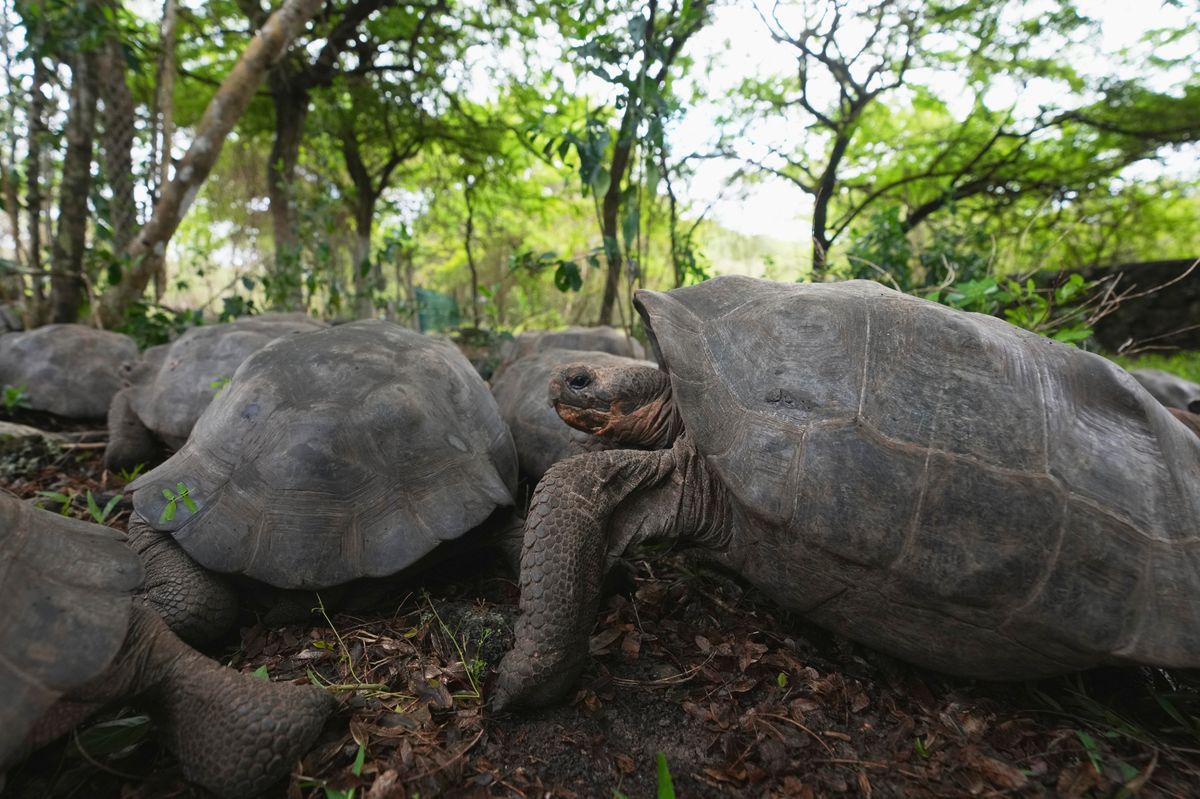
Conservationists have successfully reintroduced 158 juvenile giant tortoises to Floreana Island, Ecuador, marking a significant step in efforts to restore the island’s ecosystem. This initiative comes nearly 150 years after the last giant tortoises were removed from the island, and it serves as a key part of a larger conservation strategy aimed at revitalizing the region’s biodiversity.
The tortoises, aged between 8 and 13 years, were released on March 15, 2024, coinciding with the arrival of the first winter rains of the season. This timing is crucial as it allows the animals to acclimatize and explore their new habitat. According to Fredy Villalba, director of the Galápagos National Park breeding center on Santa Cruz Island, these tortoises are robust enough to fend off threats from introduced species such as rats and cats.
Restoring Genetic Diversity
The released tortoises are part of a planned total of 700 that will be introduced gradually to Floreana. Christian Sevilla, director of ecosystems for the Galápagos National Park, highlighted that the new tortoises carry between 40% and 80% of the genetic makeup of the Chelonoidis niger species, which has been extinct on the island for a century and a half. The lineage of these tortoises can be traced back to the Wolf Volcano on Isabela Island, a finding that continues to intrigue scientists.
By carefully selecting tortoises with strong genetic backgrounds, the breeding program aims to restore the original Floreana species gradually. Washington Tapia, a biologist and director of Biodiversa-Consultores, emphasized that the reintroduction is not merely a numbers game but a crucial effort to revive a lost lineage.
Challenges Ahead for the Ecosystem
Floreana Island, which spans approximately 67 square miles, is home to a human population of nearly 200, alongside a diverse array of wildlife, including flamingos, iguanas, and sea gulls. However, the tortoises face significant challenges from non-native plant species, such as blackberry and guava, as well as introduced animals like rats, cats, pigs, and donkeys. These invasive species pose potential threats to the survival of the newly released tortoises.
Historically, Floreana was inhabited by around 20,000 giant tortoises before human exploitation, whaling, and environmental disasters led to their extinction. The U.N. designated the Galápagos Islands as a Natural World Heritage Site in 1978, acknowledging their unique ecological significance and the need for ongoing conservation efforts.
As the tortoises begin their journey on Floreana Island, the focus remains on ensuring a sustainable future for this vital ecosystem. The successful release of these tortoises represents not only a return of a species but also a hopeful step towards ecological restoration in one of the world’s most unique habitats.

Funko’s Price Target Increased to $4.00 as Analysts React

Humboldt Celebrates as ‘One Battle After Another’ Claims Best Picture

GSK Faces Backlash Over Asthma Inhaler Scrapping, Children Suffer

Adorable Sandhill Crane Colt Hugs Mom in The Villages

USA Unveils Star-Spangled Jerseys Ahead of March Friendlies

Newport Plans Colorful Lighting for Fourth Street Bridge

Sandia Scientists Honored for Innovative Career Journeys

Urgent: Charles M. Payment Passes Away at 78, Memorial Details Inside

NFL Free Agency: Key Moves and Player Signings in Week One

Researchers Launch $1.25M Project for Real-Time Hazard Monitoring in Hawaiʻi

Send It South Revives Culture and Community at The Momentary

UK Government Borrowing Hits £20.2 Billion in September Surge

Flipkart Republic Day Sale: iPhone 16 Plus Price Slashed by ₹23,900

Adecco SA Secures Mixed Ratings from Analysts Amid Earnings Update

Researchers Achieve Record 15.1 mA/cm² Hydrogen Production Efficiency

Globant Reveals Key Tech Forces Shaping Business in 2026

Inventor Achieves Breakthrough with 2 Billion FPS Laser Video

Dua Lipa Aces GCSE Spanish, Sparks Super Bowl Buzz with Fans
-
 Science8 months ago
Researchers Launch $1.25M Project for Real-Time Hazard Monitoring in Hawaiʻi
-
 Entertainment7 months ago
Send It South Revives Culture and Community at The Momentary
-
 World9 months ago
UK Government Borrowing Hits £20.2 Billion in September Surge
-
 Business6 months ago
Flipkart Republic Day Sale: iPhone 16 Plus Price Slashed by ₹23,900
-
 Sports8 months ago
Adecco SA Secures Mixed Ratings from Analysts Amid Earnings Update
-
 Top Stories5 months ago
Researchers Achieve Record 15.1 mA/cm² Hydrogen Production Efficiency
-
 Business8 months ago
Globant Reveals Key Tech Forces Shaping Business in 2026
-
 Science9 months ago
Inventor Achieves Breakthrough with 2 Billion FPS Laser Video
-
 Entertainment10 months ago
Dua Lipa Aces GCSE Spanish, Sparks Super Bowl Buzz with Fans
-

 Top Stories10 months ago
Charlie Sheen’s New Romance: ‘Glowing’ with Younger Partner
-

 Top Stories8 months ago
JSerra Names Hardy Nickerson as First Black Football Coach
-

 Health10 months ago
Community Unites for 7th Annual Into the Light Walk for Mental Health