
Science
AI Revolutionizes 3D Reconstruction of Biological Structures

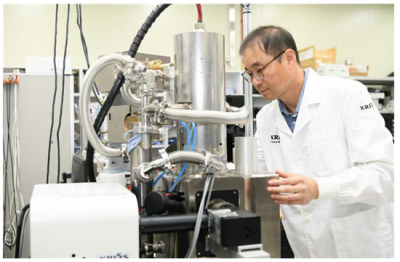
The Korea Research Institute of Standards and Science (KRISS) has introduced an innovative artificial intelligence (AI) image segmentation algorithm that can efficiently reconstruct three-dimensional (3D) structures from two-dimensional (2D) cross-sectional images. This advancement utilizes data captured by scanning electron microscopes (SEM), marking a significant leap forward in the field of microscopy and biological imaging.
The algorithm developed by KRISS allows researchers to quickly generate detailed 3D models from the often complex and intricate 2D images produced by electron microscopy. This technology not only enhances the speed of reconstruction but also improves the accuracy of the models, enabling scientists to gain deeper insights into the microstructural properties of biological samples.
Impact on Research and Industry
According to Lee Ho Seong, the president of KRISS, the new algorithm has the potential to transform various research fields, including materials science and biology. By streamlining the process of visualizing microscopic structures, researchers can focus more on analysis and interpretation rather than spending excessive time on image processing. This efficiency could lead to faster discoveries in areas such as drug development and disease understanding.
The ability to reconstruct 3D structures from 2D images also opens up new avenues for industries reliant on high-resolution imaging. These include pharmaceuticals, biotechnology, and nanotechnology sectors, where precise visualization of materials at a microscopic level is critical for product development and quality control.
Technological Details and Future Applications
The AI algorithm is designed to learn from large datasets, improving its performance over time. This machine learning approach allows it to adapt to various types of biological samples and imaging conditions. As a result, the algorithm can handle diverse challenges presented by different specimens, ensuring robust performance across applications.
In practical terms, this means that researchers can analyze complex biological phenomena—such as cellular interactions, tissue architecture, and pathogen structures—more effectively than ever before. The implications for healthcare, particularly in understanding diseases at a cellular level, could be profound, paving the way for innovative treatment strategies.
As KRISS continues to refine this technology, collaboration with academic institutions and industry partners is expected to accelerate its deployment in real-world applications. The institute aims to share its findings and technology to foster further advancements in microscopy and related fields.
The development of this AI-based reconstruction algorithm exemplifies how cutting-edge technology can enhance scientific research, bridging the gap between complex data and actionable insights. As the field of microscopy evolves, tools like these will play a crucial role in advancing our understanding of the microscopic world.

Funko’s Price Target Increased to $4.00 as Analysts React

Humboldt Celebrates as ‘One Battle After Another’ Claims Best Picture

GSK Faces Backlash Over Asthma Inhaler Scrapping, Children Suffer

Adorable Sandhill Crane Colt Hugs Mom in The Villages

USA Unveils Star-Spangled Jerseys Ahead of March Friendlies

Newport Plans Colorful Lighting for Fourth Street Bridge

Sandia Scientists Honored for Innovative Career Journeys

Urgent: Charles M. Payment Passes Away at 78, Memorial Details Inside

NFL Free Agency: Key Moves and Player Signings in Week One

Researchers Launch $1.25M Project for Real-Time Hazard Monitoring in Hawaiʻi

Send It South Revives Culture and Community at The Momentary

UK Government Borrowing Hits £20.2 Billion in September Surge

Flipkart Republic Day Sale: iPhone 16 Plus Price Slashed by ₹23,900

Adecco SA Secures Mixed Ratings from Analysts Amid Earnings Update

Researchers Achieve Record 15.1 mA/cm² Hydrogen Production Efficiency

Globant Reveals Key Tech Forces Shaping Business in 2026

Dua Lipa Aces GCSE Spanish, Sparks Super Bowl Buzz with Fans

Inventor Achieves Breakthrough with 2 Billion FPS Laser Video
-
 Science8 months ago
Researchers Launch $1.25M Project for Real-Time Hazard Monitoring in Hawaiʻi
-
 Entertainment7 months ago
Send It South Revives Culture and Community at The Momentary
-
 World10 months ago
UK Government Borrowing Hits £20.2 Billion in September Surge
-
 Business6 months ago
Flipkart Republic Day Sale: iPhone 16 Plus Price Slashed by ₹23,900
-
 Sports8 months ago
Adecco SA Secures Mixed Ratings from Analysts Amid Earnings Update
-
 Top Stories5 months ago
Researchers Achieve Record 15.1 mA/cm² Hydrogen Production Efficiency
-
 Business8 months ago
Globant Reveals Key Tech Forces Shaping Business in 2026
-
 Entertainment10 months ago
Dua Lipa Aces GCSE Spanish, Sparks Super Bowl Buzz with Fans
-
 Science10 months ago
Inventor Achieves Breakthrough with 2 Billion FPS Laser Video
-

 Top Stories10 months ago
Charlie Sheen’s New Romance: ‘Glowing’ with Younger Partner
-

 Top Stories8 months ago
JSerra Names Hardy Nickerson as First Black Football Coach
-

 Health10 months ago
Community Unites for 7th Annual Into the Light Walk for Mental Health