
Science
Harvard Scientist Discovers Unique Metal Alloy from 3I/ATLAS

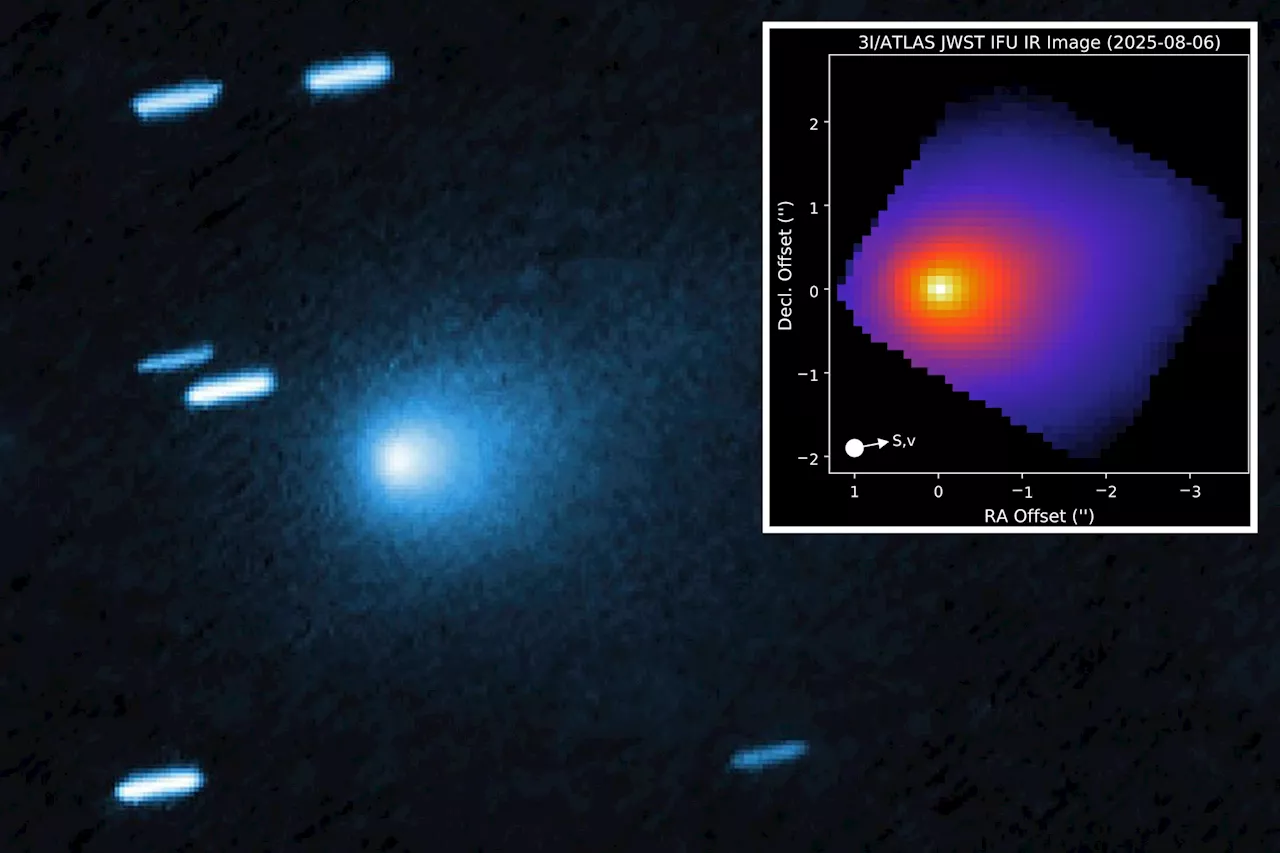
A recent discovery regarding the interstellar object known as 3I/ATLAS has captured the attention of astronomers and the public alike. According to Dr. Avi Loeb, a theoretical physicist at Harvard University, this object is emitting a metal alloy that has never been observed in nature. The findings were based on new images captured by the Keck II Telescope in Hawaii, which revealed that 3I/ATLAS is producing approximately four grams of nickel per second, devoid of iron—an unprecedented occurrence for a comet.
The alloy identified in the emissions is known as nickel tetracarbonyl, a compound typically found only in industrial contexts. Dr. Loeb noted, “There is only one place where that is known to exist and that is in industrially produced nickel alloys.” He further emphasized the significance of this observation, stating, “This was never observed for any other object.”
Unusual Characteristics of 3I/ATLAS
Another striking aspect of 3I/ATLAS is its lack of a traditional cometary tail. Dr. Loeb pointed out that comets usually exhibit beautiful tails extending away from the Sun, yet this object shows no evidence of such a feature. Instead, observations from the Hubble Space Telescope revealed a stream of materials, weighing approximately 330 pounds per second, directed towards the Sun. Dr. Loeb remarked, “Why are we seeing a jet pointed at the Sun? A stream of material in the direction of the Sun?”
The composition of this stream is primarily carbon dioxide and water, along with trace amounts of cyanide and nickel. The discovery of these materials suggests that 3I/ATLAS may challenge existing theories regarding cometary behavior and composition.
Awaited Data from Mars Reconnaissance Orbiter
As excitement builds within the scientific community and among skywatchers, there is anticipation for more images from the Mars Reconnaissance Orbiter’s HiRISE camera, which captured data between October 4 and October 7, 2025. Unfortunately, the release of these images has been delayed due to a government shutdown that has impacted NASA’s communications department. Dr. Loeb expressed frustration over the situation, stating, “Who cares about the communication departments? We want to see the data from the scientists.”
The upcoming images from the HiRISE camera are expected to provide critical insights during 3I/ATLAS’s fleeting journey through our inner Solar System. As the scientific community eagerly awaits this data, the discoveries surrounding 3I/ATLAS are already prompting a reevaluation of our understanding of interstellar objects and their materials.
This remarkable finding not only enhances our knowledge of 3I/ATLAS but also opens new avenues for research into the origins and evolution of materials in space, potentially shedding light on the building blocks of life beyond our solar system.

Funko’s Price Target Increased to $4.00 as Analysts React

Humboldt Celebrates as ‘One Battle After Another’ Claims Best Picture

GSK Faces Backlash Over Asthma Inhaler Scrapping, Children Suffer

Adorable Sandhill Crane Colt Hugs Mom in The Villages

USA Unveils Star-Spangled Jerseys Ahead of March Friendlies

Newport Plans Colorful Lighting for Fourth Street Bridge

Sandia Scientists Honored for Innovative Career Journeys

Urgent: Charles M. Payment Passes Away at 78, Memorial Details Inside

NFL Free Agency: Key Moves and Player Signings in Week One

Researchers Launch $1.25M Project for Real-Time Hazard Monitoring in Hawaiʻi

Send It South Revives Culture and Community at The Momentary

UK Government Borrowing Hits £20.2 Billion in September Surge

Flipkart Republic Day Sale: iPhone 16 Plus Price Slashed by ₹23,900

Adecco SA Secures Mixed Ratings from Analysts Amid Earnings Update

Researchers Achieve Record 15.1 mA/cm² Hydrogen Production Efficiency

Globant Reveals Key Tech Forces Shaping Business in 2026

Inventor Achieves Breakthrough with 2 Billion FPS Laser Video

Dua Lipa Aces GCSE Spanish, Sparks Super Bowl Buzz with Fans
-
 Science8 months ago
Researchers Launch $1.25M Project for Real-Time Hazard Monitoring in Hawaiʻi
-
 Entertainment7 months ago
Send It South Revives Culture and Community at The Momentary
-
 World9 months ago
UK Government Borrowing Hits £20.2 Billion in September Surge
-
 Business6 months ago
Flipkart Republic Day Sale: iPhone 16 Plus Price Slashed by ₹23,900
-
 Sports7 months ago
Adecco SA Secures Mixed Ratings from Analysts Amid Earnings Update
-
 Top Stories5 months ago
Researchers Achieve Record 15.1 mA/cm² Hydrogen Production Efficiency
-
 Business8 months ago
Globant Reveals Key Tech Forces Shaping Business in 2026
-
 Science9 months ago
Inventor Achieves Breakthrough with 2 Billion FPS Laser Video
-
 Entertainment10 months ago
Dua Lipa Aces GCSE Spanish, Sparks Super Bowl Buzz with Fans
-

 Top Stories10 months ago
Charlie Sheen’s New Romance: ‘Glowing’ with Younger Partner
-

 Top Stories7 months ago
JSerra Names Hardy Nickerson as First Black Football Coach
-

 Entertainment10 months ago
Olivia Plath Opens Up About Her Marriage Struggles and Divorce