
Science
Indonesia Transforms Toll Roads into Emergency Runways for Jets

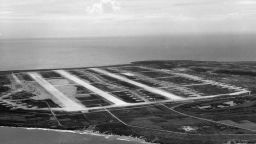
Indonesia is initiating a groundbreaking plan to convert its toll roads into emergency runways for military aircraft, effectively creating numerous makeshift aircraft carriers across its extensive archipelago. The Chief of Staff of the Indonesian Air Forces, Marshal Tonny Harjono, announced the initiative on Wednesday, highlighting the ambition for each of the country’s 39 provinces to eventually have at least one section of toll road designated for this purpose. While no specific timeline has been disclosed, the project aims to enhance national defense capabilities.
During a demonstration in Lampung province on the southern tip of the island of Sumatra, an Indonesian Air Force F-16 fighter jet and a Super Tucano attack aircraft successfully landed and took off from a toll road. Deputy Defense Minister Donny Ermawan Taufanto emphasized the significance of this achievement, stating, “This success marks an important milestone in strengthening the universal defense system.”
The concept of using highways as military landing strips is not new. Countries such as the United States, Finland, and Sweden have previously implemented similar strategies. Additionally, the US military is exploring the distribution of fighter jets across various Pacific islands to enhance operational security in potential conflicts, particularly with China. Although Indonesia has faced disputes with China regarding the South China Sea, the decision to utilize toll roads for military purposes is not aimed at any particular nation.
According to an official statement from the Indonesian Air Force, “The use of toll roads as situational alternative runways is expected to strengthen the operational readiness of the Indonesian Air Force in facing various potential threats, without reducing the primary function of toll roads as public transportation infrastructure.” Analysts suggest that this initiative is also a cost-effective solution for a country with a vast geographical footprint.
Indonesia, the world’s largest archipelago, spans over 6,000 inhabited islands along a distance of approximately 3,100 miles (5,000 kilometers). This expansive territory would be prohibitively expensive to cover with traditional aircraft carriers, which can cost billions of dollars to build and maintain.
Collin Koh, a research fellow at the S. Rajaratnam School of International Studies in Singapore, highlighted the strategic advantages of the new approach. “An aircraft carrier doesn’t seem that attractive as a cost-effective platform,” Koh stated. “Having countless toll roads and highways earmarked as emergency military runways across the entire archipelago makes more strategic and operational sense.” He noted that multiple runways reduce the risk associated with losing a single aircraft carrier, as the loss of one roadway would not incapacitate the entire operation.
The Indonesian Air Force intends for designated roadway sections to measure 3,000 meters (almost two miles) long, allowing military aircraft to conduct landings and takeoffs safely. Harjono acknowledged the impressive skills of Indonesian pilots, who successfully landed on roadways that are only half the width of standard airport runways. “Toll roads are only about 24 meters (79 feet) wide, narrower than airport runways at 45 to 60 meters. It’s risky, but Air Force pilots are trained for these conditions,” he remarked, as reported by the government-run Antara news agency.
This innovative strategy represents a significant step forward in strengthening Indonesia’s air defense capabilities while ensuring the country’s infrastructure continues to serve the public effectively. As the plan unfolds, it will be closely watched by regional observers and defense analysts alike.

Funko’s Price Target Increased to $4.00 as Analysts React

Humboldt Celebrates as ‘One Battle After Another’ Claims Best Picture

GSK Faces Backlash Over Asthma Inhaler Scrapping, Children Suffer

Adorable Sandhill Crane Colt Hugs Mom in The Villages

USA Unveils Star-Spangled Jerseys Ahead of March Friendlies

Newport Plans Colorful Lighting for Fourth Street Bridge

Sandia Scientists Honored for Innovative Career Journeys

Urgent: Charles M. Payment Passes Away at 78, Memorial Details Inside

NFL Free Agency: Key Moves and Player Signings in Week One

Researchers Launch $1.25M Project for Real-Time Hazard Monitoring in Hawaiʻi

Send It South Revives Culture and Community at The Momentary

UK Government Borrowing Hits £20.2 Billion in September Surge

Flipkart Republic Day Sale: iPhone 16 Plus Price Slashed by ₹23,900

Adecco SA Secures Mixed Ratings from Analysts Amid Earnings Update

Researchers Achieve Record 15.1 mA/cm² Hydrogen Production Efficiency

Globant Reveals Key Tech Forces Shaping Business in 2026

Inventor Achieves Breakthrough with 2 Billion FPS Laser Video

Dua Lipa Aces GCSE Spanish, Sparks Super Bowl Buzz with Fans
-
 Science8 months ago
Researchers Launch $1.25M Project for Real-Time Hazard Monitoring in Hawaiʻi
-
 Entertainment7 months ago
Send It South Revives Culture and Community at The Momentary
-
 World9 months ago
UK Government Borrowing Hits £20.2 Billion in September Surge
-
 Business6 months ago
Flipkart Republic Day Sale: iPhone 16 Plus Price Slashed by ₹23,900
-
 Sports7 months ago
Adecco SA Secures Mixed Ratings from Analysts Amid Earnings Update
-
 Top Stories5 months ago
Researchers Achieve Record 15.1 mA/cm² Hydrogen Production Efficiency
-
 Business8 months ago
Globant Reveals Key Tech Forces Shaping Business in 2026
-
 Science9 months ago
Inventor Achieves Breakthrough with 2 Billion FPS Laser Video
-
 Entertainment10 months ago
Dua Lipa Aces GCSE Spanish, Sparks Super Bowl Buzz with Fans
-

 Top Stories10 months ago
Charlie Sheen’s New Romance: ‘Glowing’ with Younger Partner
-

 Top Stories7 months ago
JSerra Names Hardy Nickerson as First Black Football Coach
-

 Entertainment10 months ago
Olivia Plath Opens Up About Her Marriage Struggles and Divorce