
Science
Jellyfish and Sea Anemones Display Sleep Patterns Similar to Humans

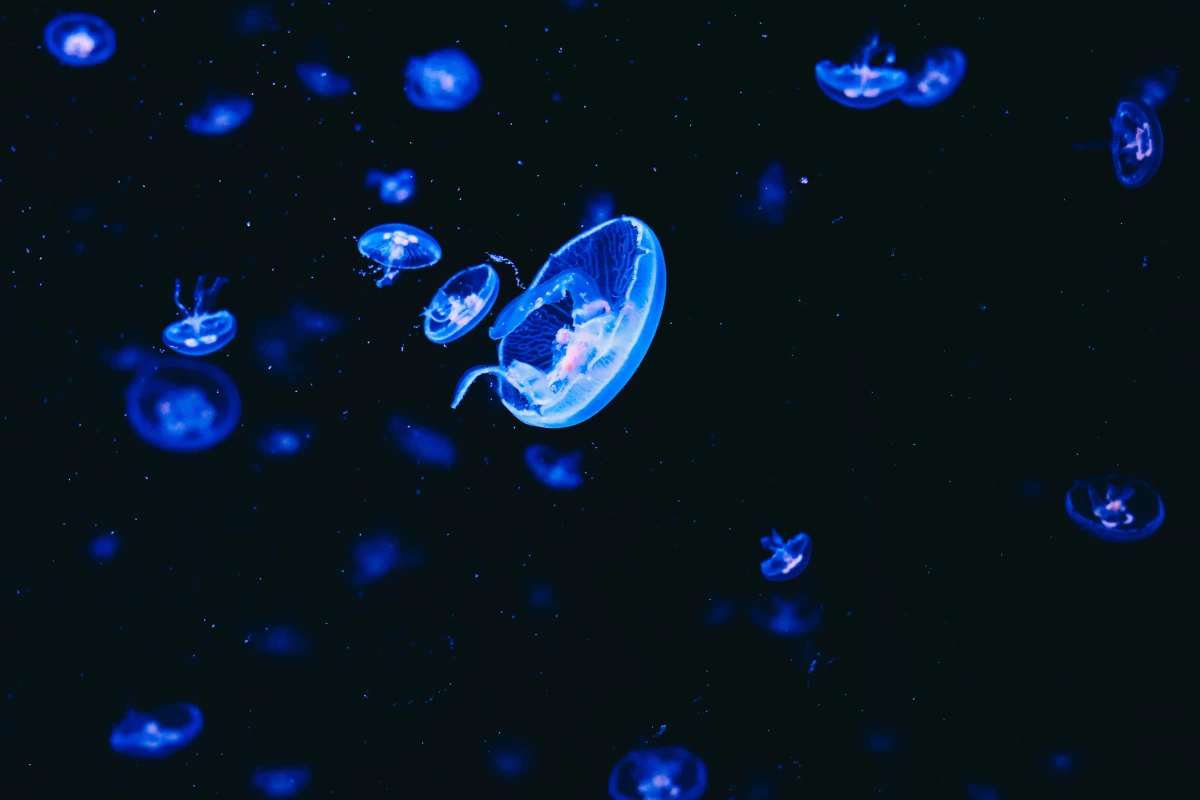
Research has revealed that jellyfish and sea anemones exhibit sleep patterns strikingly similar to those of humans. A study published in Nature Communications indicates that these ancient creatures, which possess a nervous system but lack a brain, sleep for approximately one-third of the day. This finding challenges previous assumptions about sleep in simpler organisms and suggests that sleep may have evolved long before the development of the brain.
Lior Appelbaum, a neurobiologist at Bar-Ilan University, emphasized the significance of the discovery, stating, “Jellyfish and sea anemones really do sleep, which wasn’t entirely clear before.” He added that sleep plays a crucial role in helping these animals recover from cellular stress and maintain their cellular functions.
The question of why animals sleep has intrigued researchers for decades. Despite sleep being a common trait across the animal kingdom, the underlying reasons for this behavior remain a topic of debate. Interestingly, sleep renders animals less aware of their surroundings, thereby increasing their vulnerability to predators. This apparent evolutionary trade-off motivated Appelbaum and his team to explore the evolution of sleep in these organisms.
To investigate this phenomenon, the researchers focused on the upside-down jellyfish (Cassiopea andromeda) and the starlet sea anemone (Nematostella vectensis). They utilized infrared cameras and movement-tracking software to observe periods of activity and inactivity in these cnidarians over a standard 24-hour cycle, replicating natural day conditions with 12 hours of light and 12 hours of darkness.
The findings revealed that jellyfish, which host photosynthetic algae, are primarily active during daylight hours and predominantly sleep at night. Remarkably, they also exhibit a tendency to take midday naps, similar to human post-lunch habits. Conversely, sea anemones are more active at night and tend to sleep during the early morning hours.
To confirm that the jellyfish and sea anemones were genuinely sleeping rather than simply resting, Appelbaum’s team measured the animals’ responsiveness to stimuli such as light or food during inactive periods. They defined a sleep-like state in jellyfish as pulsing fewer than 37 times per minute for over three minutes, while sea anemones displayed eight minutes or more of stillness.
Appelbaum noted, “What was surprising was that both animals sleep approximately eight hours, which is interesting because we also sleep approximately one-third of our lives, and they have more or less the same part.” This parallel raises intriguing questions about the evolutionary origins of sleep.
The study also delved into the factors that trigger sleep. Previous research indicated that increased DNA damage in nerve cells promotes sleep in zebrafish. Building on this understanding, Appelbaum’s team exposed jellyfish and sea anemones to ultraviolet (UV) radiation and specific chemicals known to cause DNA damage. Additionally, they disrupted sleep with subtle interventions, such as water pulses or gentle currents.
The results indicated that DNA damage heightened during wake periods and diminished during sleep. Notably, both jellyfish and sea anemones responded to DNA damage by increasing their sleep duration, suggesting that sleep is critical for cellular repair. Appelbaum stated, “Sleep evolved way before the brain – it’s essential for cells, cellular maintenance, and neurons.”
This groundbreaking research not only enhances our understanding of sleep in simpler organisms but also raises further questions about the evolutionary significance of sleep across the animal kingdom. The implications of these findings may extend beyond jellyfish and sea anemones, potentially offering insights into the fundamental biological processes that govern sleep in all animals, including humans.

Funko’s Price Target Increased to $4.00 as Analysts React

Humboldt Celebrates as ‘One Battle After Another’ Claims Best Picture

GSK Faces Backlash Over Asthma Inhaler Scrapping, Children Suffer

Adorable Sandhill Crane Colt Hugs Mom in The Villages

USA Unveils Star-Spangled Jerseys Ahead of March Friendlies

Newport Plans Colorful Lighting for Fourth Street Bridge

Sandia Scientists Honored for Innovative Career Journeys

Urgent: Charles M. Payment Passes Away at 78, Memorial Details Inside

NFL Free Agency: Key Moves and Player Signings in Week One

Researchers Launch $1.25M Project for Real-Time Hazard Monitoring in Hawaiʻi

Send It South Revives Culture and Community at The Momentary

UK Government Borrowing Hits £20.2 Billion in September Surge

Flipkart Republic Day Sale: iPhone 16 Plus Price Slashed by ₹23,900

Adecco SA Secures Mixed Ratings from Analysts Amid Earnings Update

Researchers Achieve Record 15.1 mA/cm² Hydrogen Production Efficiency

Globant Reveals Key Tech Forces Shaping Business in 2026

Inventor Achieves Breakthrough with 2 Billion FPS Laser Video

Dua Lipa Aces GCSE Spanish, Sparks Super Bowl Buzz with Fans
-
 Science8 months ago
Researchers Launch $1.25M Project for Real-Time Hazard Monitoring in Hawaiʻi
-
 Entertainment7 months ago
Send It South Revives Culture and Community at The Momentary
-
 World9 months ago
UK Government Borrowing Hits £20.2 Billion in September Surge
-
 Business6 months ago
Flipkart Republic Day Sale: iPhone 16 Plus Price Slashed by ₹23,900
-
 Sports8 months ago
Adecco SA Secures Mixed Ratings from Analysts Amid Earnings Update
-
 Top Stories5 months ago
Researchers Achieve Record 15.1 mA/cm² Hydrogen Production Efficiency
-
 Business8 months ago
Globant Reveals Key Tech Forces Shaping Business in 2026
-
 Science9 months ago
Inventor Achieves Breakthrough with 2 Billion FPS Laser Video
-
 Entertainment10 months ago
Dua Lipa Aces GCSE Spanish, Sparks Super Bowl Buzz with Fans
-

 Top Stories10 months ago
Charlie Sheen’s New Romance: ‘Glowing’ with Younger Partner
-

 Top Stories7 months ago
JSerra Names Hardy Nickerson as First Black Football Coach
-

 Health10 months ago
Community Unites for 7th Annual Into the Light Walk for Mental Health