
Science
New Study Indicates Universe Is Slowing Down Expansion Rate

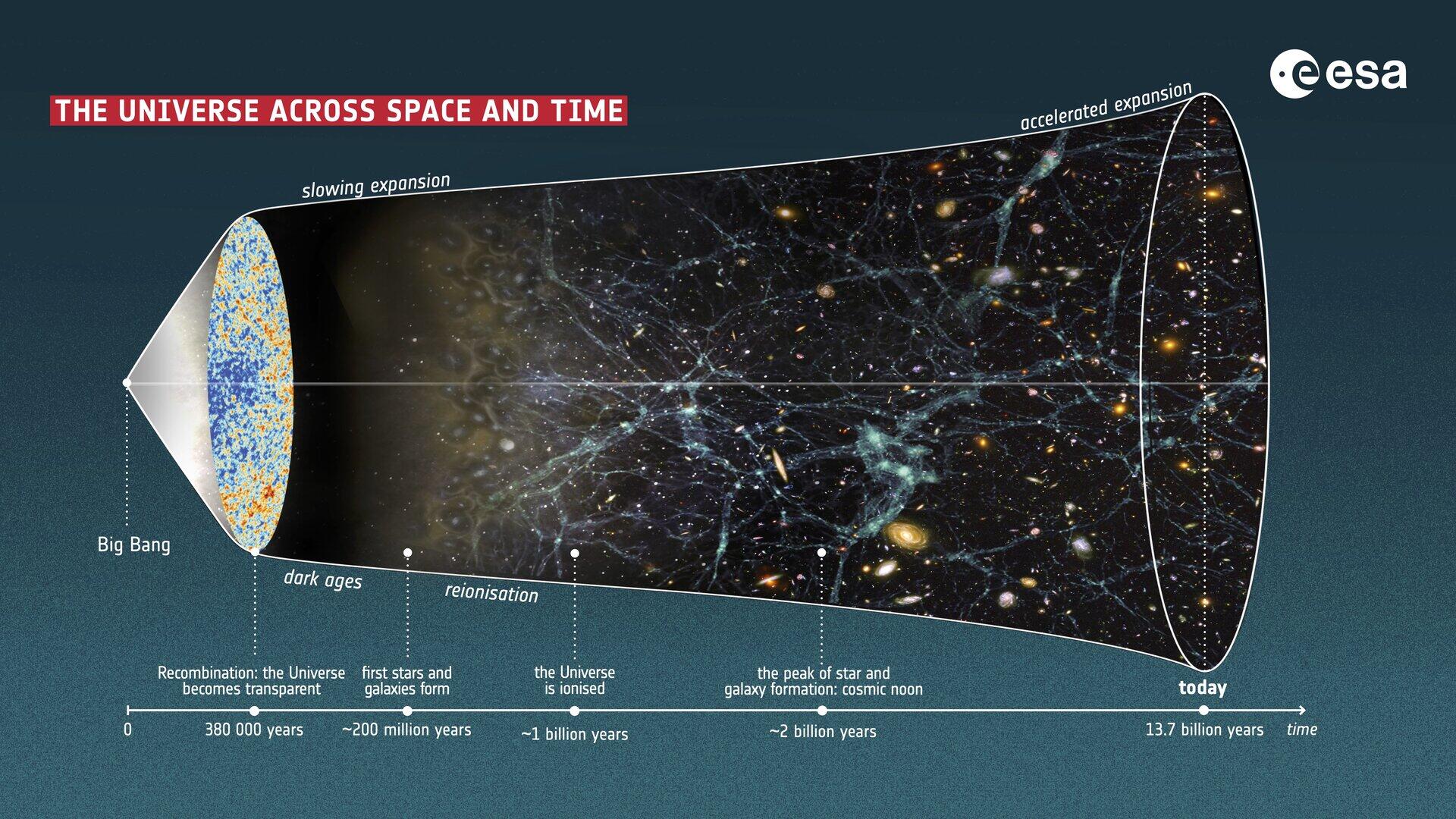
A recent study led by Professor Young-Wook Lee from Yonsei University in South Korea suggests that the universe is currently experiencing a slowdown in its expansion. The findings challenge long-held beliefs about the behavior of dark energy, which has been thought to drive the accelerating expansion of the cosmos. The research provides strong statistical evidence supporting this decelerated phase at the present epoch.
The concept of a “Hubble residual” is central to this study, as it tracks the age of the universe’s host with significant statistical backing. According to Professor Lee, “Our study shows that the universe has already entered a phase of decelerated expansion at the present epoch and that dark energy evolves with time much more rapidly than previously thought.” This statement emphasizes the potential implications of the research, which could lead to a fundamental shift in cosmological understanding.
Implications for Cosmology
If these findings are confirmed through further research, they could signify a major paradigm shift in cosmology, marking the first significant change in understanding dark energy since its discovery approximately 27 years ago. The implications extend beyond theoretical physics, prompting a reevaluation of existing models that describe the universe’s expansion and the forces that govern it.
The study’s results align with growing skepticism within the scientific community regarding the nature of dark energy. While previous models posited a consistent acceleration, this new evidence suggests a more complex relationship that could redefine how scientists approach cosmological research.
The research also highlights the importance of ongoing observation and analysis in astronomy. Understanding the universe’s expansion is crucial not only for theoretical physics but also for grasping the larger narrative of cosmic evolution.
As this investigation develops, the scientific community will likely scrutinize the methodology and data presented by Lee and his team. Continued exploration into dark energy may provide further insights into how the universe operates, reshaping our understanding of fundamental cosmic principles.
In conclusion, the assertion that the universe is slowing down raises profound questions about our current models and theories. The findings from Yonsei University could pave the way for new avenues of research in cosmology, inviting scientists to rethink long-standing assumptions about the cosmos and its future trajectory.

Funko’s Price Target Increased to $4.00 as Analysts React

Humboldt Celebrates as ‘One Battle After Another’ Claims Best Picture

GSK Faces Backlash Over Asthma Inhaler Scrapping, Children Suffer

Adorable Sandhill Crane Colt Hugs Mom in The Villages

USA Unveils Star-Spangled Jerseys Ahead of March Friendlies

Newport Plans Colorful Lighting for Fourth Street Bridge

Sandia Scientists Honored for Innovative Career Journeys

Urgent: Charles M. Payment Passes Away at 78, Memorial Details Inside

NFL Free Agency: Key Moves and Player Signings in Week One

Researchers Launch $1.25M Project for Real-Time Hazard Monitoring in Hawaiʻi

Send It South Revives Culture and Community at The Momentary

UK Government Borrowing Hits £20.2 Billion in September Surge

Flipkart Republic Day Sale: iPhone 16 Plus Price Slashed by ₹23,900

Adecco SA Secures Mixed Ratings from Analysts Amid Earnings Update

Researchers Achieve Record 15.1 mA/cm² Hydrogen Production Efficiency

Globant Reveals Key Tech Forces Shaping Business in 2026

Inventor Achieves Breakthrough with 2 Billion FPS Laser Video

Dua Lipa Aces GCSE Spanish, Sparks Super Bowl Buzz with Fans
-
 Science8 months ago
Researchers Launch $1.25M Project for Real-Time Hazard Monitoring in Hawaiʻi
-
 Entertainment7 months ago
Send It South Revives Culture and Community at The Momentary
-
 World9 months ago
UK Government Borrowing Hits £20.2 Billion in September Surge
-
 Business6 months ago
Flipkart Republic Day Sale: iPhone 16 Plus Price Slashed by ₹23,900
-
 Sports7 months ago
Adecco SA Secures Mixed Ratings from Analysts Amid Earnings Update
-
 Top Stories5 months ago
Researchers Achieve Record 15.1 mA/cm² Hydrogen Production Efficiency
-
 Business8 months ago
Globant Reveals Key Tech Forces Shaping Business in 2026
-
 Science9 months ago
Inventor Achieves Breakthrough with 2 Billion FPS Laser Video
-
 Entertainment10 months ago
Dua Lipa Aces GCSE Spanish, Sparks Super Bowl Buzz with Fans
-

 Top Stories10 months ago
Charlie Sheen’s New Romance: ‘Glowing’ with Younger Partner
-

 Top Stories7 months ago
JSerra Names Hardy Nickerson as First Black Football Coach
-

 Health10 months ago
Community Unites for 7th Annual Into the Light Walk for Mental Health