
Science
Renowned Physicist George F. Smoot Passes Away at 80

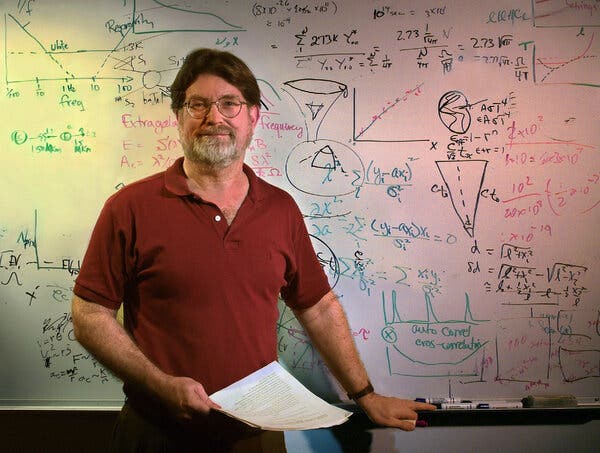
George F. Smoot, the influential American physicist and Nobel laureate, passed away at the age of 80 on September 18 at his home in Paris. His death was confirmed by his sister, Sharon Bowie, and was attributed to cardiac arrest. Smoot was widely recognized for his pivotal role in understanding the early universe, particularly for providing evidence of the primordial seeds that eventually formed galaxies and galaxy clusters.
Dr. Smoot was a research scientist at the Lawrence Berkeley National Laboratory and the Space Sciences Laboratory at the University of California, Berkeley. He led a team that developed an instrument in the 1970s, which was later launched into space aboard the NASA satellite, the Cosmic Background Explorer (COBE), in 1989. This instrument detected minute variations in the temperature of light that remained from the Big Bang, offering crucial insight into the universe’s formation.
Transforming Cosmology Through Groundbreaking Discoveries
The data collected by COBE provided a detailed map of how cosmic matter was unevenly distributed billions of years ago, establishing the foundational structure of the current universe. In 1992, when Dr. Smoot announced the COBE findings at an American Physical Society conference, he remarked, “If you’re religious, it’s like seeing God.” This declaration captured global attention, with The New York Times featuring it as the lead story on April 24, 1992, under the headline “Scientists Report Profound Insight on How Time Began.”
Renowned theoretical physicist Stephen Hawking described the findings as “the greatest discovery of the century, if not of all time.” Dr. Smoot’s research built upon the earlier work of physicists Arno A. Penzias and Robert W. Wilson, who in 1964 discovered the cosmic microwave background, confirming that the universe had a beginning.
Before Smoot’s contributions, cosmology lacked empirical data, relying heavily on speculation. The results from the COBE satellite fundamentally changed this, transitioning cosmology into a discipline supported by precise measurements.
A Complex Legacy and Continued Influence
In 2006, Dr. Smoot shared the Nobel Prize in Physics with John C. Mather, a cosmologist at NASA’s Goddard Space Flight Center, recognizing their collaborative achievements through the COBE project. While Dr. Smoot was celebrated for his brilliance, he faced criticism from some colleagues who felt he received disproportionate credit for the team’s scientific results. Just days before the pivotal conference in 1992, a news release from Berkeley Lab was perceived as attributing the discovery of the light temperature variations solely to Smoot, which sparked controversy among team members.
In his 1993 book, “Wrinkles in Time: Witness to the Birth of the Universe,” co-authored with Keay Davidson, Dr. Smoot chronicled the discovery process, although some collaborators disputed his portrayal of events. Dr. Mather later published his own account in “The Very First Light: The True Inside Story of the Scientific Journey Back to the Dawn of the Universe,” which differed in detail from Smoot’s narrative. In an interview, Dr. Mather acknowledged Smoot’s complexities, stating he was “ingenious and thoughtful and enthusiastic, as everybody knows.”
Born on February 20, 1945, in Yukon, Florida, Dr. Smoot was influenced by his parents, particularly his mother, a science teacher, and his father, a hydrologist. He pursued his education at the Massachusetts Institute of Technology, earning degrees in physics and mathematics in 1966, followed by a Ph.D. in particle physics in 1970.
Dr. Smoot’s career evolved as he transitioned from particle physics to cosmology, developing instruments to measure temperature differences in the cosmic microwave background. His innovative work led to significant discoveries, including the Milky Way’s velocity through space.
In addition to his scientific endeavors, Dr. Smoot dedicated time to public outreach, teaching high school teachers and students about cosmology. He also gained public recognition through appearances on popular television shows, including the CBS sitcom “The Big Bang Theory” and the game show “Are You Smarter Than a Fifth Grader?,” where he became the second person to win $1 million. Dr. Smoot noted that he donated his Nobel Prize winnings to establish scholarships and fellowships for aspiring scientists, emphasizing his commitment to education.
Dr. Smoot is survived by his partner, Nóra Csiszár, and his sister. His contributions to cosmology and public science education will leave a lasting legacy, inspiring future generations of scientists and enthusiasts alike.

Funko’s Price Target Increased to $4.00 as Analysts React

Humboldt Celebrates as ‘One Battle After Another’ Claims Best Picture

GSK Faces Backlash Over Asthma Inhaler Scrapping, Children Suffer

Adorable Sandhill Crane Colt Hugs Mom in The Villages

USA Unveils Star-Spangled Jerseys Ahead of March Friendlies

Newport Plans Colorful Lighting for Fourth Street Bridge

Sandia Scientists Honored for Innovative Career Journeys

Urgent: Charles M. Payment Passes Away at 78, Memorial Details Inside

NFL Free Agency: Key Moves and Player Signings in Week One

Researchers Launch $1.25M Project for Real-Time Hazard Monitoring in Hawaiʻi

Send It South Revives Culture and Community at The Momentary

UK Government Borrowing Hits £20.2 Billion in September Surge

Flipkart Republic Day Sale: iPhone 16 Plus Price Slashed by ₹23,900

Adecco SA Secures Mixed Ratings from Analysts Amid Earnings Update

Researchers Achieve Record 15.1 mA/cm² Hydrogen Production Efficiency

Globant Reveals Key Tech Forces Shaping Business in 2026

Inventor Achieves Breakthrough with 2 Billion FPS Laser Video

Dua Lipa Aces GCSE Spanish, Sparks Super Bowl Buzz with Fans
-
 Science8 months ago
Researchers Launch $1.25M Project for Real-Time Hazard Monitoring in Hawaiʻi
-
 Entertainment7 months ago
Send It South Revives Culture and Community at The Momentary
-
 World9 months ago
UK Government Borrowing Hits £20.2 Billion in September Surge
-
 Business6 months ago
Flipkart Republic Day Sale: iPhone 16 Plus Price Slashed by ₹23,900
-
 Sports8 months ago
Adecco SA Secures Mixed Ratings from Analysts Amid Earnings Update
-
 Top Stories5 months ago
Researchers Achieve Record 15.1 mA/cm² Hydrogen Production Efficiency
-
 Business8 months ago
Globant Reveals Key Tech Forces Shaping Business in 2026
-
 Science9 months ago
Inventor Achieves Breakthrough with 2 Billion FPS Laser Video
-
 Entertainment10 months ago
Dua Lipa Aces GCSE Spanish, Sparks Super Bowl Buzz with Fans
-

 Top Stories10 months ago
Charlie Sheen’s New Romance: ‘Glowing’ with Younger Partner
-

 Top Stories8 months ago
JSerra Names Hardy Nickerson as First Black Football Coach
-

 Health10 months ago
Community Unites for 7th Annual Into the Light Walk for Mental Health