
Science
Researchers Simulate Early Universe Magnetic Fields to Solve Hubble Tension

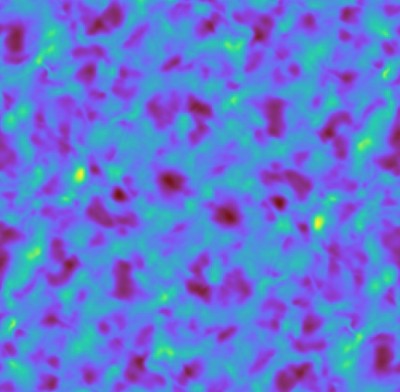
An international team of researchers has simulated magnetic forces from the early universe, discovering that these primordial magnetic fields could help reconcile the discrepancies in the observed and calculated rates of the universe’s expansion. This breakthrough addresses the ongoing debate known as the Hubble tension, which highlights the differences in measurements of the universe’s expansion rate using different observational methods.
The Hubble tension stems from varying results obtained by the Hubble Space Telescope and measurements of the cosmic microwave background radiation. While the former suggests an expansion rate of about 73 kilometers per second per megaparsec, studies involving the latter indicate a lower rate of approximately 67 kilometers per second per megaparsec. This discrepancy has puzzled astronomers for years, leading to questions about the fundamental understanding of cosmic evolution.
Significance of Magnetic Fields in Cosmic Expansion
The research team, comprising scientists from several institutions, including the University of California, Berkeley and the European Space Agency, employed sophisticated simulations to model the effects of magnetic fields in the early universe. Their findings suggest that these magnetic forces could significantly influence the expansion dynamics of the cosmos.
The presence of such magnetic fields in the universe’s infancy may provide additional gravitational effects, altering the behavior of matter and radiation. By incorporating these factors into their models, the researchers believe they can bridge the gap between the two differing expansion rates, bringing a more cohesive understanding to the issue.
According to the lead researcher, Dr. Sarah Thompson, “Our simulations indicate that primordial magnetic fields could play a crucial role in determining cosmic expansion. This insight not only addresses the Hubble tension but also opens new avenues for exploring the early universe’s conditions.” The implications of their research extend beyond the Hubble tension, potentially shedding light on other cosmic mysteries, such as dark matter and dark energy.
Future Research Directions
The team’s work is not the final answer but rather a stepping stone for future studies. To validate their findings, further observational data is needed. The researchers plan to collaborate with other institutions to gather more precise measurements of cosmic expansion and the role of magnetic fields.
The research was published in the journal Astrophysical Journal in March 2024, where it has sparked interest within the cosmic community. As this field of study evolves, the potential for resolving fundamental questions about the universe continues to grow.
In conclusion, the simulation of early universe magnetic fields represents a significant advancement in our understanding of the cosmos. By bridging the gap between different measurements of cosmic expansion, researchers are moving closer to unraveling the mysteries that govern the universe’s evolution.

Funko’s Price Target Increased to $4.00 as Analysts React

Humboldt Celebrates as ‘One Battle After Another’ Claims Best Picture

GSK Faces Backlash Over Asthma Inhaler Scrapping, Children Suffer

Adorable Sandhill Crane Colt Hugs Mom in The Villages

USA Unveils Star-Spangled Jerseys Ahead of March Friendlies

Newport Plans Colorful Lighting for Fourth Street Bridge

Sandia Scientists Honored for Innovative Career Journeys

Urgent: Charles M. Payment Passes Away at 78, Memorial Details Inside

NFL Free Agency: Key Moves and Player Signings in Week One

Researchers Launch $1.25M Project for Real-Time Hazard Monitoring in Hawaiʻi

Send It South Revives Culture and Community at The Momentary

UK Government Borrowing Hits £20.2 Billion in September Surge

Flipkart Republic Day Sale: iPhone 16 Plus Price Slashed by ₹23,900

Adecco SA Secures Mixed Ratings from Analysts Amid Earnings Update

Researchers Achieve Record 15.1 mA/cm² Hydrogen Production Efficiency

Globant Reveals Key Tech Forces Shaping Business in 2026

Inventor Achieves Breakthrough with 2 Billion FPS Laser Video

Dua Lipa Aces GCSE Spanish, Sparks Super Bowl Buzz with Fans
-
 Science8 months ago
Researchers Launch $1.25M Project for Real-Time Hazard Monitoring in Hawaiʻi
-
 Entertainment7 months ago
Send It South Revives Culture and Community at The Momentary
-
 World9 months ago
UK Government Borrowing Hits £20.2 Billion in September Surge
-
 Business6 months ago
Flipkart Republic Day Sale: iPhone 16 Plus Price Slashed by ₹23,900
-
 Sports7 months ago
Adecco SA Secures Mixed Ratings from Analysts Amid Earnings Update
-
 Top Stories5 months ago
Researchers Achieve Record 15.1 mA/cm² Hydrogen Production Efficiency
-
 Business8 months ago
Globant Reveals Key Tech Forces Shaping Business in 2026
-
 Science9 months ago
Inventor Achieves Breakthrough with 2 Billion FPS Laser Video
-
 Entertainment10 months ago
Dua Lipa Aces GCSE Spanish, Sparks Super Bowl Buzz with Fans
-

 Top Stories10 months ago
Charlie Sheen’s New Romance: ‘Glowing’ with Younger Partner
-

 Health10 months ago
Community Unites for 7th Annual Into the Light Walk for Mental Health
-

 Top Stories7 months ago
JSerra Names Hardy Nickerson as First Black Football Coach