
Science
Researchers Uncover Toxoplasma gondii Development with New Imaging Technique


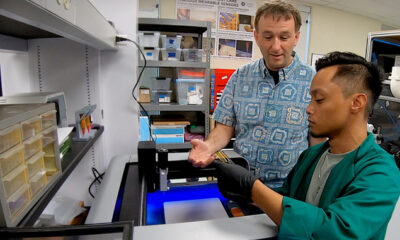
A groundbreaking study has enabled scientists to observe how the parasite Toxoplasma gondii develops, potentially leading to new treatment options. This organism infects approximately one-third of the global population, affecting both humans and animals. Researchers at the USF Health Morsani College of Medicine adapted a fluorescent imaging system, typically utilized for human cell studies, to monitor the growth of this microscopic parasite in real time.
The innovative method allows for enhanced visualization of the parasite’s lifecycle, providing valuable insights into its behavior and interactions within host organisms. Traditional methods of studying Toxoplasma gondii have faced challenges due to its small size and complex biology. By employing this advanced imaging technique, researchers can now track the parasite’s development more effectively, paving the way for targeted drug treatments.
Implications for Treatment and Research
The findings from this research are significant, as they could lead to improved strategies for combating infections caused by Toxoplasma gondii. This parasite is responsible for various health issues, particularly in individuals with weakened immune systems, such as those with HIV/AIDS or pregnant women. Understanding its development could unveil vulnerabilities that new anti-parasitic drugs might exploit.
According to the World Health Organization, approximately 30% of the global population is infected with this parasite, making it a major public health concern. The ability to observe its growth in real time enhances the potential for developing more effective therapeutic options. As researchers continue to refine this imaging technique, further studies will likely expand on these initial findings, leading to deeper insights into the parasite’s biology.
Moreover, the adaptation of this fluorescent imaging system represents a significant advancement in infectious disease research. By bridging the gap between human cell studies and parasitic infections, scientists can explore new avenues for treatment that may not have been previously considered. This could be particularly important given the increasing resistance to existing treatments and the need for innovative approaches to manage parasitic diseases.
As the research progresses, the team at USF Health Morsani College of Medicine aims to collaborate with pharmaceutical companies to translate these findings into practical drug development. The potential for new therapies could have a profound impact on public health, particularly in regions where Toxoplasma gondii poses a significant risk.
In summary, the integration of fluorescent imaging technology into the study of Toxoplasma gondii marks a pivotal step forward in understanding this widespread parasite. With continued research, there is hope for the development of effective treatments that can alleviate the burden of infection for millions worldwide.

Funko’s Price Target Increased to $4.00 as Analysts React

Humboldt Celebrates as ‘One Battle After Another’ Claims Best Picture

GSK Faces Backlash Over Asthma Inhaler Scrapping, Children Suffer

Adorable Sandhill Crane Colt Hugs Mom in The Villages

USA Unveils Star-Spangled Jerseys Ahead of March Friendlies

Newport Plans Colorful Lighting for Fourth Street Bridge

Sandia Scientists Honored for Innovative Career Journeys

Urgent: Charles M. Payment Passes Away at 78, Memorial Details Inside

NFL Free Agency: Key Moves and Player Signings in Week One

Researchers Launch $1.25M Project for Real-Time Hazard Monitoring in Hawaiʻi

Send It South Revives Culture and Community at The Momentary

UK Government Borrowing Hits £20.2 Billion in September Surge

Flipkart Republic Day Sale: iPhone 16 Plus Price Slashed by ₹23,900

Adecco SA Secures Mixed Ratings from Analysts Amid Earnings Update

Researchers Achieve Record 15.1 mA/cm² Hydrogen Production Efficiency

Globant Reveals Key Tech Forces Shaping Business in 2026

Inventor Achieves Breakthrough with 2 Billion FPS Laser Video

Dua Lipa Aces GCSE Spanish, Sparks Super Bowl Buzz with Fans
-
 Science8 months ago
Researchers Launch $1.25M Project for Real-Time Hazard Monitoring in Hawaiʻi
-
 Entertainment7 months ago
Send It South Revives Culture and Community at The Momentary
-
 World9 months ago
UK Government Borrowing Hits £20.2 Billion in September Surge
-
 Business6 months ago
Flipkart Republic Day Sale: iPhone 16 Plus Price Slashed by ₹23,900
-
 Sports7 months ago
Adecco SA Secures Mixed Ratings from Analysts Amid Earnings Update
-
 Top Stories5 months ago
Researchers Achieve Record 15.1 mA/cm² Hydrogen Production Efficiency
-
 Business8 months ago
Globant Reveals Key Tech Forces Shaping Business in 2026
-
 Science9 months ago
Inventor Achieves Breakthrough with 2 Billion FPS Laser Video
-
 Entertainment10 months ago
Dua Lipa Aces GCSE Spanish, Sparks Super Bowl Buzz with Fans
-

 Top Stories10 months ago
Charlie Sheen’s New Romance: ‘Glowing’ with Younger Partner
-

 Top Stories7 months ago
JSerra Names Hardy Nickerson as First Black Football Coach
-

 Entertainment10 months ago
Olivia Plath Opens Up About Her Marriage Struggles and Divorce