
Science
Study Reveals CEO Accents Influence Everyday Investors’ Choices

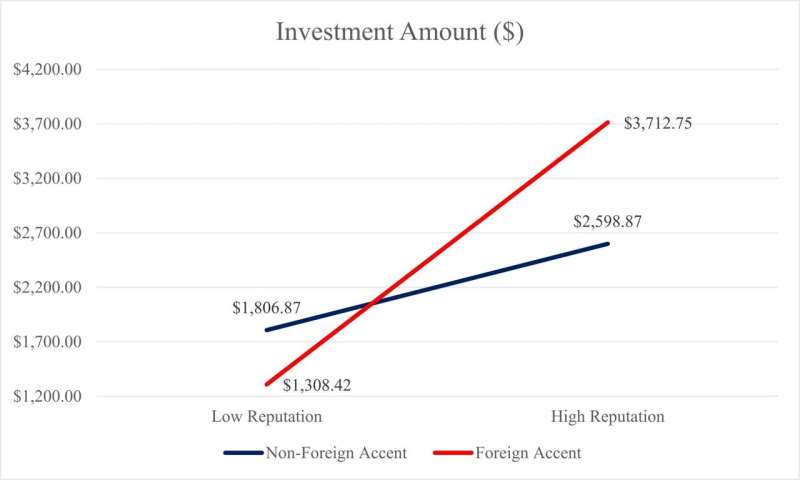
Research indicates that the accents of chief executive officers (CEOs) can affect the investment decisions of everyday investors, although this influence does not extend to professional investors. This finding emerges from a study conducted by professors Anis Triki and Devendra Kale at the University of Rhode Island, which was published in the Journal of Behavioral and Experimental Finance on January 25, 2026.
The study highlights that within the S&P 500, approximately 10% of CEOs possess an accent or originate from foreign backgrounds. Despite this small representation, these individuals lead some of the largest companies in the U.S., including Alphabet, NVIDIA, and Microsoft. The researchers sought to determine if a CEO’s accent influences investors’ willingness to invest, particularly focusing on the contrast between everyday and professional investors.
Triki noted, “We often discuss whether a professor’s accent matters, but we were surprised by the scant research on how accents affect investment decisions.” To explore this topic, Triki and Kale conducted an experiment where they assessed participants’ willingness to invest up to $10,000 in a fictional company. Participants listened to audio recordings of the CEO’s voice, which had been digitally altered to reflect different accents, including American, Indian, and Kenyan.
The findings revealed a nuanced relationship between accent and investment behavior. Everyday investors were inclined to invest more in companies led by CEOs with foreign accents, particularly when those CEOs had a strong reputation. Conversely, when a CEO’s reputation was poor, the accent had no significant impact on investment choices. Triki explained, “When we presented the research, people were pleasantly surprised because there’s been so much written about how accents can create a negative bias in general.”
Interestingly, the study found that CEOs with Indian and Kenyan accents attracted more hypothetical investment compared to those with an American accent. This outcome suggests that the perceived prejudices against foreign accents may not align with actual investor behavior.
Kale emphasized the significance of reputation in shaping investment decisions: “If somebody’s reputation is bad, whether they have an accent or not, it’s not going to matter. But if the CEO establishes a good reputation, then having a foreign accent could trigger higher investment decisions.”
This research contributes to the understanding of how personal attributes, such as accents, can influence investor psychology, particularly among those who may not engage with the same level of analytical rigor as professional investors. The implications of these findings could extend to broader discussions about diversity and representation in corporate leadership, particularly as the landscape of executive leadership continues to evolve.
In summary, while the accents of CEOs can impact the investment decisions of everyday investors, the strength of a CEO’s reputation plays a crucial role in determining the extent of that influence. As the corporate world sees an increasing number of leaders from diverse backgrounds, understanding these dynamics becomes essential for both investors and companies alike.

Funko’s Price Target Increased to $4.00 as Analysts React

Humboldt Celebrates as ‘One Battle After Another’ Claims Best Picture

GSK Faces Backlash Over Asthma Inhaler Scrapping, Children Suffer

Adorable Sandhill Crane Colt Hugs Mom in The Villages

USA Unveils Star-Spangled Jerseys Ahead of March Friendlies

Newport Plans Colorful Lighting for Fourth Street Bridge

Sandia Scientists Honored for Innovative Career Journeys

Urgent: Charles M. Payment Passes Away at 78, Memorial Details Inside

NFL Free Agency: Key Moves and Player Signings in Week One

Researchers Launch $1.25M Project for Real-Time Hazard Monitoring in Hawaiʻi

Send It South Revives Culture and Community at The Momentary

UK Government Borrowing Hits £20.2 Billion in September Surge

Flipkart Republic Day Sale: iPhone 16 Plus Price Slashed by ₹23,900

Adecco SA Secures Mixed Ratings from Analysts Amid Earnings Update

Researchers Achieve Record 15.1 mA/cm² Hydrogen Production Efficiency

Globant Reveals Key Tech Forces Shaping Business in 2026

Inventor Achieves Breakthrough with 2 Billion FPS Laser Video

Dua Lipa Aces GCSE Spanish, Sparks Super Bowl Buzz with Fans
-
 Science8 months ago
Researchers Launch $1.25M Project for Real-Time Hazard Monitoring in Hawaiʻi
-
 Entertainment7 months ago
Send It South Revives Culture and Community at The Momentary
-
 World9 months ago
UK Government Borrowing Hits £20.2 Billion in September Surge
-
 Business6 months ago
Flipkart Republic Day Sale: iPhone 16 Plus Price Slashed by ₹23,900
-
 Sports8 months ago
Adecco SA Secures Mixed Ratings from Analysts Amid Earnings Update
-
 Top Stories5 months ago
Researchers Achieve Record 15.1 mA/cm² Hydrogen Production Efficiency
-
 Business8 months ago
Globant Reveals Key Tech Forces Shaping Business in 2026
-
 Science9 months ago
Inventor Achieves Breakthrough with 2 Billion FPS Laser Video
-
 Entertainment10 months ago
Dua Lipa Aces GCSE Spanish, Sparks Super Bowl Buzz with Fans
-

 Top Stories10 months ago
Charlie Sheen’s New Romance: ‘Glowing’ with Younger Partner
-

 Top Stories7 months ago
JSerra Names Hardy Nickerson as First Black Football Coach
-

 Health10 months ago
Community Unites for 7th Annual Into the Light Walk for Mental Health