
Science
UC San Diego Initiates Groundbreaking Project to 3D Bioprint Livers

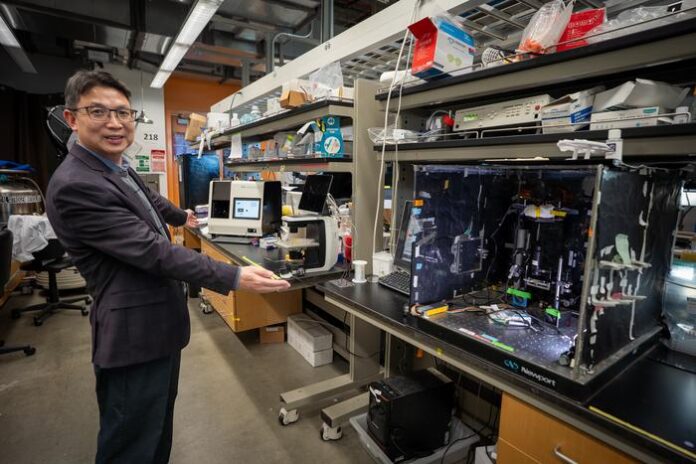
A significant advancement in organ transplantation is underway at the University of California San Diego, where researchers are launching a project aimed at 3D bioprinting patient-specific human livers. This initiative, funded by the Advanced Research Projects Agency for Health (ARPA-H), has received up to $25,771,771 over a 60-month timeframe. The project’s goal is to create fully functional livers using a patient’s own cells, potentially offering a safe alternative to traditional organ transplants.
The project is part of ARPA-H’s Personalized Regenerative Immunocompetent Nanotechnology Tissue (PRINT) program. This innovative approach could transform the landscape of organ transplantation, eliminating the need for donor organs and the lifelong reliance on immunosuppressant medications.
Shaochen Chen, PhD, a professor at the Jacobs School of Engineering, emphasized the project’s potential by saying, “When people think about 3D printing, they often imagine making gadgets like cellphone holders or toys, not human organs. But the need for organ transplants is enormous, and 3D bioprinting is uniquely suited to address that challenge.” Chen’s team aims to produce “made-to-order” livers that can restore health and quality of life for patients suffering from liver failure.
Innovative Technology and Patient Impact
The research team has developed a technology that enables rapid fabrication of complex biological tissues within seconds. This advancement could revolutionize organ transplantation by providing an on-demand source of functional liver tissue. Currently, over 12,000 patients in the United States await liver transplants each year. By addressing the organ shortage, this project could significantly improve patient outcomes and lower healthcare costs.
Gabriel Schnickel, MD, who heads the Division of Transplantation and Hepatobiliary Surgery at UC San Diego Health, remarked, “For decades, the transplant community has dreamed of a future where the fate of thousands of patients each year is no longer determined by the scarcity of donor organs. This work has the potential to fundamentally change countless lives by moving that vision from aspiration to reality.”
The project’s collaboration with Allele Biotechnology brings industry expertise in personalized stem cell technologies. This partnership aims to ensure that the liver bioprinting process progresses from laboratory-grade to clinical-grade production, paving the way for future transplantation solutions.
The Path Forward
Unlike traditional 3D printing techniques, this project employs digitally controlled light patterns to solidify cell-laden materials layer by layer. This method allows for precise recreation of the intricate microarchitecture found in living tissues, including complex vascular networks essential for organ function.
As part of this initiative, Chen and his team have established a startup, originally named Allegro 3D (now known as Cellink), to translate their innovative bioprinting technology from the lab to commercial applications. This team has advanced their systems from experimental prototypes to industrial-scale printers capable of producing larger, more complex biological structures.
The work at UC San Diego represents a significant leap forward in combating liver disease and could serve as a model for future developments in organ transplantation. The combination of cutting-edge technology, expert collaboration, and a focus on patient-specific solutions places this project at the forefront of biomedical innovation, offering hope to thousands waiting for life-saving organ transplants.

Funko’s Price Target Increased to $4.00 as Analysts React

Humboldt Celebrates as ‘One Battle After Another’ Claims Best Picture

GSK Faces Backlash Over Asthma Inhaler Scrapping, Children Suffer

Adorable Sandhill Crane Colt Hugs Mom in The Villages

USA Unveils Star-Spangled Jerseys Ahead of March Friendlies

Newport Plans Colorful Lighting for Fourth Street Bridge

Sandia Scientists Honored for Innovative Career Journeys

Urgent: Charles M. Payment Passes Away at 78, Memorial Details Inside

NFL Free Agency: Key Moves and Player Signings in Week One

Researchers Launch $1.25M Project for Real-Time Hazard Monitoring in Hawaiʻi

Send It South Revives Culture and Community at The Momentary

UK Government Borrowing Hits £20.2 Billion in September Surge

Flipkart Republic Day Sale: iPhone 16 Plus Price Slashed by ₹23,900

Adecco SA Secures Mixed Ratings from Analysts Amid Earnings Update

Researchers Achieve Record 15.1 mA/cm² Hydrogen Production Efficiency

Globant Reveals Key Tech Forces Shaping Business in 2026

Inventor Achieves Breakthrough with 2 Billion FPS Laser Video

Dua Lipa Aces GCSE Spanish, Sparks Super Bowl Buzz with Fans
-
 Science8 months ago
Researchers Launch $1.25M Project for Real-Time Hazard Monitoring in Hawaiʻi
-
 Entertainment7 months ago
Send It South Revives Culture and Community at The Momentary
-
 World9 months ago
UK Government Borrowing Hits £20.2 Billion in September Surge
-
 Business6 months ago
Flipkart Republic Day Sale: iPhone 16 Plus Price Slashed by ₹23,900
-
 Sports8 months ago
Adecco SA Secures Mixed Ratings from Analysts Amid Earnings Update
-
 Top Stories5 months ago
Researchers Achieve Record 15.1 mA/cm² Hydrogen Production Efficiency
-
 Business8 months ago
Globant Reveals Key Tech Forces Shaping Business in 2026
-
 Science9 months ago
Inventor Achieves Breakthrough with 2 Billion FPS Laser Video
-
 Entertainment10 months ago
Dua Lipa Aces GCSE Spanish, Sparks Super Bowl Buzz with Fans
-

 Top Stories10 months ago
Charlie Sheen’s New Romance: ‘Glowing’ with Younger Partner
-

 Top Stories7 months ago
JSerra Names Hardy Nickerson as First Black Football Coach
-

 Health10 months ago
Community Unites for 7th Annual Into the Light Walk for Mental Health