
Politics
Keene Mobilizes for Civil War: A Community’s Response

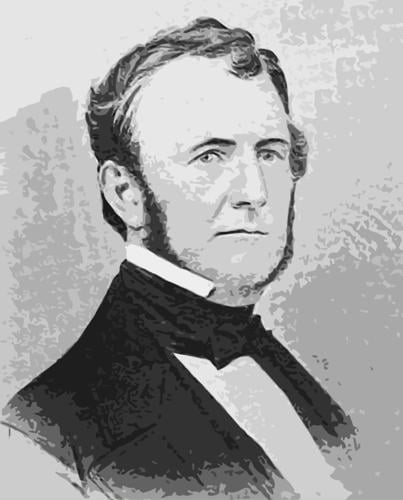
The presidential election of November 6, 1860, marked a pivotal moment in Keene, New Hampshire, as the community rallied in support of anti-slavery candidates. Abraham Lincoln of Illinois, representing the Republican Party, received 635 of the 895 votes cast, signaling a clear preference for the anti-slavery cause among local voters. His closest rival, Democratic candidate Stephen A. Douglas, garnered 224 votes, while pro-slavery candidate John C. Breckenridge received 31 votes. The election results reflected a divided sentiment, with a significant portion of the population supporting various political ideologies.
In the backdrop of increasing tensions, Simon G. Griffin, a local attorney and historian, documented this turbulent period in his book, “A History of the Town of Keene.” Griffin, who was admitted to the bar in 1860 and later became a captain in the army, described the atmosphere in the early months of 1861. He noted that alarming reports regarding disunionists were frequent, and Southern states were actively passing ordinances of secession. This culminated in the onset of the Civil War when Fort Sumter was attacked on April 12, 1861, leading to its surrender the following day.
In response to the outbreak of war, President Lincoln issued a proclamation on April 15, 1861, calling for volunteers to suppress the rebellion. In Keene, Republican Governor Joseph A. Gilmore called for the formation of an infantry regiment, designating the town as a key recruiting station. Griffin recounted how, on the afternoon of April 19, handbills signed by prominent figures from both political parties urged citizens to gather in Central Square on April 22 to address the national crisis.
The mass meeting in Central Square showcased a united front, prioritizing loyalty to the country over partisan divisions. Local attorney Levi Chamberlain led the proceedings, and former Governor Samuel Dinsmoor Jr. was appointed as president of the gathering. Dinsmoor’s patriotic speech resonated with attendees, stating, “Amid the general gloom which pervades the community, there is yet one cause for congratulation — that we at least see a united North.”
The recruitment efforts gained momentum, with funds raised to support the families of the volunteers. By April 25, a company of 67 recruits from Keene and surrounding towns gathered at the local railroad station. The community turned out to bid farewell as the volunteers boarded a train. Griffin’s account described how Rev. Dr. Barstow offered a prayer, and each volunteer received a testament from an agent of the New Hampshire Bible Society. The recruits traveled through Massachusetts to Nashua and Concord, where they were assigned to the First Regiment of the New Hampshire Volunteers.
Griffin himself enlisted in the Army, mustering into the infantry as a private at Portsmouth on June 4, 1861. He quickly demonstrated leadership abilities, earning a promotion to captain and later rising to the rank of brigadier general. His military service was marked by a commitment to detail, as he provided insights into the contributions of New Hampshire’s troops. In his accounts, he noted that by 1861, New Hampshire deployed nearly 9,000 men across various regiments, including infantry, cavalry, and sharpshooters.
Griffin’s historical narrative not only highlights the local response to the Civil War but also sets the stage for further examination of Keene’s experiences during this tumultuous era. The town’s story continues next week with an exploration of its encounter with notorious bank robber Maximilian Schoenbein.

Funko’s Price Target Increased to $4.00 as Analysts React

Humboldt Celebrates as ‘One Battle After Another’ Claims Best Picture

GSK Faces Backlash Over Asthma Inhaler Scrapping, Children Suffer

Adorable Sandhill Crane Colt Hugs Mom in The Villages

USA Unveils Star-Spangled Jerseys Ahead of March Friendlies

Newport Plans Colorful Lighting for Fourth Street Bridge

Sandia Scientists Honored for Innovative Career Journeys

Urgent: Charles M. Payment Passes Away at 78, Memorial Details Inside

NFL Free Agency: Key Moves and Player Signings in Week One

Researchers Launch $1.25M Project for Real-Time Hazard Monitoring in Hawaiʻi

Send It South Revives Culture and Community at The Momentary

UK Government Borrowing Hits £20.2 Billion in September Surge

Flipkart Republic Day Sale: iPhone 16 Plus Price Slashed by ₹23,900

Adecco SA Secures Mixed Ratings from Analysts Amid Earnings Update

Globant Reveals Key Tech Forces Shaping Business in 2026

Researchers Achieve Record 15.1 mA/cm² Hydrogen Production Efficiency

Dua Lipa Aces GCSE Spanish, Sparks Super Bowl Buzz with Fans

Inventor Achieves Breakthrough with 2 Billion FPS Laser Video
-
 Science8 months ago
Researchers Launch $1.25M Project for Real-Time Hazard Monitoring in Hawaiʻi
-
 Entertainment7 months ago
Send It South Revives Culture and Community at The Momentary
-
 World10 months ago
UK Government Borrowing Hits £20.2 Billion in September Surge
-
 Business6 months ago
Flipkart Republic Day Sale: iPhone 16 Plus Price Slashed by ₹23,900
-
 Sports8 months ago
Adecco SA Secures Mixed Ratings from Analysts Amid Earnings Update
-
 Business8 months ago
Globant Reveals Key Tech Forces Shaping Business in 2026
-
 Top Stories5 months ago
Researchers Achieve Record 15.1 mA/cm² Hydrogen Production Efficiency
-
 Entertainment10 months ago
Dua Lipa Aces GCSE Spanish, Sparks Super Bowl Buzz with Fans
-
 Science10 months ago
Inventor Achieves Breakthrough with 2 Billion FPS Laser Video
-

 Top Stories10 months ago
Charlie Sheen’s New Romance: ‘Glowing’ with Younger Partner
-
 Top Stories8 months ago
JSerra Names Hardy Nickerson as First Black Football Coach
-

 Health10 months ago
Community Unites for 7th Annual Into the Light Walk for Mental Health