
Business
U.S. Influence on Venezuela Shapes Guyana’s Oil Future

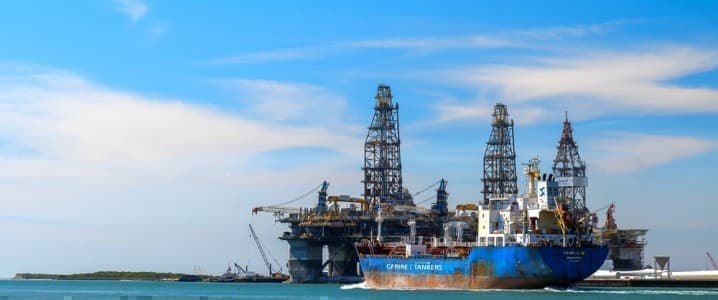
Oil production in Guyana has surged in recent years, positioning the South American nation as a key player in the global energy market. The presence of major international oil companies has fueled this growth in the country, which is now recognized for its potential in “low-carbon” oil production. However, developments in neighboring Venezuela, which holds the world’s largest oil reserves, have raised concerns regarding the future of Guyana’s oil ambitions.
The recent U.S. intervention in Venezuela has sparked discussions about the implications for Guyana’s oil sector. Venezuelan President Nicolás Maduro’s government has long claimed the Essequibo region, which constitutes roughly two-thirds of Guyana, as its own. This contested area is rich in natural resources, including gold, diamonds, and offshore oil. The involvement of U.S. oil companies in Venezuela’s oil industry could heighten the risk of territorial disputes in the region.
Exxon Mobil and Chevron, along with China’s CNOOC, are currently developing oil operations in Guyana’s waters. The discovery of high-quality oil reserves by ExxonMobil in 2015 has attracted significant international investment, leading to rapid economic development in Guyana. In response, the Venezuelan government has reaffirmed its claim to Essequibo, a dispute that has persisted for over a century.
Historically, Venezuela’s claim dates back to 1841 when it asserted ownership over the region ceded to Great Britain in 1814. The British established the colony of Guiana, which included Essequibo, in 1831. An international arbitration tribunal awarded the territory to Britain in 1899, a ruling Venezuela has contested vigorously. Recently, Venezuela has accused Guyana and the U.S. of pursuing “legal colonialism” by exploiting resources in Essequibo.
In 2018, the International Court of Justice (ICJ) ruled that Guyana’s territorial accord was legal and binding. Following this ruling, the Maduro government began a military buildup along the Guyanese border, establishing bases and threatening to annex Essequibo. In 2023, a referendum indicated that 95.9 percent of voters supported annexation. Subsequently, Maduro announced plans to create the Venezuelan state of Guayana Esequiba and grant operating licenses to the state-owned oil firm PDVSA in the disputed territory.
Despite Venezuela’s vast oil reserves, estimated at around 300 billion barrels, its oil production has plummeted due to years of underinvestment in infrastructure. Experts suggest that repairing this failing infrastructure could require billions of dollars and over a decade. Additionally, Venezuelan extra-heavy crude is challenging and costly to extract and refine, making it less competitive in the current market.
The U.S. intervention in Venezuela has seemingly muted the Maduro government’s claims on Essequibo, yet the historical significance of the territory and its resources make it improbable that any future Venezuelan administration would relinquish its ambitions. Allen Good, director of equity research at Morningstar, expressed that any aggressive moves by Venezuela could provoke a U.S. response, especially given ExxonMobil’s prominent role in Guyana.
Guyana’s President Irfaan Ali has strengthened ties with the United States, viewing it as a crucial ally in maintaining the country’s sovereignty. On January 6, 2023, Foreign Secretary Robert Persaud reiterated the government’s commitment to collaboration with the U.S., highlighting the strategic importance of this partnership.
As the situation unfolds, the extent of U.S. involvement in Venezuelan politics and oil production will likely influence the future of oil expansion in Guyana. The geopolitical dynamics between these nations could determine not only the direction of oil development but also the stability of the region.

Funko’s Price Target Increased to $4.00 as Analysts React

Humboldt Celebrates as ‘One Battle After Another’ Claims Best Picture

GSK Faces Backlash Over Asthma Inhaler Scrapping, Children Suffer

Adorable Sandhill Crane Colt Hugs Mom in The Villages

USA Unveils Star-Spangled Jerseys Ahead of March Friendlies

Newport Plans Colorful Lighting for Fourth Street Bridge

Sandia Scientists Honored for Innovative Career Journeys

Urgent: Charles M. Payment Passes Away at 78, Memorial Details Inside

NFL Free Agency: Key Moves and Player Signings in Week One

Researchers Launch $1.25M Project for Real-Time Hazard Monitoring in Hawaiʻi

Send It South Revives Culture and Community at The Momentary

UK Government Borrowing Hits £20.2 Billion in September Surge

Flipkart Republic Day Sale: iPhone 16 Plus Price Slashed by ₹23,900

Adecco SA Secures Mixed Ratings from Analysts Amid Earnings Update

Researchers Achieve Record 15.1 mA/cm² Hydrogen Production Efficiency

Globant Reveals Key Tech Forces Shaping Business in 2026

Dua Lipa Aces GCSE Spanish, Sparks Super Bowl Buzz with Fans

Inventor Achieves Breakthrough with 2 Billion FPS Laser Video
-
 Science8 months ago
Researchers Launch $1.25M Project for Real-Time Hazard Monitoring in Hawaiʻi
-
 Entertainment7 months ago
Send It South Revives Culture and Community at The Momentary
-
 World9 months ago
UK Government Borrowing Hits £20.2 Billion in September Surge
-
 Business6 months ago
Flipkart Republic Day Sale: iPhone 16 Plus Price Slashed by ₹23,900
-
 Sports8 months ago
Adecco SA Secures Mixed Ratings from Analysts Amid Earnings Update
-
 Top Stories5 months ago
Researchers Achieve Record 15.1 mA/cm² Hydrogen Production Efficiency
-
 Business8 months ago
Globant Reveals Key Tech Forces Shaping Business in 2026
-
 Entertainment10 months ago
Dua Lipa Aces GCSE Spanish, Sparks Super Bowl Buzz with Fans
-
 Science10 months ago
Inventor Achieves Breakthrough with 2 Billion FPS Laser Video
-

 Top Stories10 months ago
Charlie Sheen’s New Romance: ‘Glowing’ with Younger Partner
-

 Top Stories8 months ago
JSerra Names Hardy Nickerson as First Black Football Coach
-

 Health10 months ago
Community Unites for 7th Annual Into the Light Walk for Mental Health