
Politics
Pakistan Enforces Curfew as Protests Erupt After Khamenei’s Death

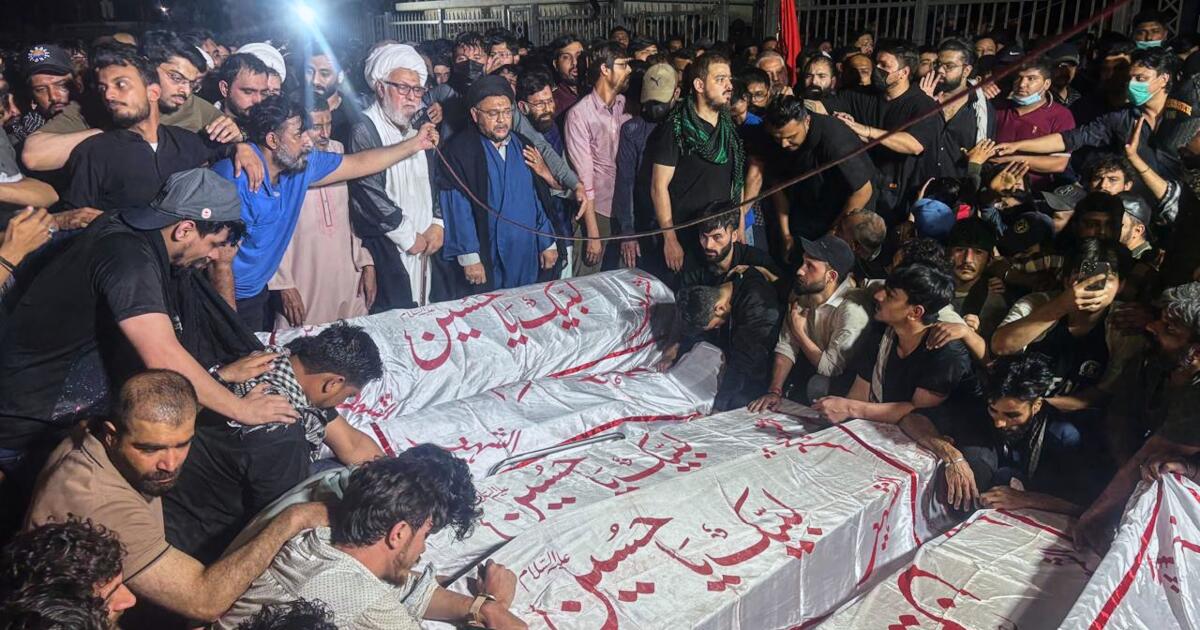
Pakistani authorities implemented a three-day curfew in the northern cities of Gilgit and Skardu following violent protests that erupted after the death of Iran’s Supreme Leader Ayatollah Ali Khamenei. His killing in U.S.-Israeli strikes has led to widespread unrest, with reports indicating at least 12 fatalities and over 80 injuries in the aftermath of these demonstrations.
In the early hours of Monday, troops were deployed to restore order as thousands of Shiite protesters targeted the offices of the U.N. Military Observer Group (UNMOGIP) and the U.N. Development Programme in Skardu. The violence escalated with protesters vandalizing a police station and damaging a school and local charity offices in Gilgit. According to police in the Gilgit-Baltistan region, the unrest was particularly intense, prompting local officials to act swiftly.
Escalating Tensions and Security Measures
The U.N. spokesman Stephane Dujarric confirmed the vandalism near the UNMOGIP Field Station, emphasizing the organization’s commitment to the safety of its personnel. “The safety and security of U.N. personnel and premises throughout the region remain our top priority,” he stated, noting that the situation is being closely monitored.
In light of the deteriorating law and order conditions, Akbar Nasir Khan, the police chief of Gilgit, urged residents to remain indoors. The curfew is set to last until Wednesday, with local government spokesman Shabir Mir asserting that authorities have the situation under control.
Violence was not limited to the northern regions; protests in Pakistan’s southern city of Karachi escalated when demonstrators stormed the U.S. Consulate. Protesters broke windows and attempted to set the building ablaze, resulting in a police response that included batons, tear gas, and gunfire. This confrontation led to at least 10 deaths and over 50 injuries. Additional clashes also occurred in Islamabad, where one individual was killed during a Shiite march towards the U.S. Embassy.
In response to the violence, the U.S. Embassy and its consulates in Karachi and Lahore canceled visa appointments and American Citizen Services for security reasons. Pakistani authorities have heightened security measures around U.S. diplomatic missions across the country, including the consulate in Peshawar.
Market Reaction and Broader Implications
The unrest has had significant economic repercussions, with the Pakistan Stock Exchange experiencing a sharp decline. On Monday, the benchmark KSE-100 Index fell nearly 10%, as investors reacted to the rising geopolitical tensions following the attacks on Iran. Analysts attribute the decline to heightened uncertainty among investors, leading to widespread sell-offs across various sectors.
The violence has intensified existing anger among Pakistan’s Shiite minority, who have been particularly vocal in their opposition to U.S. and Israeli actions. While Shiites are a minority nationwide, they represent a majority in certain northern districts and the province of Khyber Pakhtunkhwa, which shares a border with Afghanistan.
The protests also coincide with ongoing border tensions between Pakistan and Afghanistan, which escalated last week after Afghanistan retaliated against Pakistani airstrikes. As the situation evolves, both local and international observers are closely watching the developments in Pakistan, particularly the potential for further unrest in response to international events.
The unrest following Khamenei’s death reflects a complex interplay of regional politics and domestic grievances, raising concerns about stability in the region moving forward.

Funko’s Price Target Increased to $4.00 as Analysts React

Humboldt Celebrates as ‘One Battle After Another’ Claims Best Picture

GSK Faces Backlash Over Asthma Inhaler Scrapping, Children Suffer

Adorable Sandhill Crane Colt Hugs Mom in The Villages

USA Unveils Star-Spangled Jerseys Ahead of March Friendlies

Newport Plans Colorful Lighting for Fourth Street Bridge

Sandia Scientists Honored for Innovative Career Journeys

Urgent: Charles M. Payment Passes Away at 78, Memorial Details Inside

NFL Free Agency: Key Moves and Player Signings in Week One

Researchers Launch $1.25M Project for Real-Time Hazard Monitoring in Hawaiʻi

Send It South Revives Culture and Community at The Momentary

UK Government Borrowing Hits £20.2 Billion in September Surge

Flipkart Republic Day Sale: iPhone 16 Plus Price Slashed by ₹23,900

Adecco SA Secures Mixed Ratings from Analysts Amid Earnings Update

Researchers Achieve Record 15.1 mA/cm² Hydrogen Production Efficiency

Globant Reveals Key Tech Forces Shaping Business in 2026

Dua Lipa Aces GCSE Spanish, Sparks Super Bowl Buzz with Fans

Inventor Achieves Breakthrough with 2 Billion FPS Laser Video
-
 Science8 months ago
Researchers Launch $1.25M Project for Real-Time Hazard Monitoring in Hawaiʻi
-
 Entertainment7 months ago
Send It South Revives Culture and Community at The Momentary
-
 World9 months ago
UK Government Borrowing Hits £20.2 Billion in September Surge
-
 Business6 months ago
Flipkart Republic Day Sale: iPhone 16 Plus Price Slashed by ₹23,900
-
 Sports8 months ago
Adecco SA Secures Mixed Ratings from Analysts Amid Earnings Update
-
 Top Stories5 months ago
Researchers Achieve Record 15.1 mA/cm² Hydrogen Production Efficiency
-
 Business8 months ago
Globant Reveals Key Tech Forces Shaping Business in 2026
-
 Entertainment10 months ago
Dua Lipa Aces GCSE Spanish, Sparks Super Bowl Buzz with Fans
-
 Science10 months ago
Inventor Achieves Breakthrough with 2 Billion FPS Laser Video
-

 Top Stories10 months ago
Charlie Sheen’s New Romance: ‘Glowing’ with Younger Partner
-
 Top Stories8 months ago
JSerra Names Hardy Nickerson as First Black Football Coach
-

 Health10 months ago
Community Unites for 7th Annual Into the Light Walk for Mental Health