
Politics
Supreme Court Limits Trump’s Tariffs After Overreach Ruling

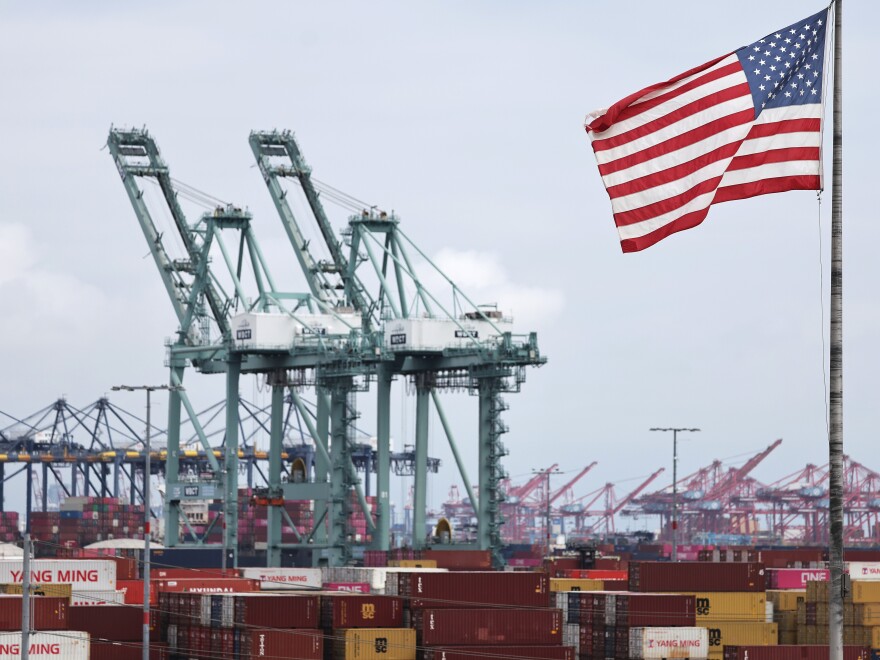
The **Supreme Court** has ruled that former President **Donald Trump** overstepped his authority by imposing tariffs on imports from nearly all countries, using a 1970s law intended for emergencies. This ruling raises significant questions about the future of U.S. trade policy and the financial implications of these tariffs.
Tariffs have generated substantial revenue, contributing approximately **$30 billion** monthly to the federal government, which is four times higher than previous levels before Trump’s presidency. Despite this increase, tariffs account for only a little over **5%** of overall government revenue as of January 2024. The total tariff bill could have been higher if not for exemptions granted to several imports, including coffee and bananas.
As importers look for ways to mitigate costs, there has been a notable shift in sourcing. In 2024, **12%** of U.S. imports originated from **China**, but by September 2023, that number had dropped to about **8%**. Research from **Gita Gopinath**, a professor at **Harvard University**, and **Brent Neiman** of the University of Chicago indicates that nearly all of the tariff burden is being shouldered by U.S. businesses, rather than foreign suppliers, contrary to Trump’s claims. Many importers are either absorbing these costs, which reduces their profits, or passing them onto consumers through higher prices.
Key Tariffs at Stake and Their Implications
The tariffs under scrutiny in the Supreme Court case represent roughly half of the total tariff revenue collected. These tariffs were imposed under the **International Emergency Economic Powers Act** (IEEPA), a statute from the 1970s that does not explicitly mention tariffs. Other tariffs, established under different legal frameworks, were not challenged in this case.
Justice **Amy Coney Barrett** expressed concern during oral arguments about the potential complexity of refunding importers should the court find the tariffs illegal. Veteran tariff lawyer **Robert Leo** acknowledged the process would be cumbersome but manageable, noting that the customs agency could efficiently identify eligible refund payments and was prepared to waive certain deadlines.
Alternatives and Future Trade Policy
While Trump has predominantly used the IEEPA to implement tariffs, alternatives exist, albeit with more limitations. For instance, the **Trade Act of 1974**, specifically **Section 122**, allows tariffs to address trade deficits but caps them at **15%** for a maximum of **150 days**. Section 301 and **Section 232** of the **Trade Expansion Act of 1962** also enable tariff imposition, but only after investigations by the **U.S. Trade Representative** and the **Commerce Department**.
The administration has indicated that any tariffs deemed illegal will be replaced with tariffs imposed under these alternative statutes. However, these alternatives do not allow for arbitrary tariff rates. For example, the president cannot impose a **50%** tax on imports from Brazil simply due to dissatisfaction with foreign policy decisions.
Despite Trump’s assertions that his tariffs would revitalize domestic manufacturing, there is little evidence of such a revival. U.S. manufacturing has struggled, losing **108,000 jobs** in 2025, as many factory managers report that tariffs have negatively impacted their operations. One factory manager noted that morale was low, citing soaring costs of living and increased component prices linked to tariffs.
The broader implications of the Supreme Court’s decision may influence future trade discussions and policies, particularly as economic conditions evolve and the administration navigates political pressures surrounding affordability for American consumers.

Funko’s Price Target Increased to $4.00 as Analysts React

Humboldt Celebrates as ‘One Battle After Another’ Claims Best Picture

GSK Faces Backlash Over Asthma Inhaler Scrapping, Children Suffer

Adorable Sandhill Crane Colt Hugs Mom in The Villages

USA Unveils Star-Spangled Jerseys Ahead of March Friendlies

Newport Plans Colorful Lighting for Fourth Street Bridge

Sandia Scientists Honored for Innovative Career Journeys

Urgent: Charles M. Payment Passes Away at 78, Memorial Details Inside

NFL Free Agency: Key Moves and Player Signings in Week One

Researchers Launch $1.25M Project for Real-Time Hazard Monitoring in Hawaiʻi

Send It South Revives Culture and Community at The Momentary

UK Government Borrowing Hits £20.2 Billion in September Surge

Flipkart Republic Day Sale: iPhone 16 Plus Price Slashed by ₹23,900

Adecco SA Secures Mixed Ratings from Analysts Amid Earnings Update

Researchers Achieve Record 15.1 mA/cm² Hydrogen Production Efficiency

Globant Reveals Key Tech Forces Shaping Business in 2026

Inventor Achieves Breakthrough with 2 Billion FPS Laser Video

Dua Lipa Aces GCSE Spanish, Sparks Super Bowl Buzz with Fans
-
 Science8 months ago
Researchers Launch $1.25M Project for Real-Time Hazard Monitoring in Hawaiʻi
-
 Entertainment7 months ago
Send It South Revives Culture and Community at The Momentary
-
 World9 months ago
UK Government Borrowing Hits £20.2 Billion in September Surge
-
 Business6 months ago
Flipkart Republic Day Sale: iPhone 16 Plus Price Slashed by ₹23,900
-
 Sports8 months ago
Adecco SA Secures Mixed Ratings from Analysts Amid Earnings Update
-
 Top Stories5 months ago
Researchers Achieve Record 15.1 mA/cm² Hydrogen Production Efficiency
-
 Business8 months ago
Globant Reveals Key Tech Forces Shaping Business in 2026
-
 Science10 months ago
Inventor Achieves Breakthrough with 2 Billion FPS Laser Video
-
 Entertainment10 months ago
Dua Lipa Aces GCSE Spanish, Sparks Super Bowl Buzz with Fans
-

 Top Stories10 months ago
Charlie Sheen’s New Romance: ‘Glowing’ with Younger Partner
-

 Top Stories8 months ago
JSerra Names Hardy Nickerson as First Black Football Coach
-

 Health10 months ago
Community Unites for 7th Annual Into the Light Walk for Mental Health