
Politics
Supreme Court Rejects Trump’s Tariffs, Challenging Trade Strategy

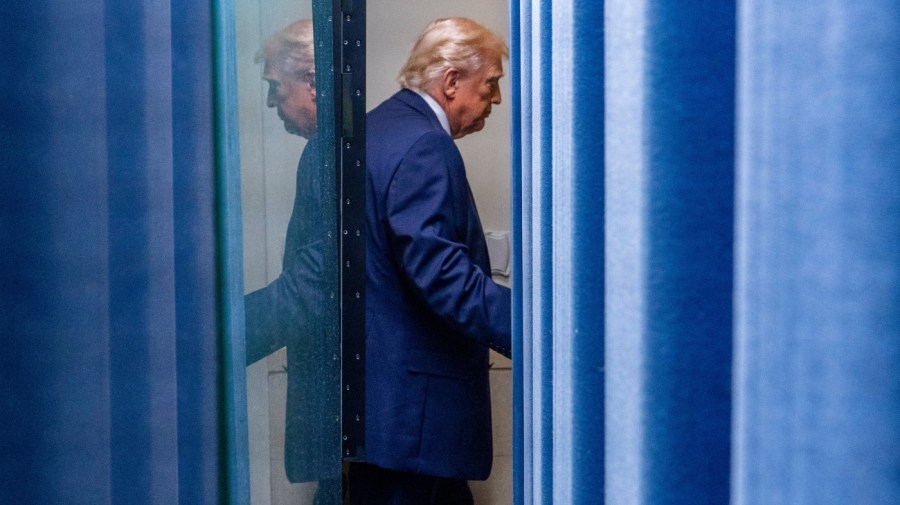
The Supreme Court of the United States dealt a significant setback to former President Donald Trump on July 7, 2023, by ruling against his use of an emergency statute to implement sweeping tariffs. This decision challenged a core aspect of Trump’s economic agenda aimed at reshaping global trade relationships.
The court’s ruling determined that Trump’s administration overstepped its authority by invoking the International Emergency Economic Powers Act (IEEPA) to impose tariffs without proper justification. This marked the first time a president sought to use the IEEPA for such a purpose, leading to a precedent that may influence future administrations’ trade policies.
In its decision, the Supreme Court emphasized the necessity for clear legislative authority when enacting such significant economic measures. The ruling stated that the tariffs, which were intended to protect domestic industries from foreign competition, lacked the necessary foundation to be enforced under the emergency powers granted to the executive branch.
This legal challenge arose from a lawsuit filed by several business groups, including the National Retail Federation and the U.S. Chamber of Commerce, which argued that the tariffs imposed by Trump resulted in increased costs for consumers and disrupted supply chains. The court’s ruling is expected to have wide-ranging implications for both domestic businesses and international trade relations.
The impact of the ruling may extend beyond just the immediate economic landscape, as it could set a precedent limiting the executive branch’s ability to impose tariffs unilaterally in future situations. Analysts suggest that this decision could encourage Congress to take a more active role in trade policy, potentially leading to a more balanced approach to international commerce.
As the legal ramifications of this ruling unfold, businesses and policymakers will be closely monitoring how it affects existing trade agreements and negotiations. The decision reinforces the principle that trade policy should involve comprehensive legislative oversight rather than unilateral executive action.
The Supreme Court’s judgment is a pivotal moment in U.S. trade policy, emphasizing the importance of checks and balances in economic decision-making. The ruling not only challenges Trump’s legacy but also opens new discussions about the role of tariffs in the global economy, setting the stage for a potential reevaluation of trade strategies in the years to come.

Funko’s Price Target Increased to $4.00 as Analysts React

Humboldt Celebrates as ‘One Battle After Another’ Claims Best Picture

GSK Faces Backlash Over Asthma Inhaler Scrapping, Children Suffer

Adorable Sandhill Crane Colt Hugs Mom in The Villages

USA Unveils Star-Spangled Jerseys Ahead of March Friendlies

Newport Plans Colorful Lighting for Fourth Street Bridge

Sandia Scientists Honored for Innovative Career Journeys

Urgent: Charles M. Payment Passes Away at 78, Memorial Details Inside

NFL Free Agency: Key Moves and Player Signings in Week One

Researchers Launch $1.25M Project for Real-Time Hazard Monitoring in Hawaiʻi

Send It South Revives Culture and Community at The Momentary

UK Government Borrowing Hits £20.2 Billion in September Surge

Flipkart Republic Day Sale: iPhone 16 Plus Price Slashed by ₹23,900

Adecco SA Secures Mixed Ratings from Analysts Amid Earnings Update

Globant Reveals Key Tech Forces Shaping Business in 2026

Researchers Achieve Record 15.1 mA/cm² Hydrogen Production Efficiency

Inventor Achieves Breakthrough with 2 Billion FPS Laser Video

Dua Lipa Aces GCSE Spanish, Sparks Super Bowl Buzz with Fans
-
 Science8 months ago
Researchers Launch $1.25M Project for Real-Time Hazard Monitoring in Hawaiʻi
-
 Entertainment7 months ago
Send It South Revives Culture and Community at The Momentary
-
 World9 months ago
UK Government Borrowing Hits £20.2 Billion in September Surge
-
 Business6 months ago
Flipkart Republic Day Sale: iPhone 16 Plus Price Slashed by ₹23,900
-
 Sports8 months ago
Adecco SA Secures Mixed Ratings from Analysts Amid Earnings Update
-
 Business8 months ago
Globant Reveals Key Tech Forces Shaping Business in 2026
-
 Top Stories5 months ago
Researchers Achieve Record 15.1 mA/cm² Hydrogen Production Efficiency
-
 Science10 months ago
Inventor Achieves Breakthrough with 2 Billion FPS Laser Video
-
 Entertainment10 months ago
Dua Lipa Aces GCSE Spanish, Sparks Super Bowl Buzz with Fans
-

 Top Stories10 months ago
Charlie Sheen’s New Romance: ‘Glowing’ with Younger Partner
-

 Top Stories8 months ago
JSerra Names Hardy Nickerson as First Black Football Coach
-

 Health10 months ago
Community Unites for 7th Annual Into the Light Walk for Mental Health