
Science
NASA Closes Historic Chapter with Demolition of Iconic Test Stands

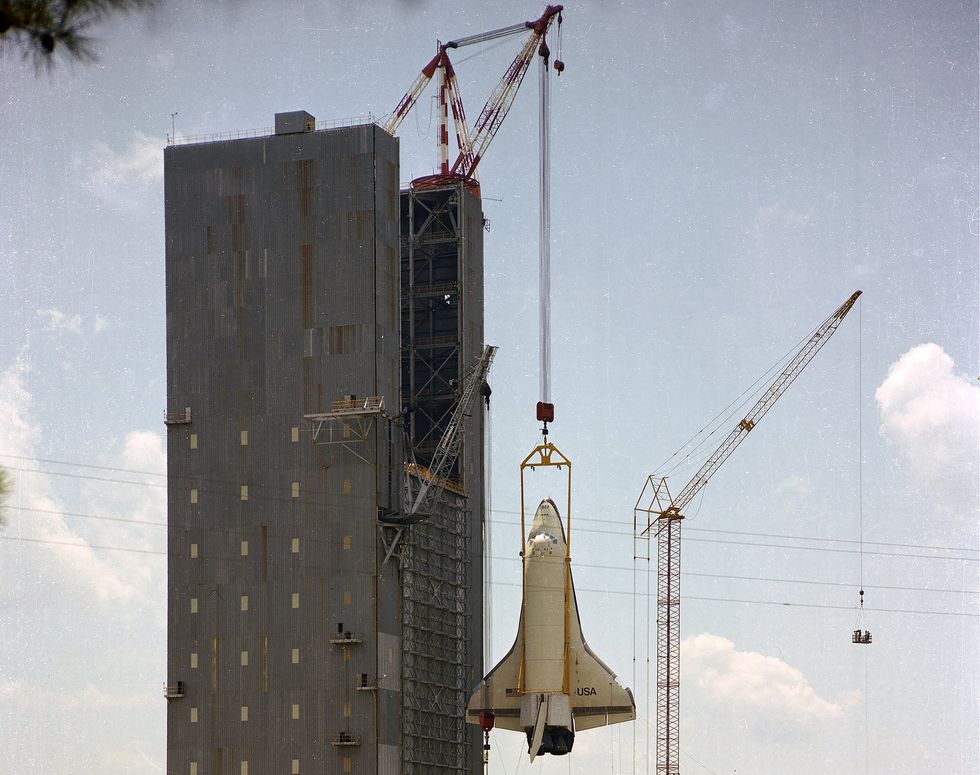
On January 10, 2024, NASA marked the end of an era as it demolished two historic test stands at the Marshall Space Flight Center in Huntsville, Alabama. The Dynamic Test Stand and the Propulsion and Structural Test Facility, commonly known as the T-tower, collapsed in controlled implosions, concluding decades of service that propelled humanity into the space age. These structures were integral to the development of rocket technology and the success of various missions, including the Apollo lunar landings.
Significant Contributions to Space Exploration
The T-tower, built in 1957 by the Army Ballistic Missile Agency before NASA’s establishment, was a pivotal facility in the early days of space exploration. Standing at just over 50 meters tall, it was specifically designed for static testing. Rockets were fired at full power while securely restrained, allowing engineers to monitor vibrations, temperature spikes, and pressure fluctuations. Under the guidance of renowned engineer Wernher von Braun, the T-tower played a crucial role in the testing of the Saturn family of launch vehicles and the F-1 engines that powered the Apollo missions. Its operations continued until the 1990s, including essential tests for Space Shuttle solid rocket boosters.
The Dynamic Test Stand, completed in 1964, was a remarkable facility that represented the height of engineering achievement at the time. Towering over 105 meters, it was the tallest man-made structure in North Alabama. Unlike its static counterpart, this stand subjected fully assembled Saturn V rockets to the mechanical stresses they would face during actual flights. Engineers ensured that everything from vibrations to flexing was rigorously tested, as failures on the launchpad at Kennedy Space Center were not an option. The stand also played a critical role in integrating all Space Shuttle components in 1978, showcasing its versatility beyond the Apollo program.
A Bittersweet Farewell and a New Era
Both test stands were designated as National Historic Landmarks in 1985, recognizing their invaluable contributions to space exploration. Their demolition, while a moment of reflection, was deemed necessary due to safety concerns and the need to allocate resources towards current missions. NASA is undertaking a broader transformation of the Marshall campus, which includes the removal of 19 obsolete structures to develop a modern facility that aligns with the agency’s future goals.
“These facilities helped NASA make history. While it is hard to let them go, they’ve earned their retirement,” said Rae Ann Meyer, acting director of the Marshall Space Flight Center. She emphasized that the legacy of the individuals who built and operated these facilities is the most significant aspect of their history.
To preserve the legacy of the T-tower and the Dynamic Test Stand, NASA has collaborated with various institutions. Detailed architectural drawings, photographs, and written histories are now archived in the Library of Congress. Additionally, Auburn University has created high-resolution digital models using LiDAR technology and 360-degree photography, capturing the structures’ intricate details before their removal. These virtual archives will allow future generations to appreciate the monumental engineering feats represented by these historic test stands, even as the physical structures are cleared away.

Funko’s Price Target Increased to $4.00 as Analysts React

Humboldt Celebrates as ‘One Battle After Another’ Claims Best Picture

GSK Faces Backlash Over Asthma Inhaler Scrapping, Children Suffer

Adorable Sandhill Crane Colt Hugs Mom in The Villages

USA Unveils Star-Spangled Jerseys Ahead of March Friendlies

Newport Plans Colorful Lighting for Fourth Street Bridge

Sandia Scientists Honored for Innovative Career Journeys

Urgent: Charles M. Payment Passes Away at 78, Memorial Details Inside

NFL Free Agency: Key Moves and Player Signings in Week One

Researchers Launch $1.25M Project for Real-Time Hazard Monitoring in Hawaiʻi

Send It South Revives Culture and Community at The Momentary

UK Government Borrowing Hits £20.2 Billion in September Surge

Flipkart Republic Day Sale: iPhone 16 Plus Price Slashed by ₹23,900

Adecco SA Secures Mixed Ratings from Analysts Amid Earnings Update

Researchers Achieve Record 15.1 mA/cm² Hydrogen Production Efficiency

Globant Reveals Key Tech Forces Shaping Business in 2026

Inventor Achieves Breakthrough with 2 Billion FPS Laser Video

Dua Lipa Aces GCSE Spanish, Sparks Super Bowl Buzz with Fans
-
 Science8 months ago
Researchers Launch $1.25M Project for Real-Time Hazard Monitoring in Hawaiʻi
-
 Entertainment7 months ago
Send It South Revives Culture and Community at The Momentary
-
 World9 months ago
UK Government Borrowing Hits £20.2 Billion in September Surge
-
 Business6 months ago
Flipkart Republic Day Sale: iPhone 16 Plus Price Slashed by ₹23,900
-
 Sports8 months ago
Adecco SA Secures Mixed Ratings from Analysts Amid Earnings Update
-
 Top Stories5 months ago
Researchers Achieve Record 15.1 mA/cm² Hydrogen Production Efficiency
-
 Business8 months ago
Globant Reveals Key Tech Forces Shaping Business in 2026
-
 Science9 months ago
Inventor Achieves Breakthrough with 2 Billion FPS Laser Video
-
 Entertainment10 months ago
Dua Lipa Aces GCSE Spanish, Sparks Super Bowl Buzz with Fans
-

 Top Stories10 months ago
Charlie Sheen’s New Romance: ‘Glowing’ with Younger Partner
-

 Top Stories7 months ago
JSerra Names Hardy Nickerson as First Black Football Coach
-

 Health10 months ago
Community Unites for 7th Annual Into the Light Walk for Mental Health