
Science
New Study Reveals Burial Date of ‘Princess of Bagicz’ in Poland

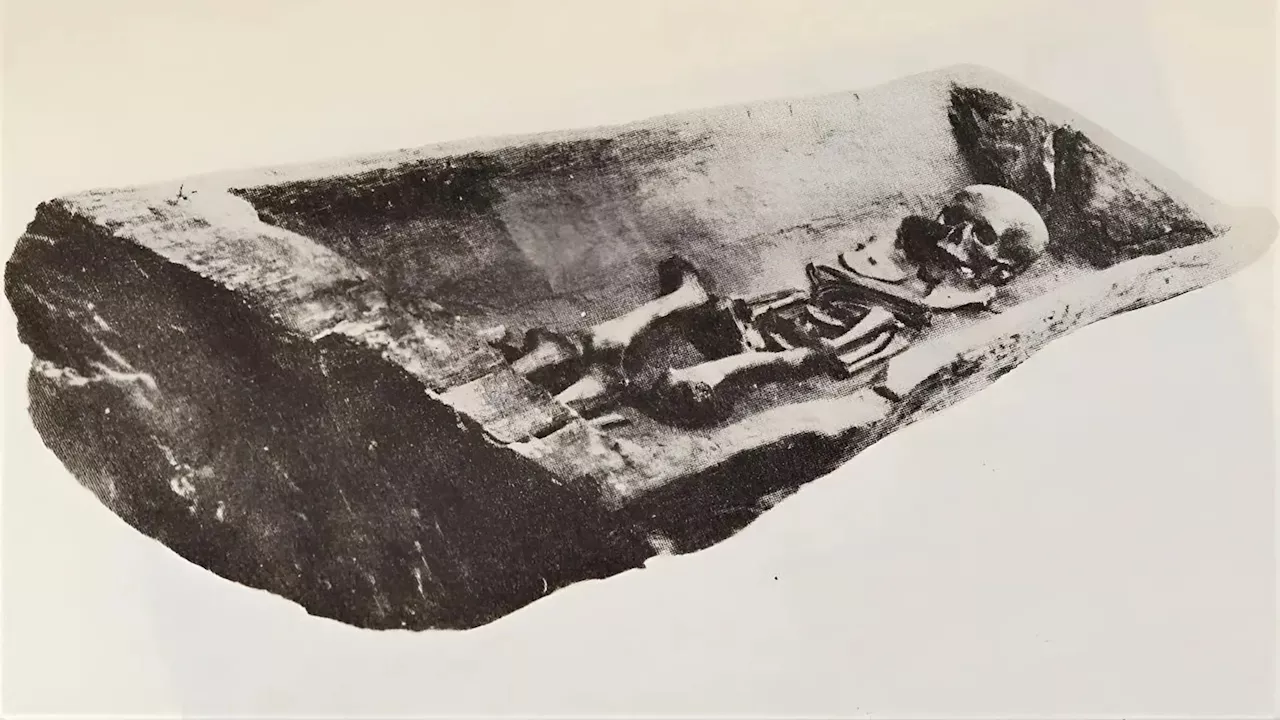
Recent research has made significant strides in determining the burial date of the ‘Princess of Bagicz,’ a Roman Iron Age Goth woman unearthed in Poland. Discovered in 1899, her remarkably preserved wooden sarcophagus has sparked intrigue among archaeologists and historians alike. The latest findings aim to resolve longstanding discrepancies in earlier dating analyses and provide a clearer understanding of her burial context.
The ‘Princess of Bagicz’ was interred in a unique wooden coffin, carved from a single log. This rare artifact, which has survived due to the region’s humid environment, offers a glimpse into the burial practices of the time. The coffin, believed to be the only one of its kind from the Roman Iron Age, contains a wealth of artifacts that align with the Goth culture, including a cowhide, a bronze pin, and a necklace made of glass and amber beads.
Confusion regarding her burial date has persisted for decades. Initial estimates, made in the 1980s, placed her demise between 110 and 160 CE. However, subsequent analysis of her teeth suggested she may have lived much earlier, between 113 BCE and 65 CE. This discrepancy created a significant gap that left researchers puzzled.
In a new effort to clarify the timeline, archaeologists revisited the case, applying dendrochronology to the oak coffin. This method involves measuring tree rings to ascertain when the wood was cut. The results indicated that the tree was felled around 120 CE, aligning more closely with earlier estimates of her burial date.
Further analysis included stable isotope testing of the woman’s bones. This revealed a high consumption of animal protein and freshwater fish, which could have skewed dating results due to the absorption of carbon from aquatic sources. Such factors contributed to the conflicting timelines that had troubled archaeologists for years.
In addition to confirming the burial date, the research also employed strontium isotopes to investigate her geographical origins. The findings suggest she may have come from Scandinavia or Öland, adding another layer of context to her story.
The results of this comprehensive study have resolved the long-standing mystery surrounding the burial date of the ‘Princess of Bagicz.’ By utilizing multiple methodologies, researchers have emphasized the importance of a multifaceted approach in the study of ancient remains. This endeavor not only sheds light on the life of a remarkable individual but also illustrates the complexities of archaeological research.
As archaeologists continue to uncover the past, the story of the ‘Princess of Bagicz’ serves as a reminder of the rich cultural heritage that informs our understanding of history.

Funko’s Price Target Increased to $4.00 as Analysts React

Humboldt Celebrates as ‘One Battle After Another’ Claims Best Picture

GSK Faces Backlash Over Asthma Inhaler Scrapping, Children Suffer

Adorable Sandhill Crane Colt Hugs Mom in The Villages

USA Unveils Star-Spangled Jerseys Ahead of March Friendlies

Newport Plans Colorful Lighting for Fourth Street Bridge

Sandia Scientists Honored for Innovative Career Journeys

Urgent: Charles M. Payment Passes Away at 78, Memorial Details Inside

NFL Free Agency: Key Moves and Player Signings in Week One

Researchers Launch $1.25M Project for Real-Time Hazard Monitoring in Hawaiʻi

Send It South Revives Culture and Community at The Momentary

UK Government Borrowing Hits £20.2 Billion in September Surge

Flipkart Republic Day Sale: iPhone 16 Plus Price Slashed by ₹23,900

Adecco SA Secures Mixed Ratings from Analysts Amid Earnings Update

Researchers Achieve Record 15.1 mA/cm² Hydrogen Production Efficiency

Globant Reveals Key Tech Forces Shaping Business in 2026

Inventor Achieves Breakthrough with 2 Billion FPS Laser Video

Dua Lipa Aces GCSE Spanish, Sparks Super Bowl Buzz with Fans
-
 Science8 months ago
Researchers Launch $1.25M Project for Real-Time Hazard Monitoring in Hawaiʻi
-
 Entertainment7 months ago
Send It South Revives Culture and Community at The Momentary
-
 World9 months ago
UK Government Borrowing Hits £20.2 Billion in September Surge
-
 Business6 months ago
Flipkart Republic Day Sale: iPhone 16 Plus Price Slashed by ₹23,900
-
 Sports7 months ago
Adecco SA Secures Mixed Ratings from Analysts Amid Earnings Update
-
 Top Stories5 months ago
Researchers Achieve Record 15.1 mA/cm² Hydrogen Production Efficiency
-
 Business8 months ago
Globant Reveals Key Tech Forces Shaping Business in 2026
-
 Science9 months ago
Inventor Achieves Breakthrough with 2 Billion FPS Laser Video
-
 Entertainment10 months ago
Dua Lipa Aces GCSE Spanish, Sparks Super Bowl Buzz with Fans
-

 Top Stories10 months ago
Charlie Sheen’s New Romance: ‘Glowing’ with Younger Partner
-

 Top Stories7 months ago
JSerra Names Hardy Nickerson as First Black Football Coach
-

 Health10 months ago
Community Unites for 7th Annual Into the Light Walk for Mental Health